What
if the most critical window to treat diseases comes before symptoms appear?
At
Duke-NUS, Professor Wang Yibin and his team are working to answer that
question. Their research focuses on metabolic dysfunction, a key driver of
conditions such as heart failure, diabetes and kidney disease. By identifying
subtle changes in metabolism early, they aim to intervene sooner and, in some
cases, reverse the course of the disease.
“Our
research is currently at a critical stage,” said Professor Wang. “Our findings
show that we can reverse the progression of these diseases. But we need
extremely advanced tools that allow us to detect cellular changes with far
greater precision than before.
That
was made possible through a gift from the Khoo Teck Puat Translational Research
Fund, which enabled the acquisition of a state-of-the-art mass spectrometer.
The instrument, the first of its kind in Singapore, has significantly
strengthened Duke-NUS’ metabolomics capabilities.
Metabolic
dysfunction underpins many chronic diseases. To detect it, researchers must
measure minute changes in metabolites from small amounts of blood or tissue.
The new spectrometer allows such analysis with greater sensitivity, accuracy
and speed.
“This
instrument represents a major upgrade for our metabolomics infrastructure,”
said Assistant Professor Federico Tesio Torta, who is a key member of Professor
Wang’s team.
“The mass spectrometer enables us to discover biomarkers that reveal how diseases begin, progress and how they might be reversed, sometimes even before symptoms appear. Our data helps guide a more effective development of drugs and therapies."
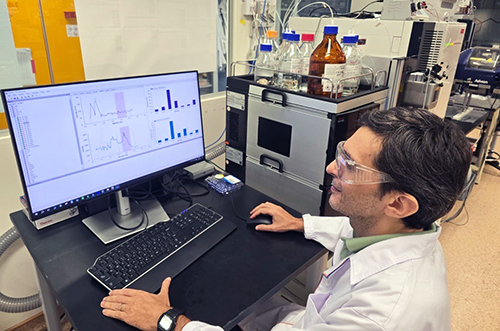
Asst
Prof Torta reviewing data produced by the mass spectrometer.
The
impact extends beyond a single laboratory. The enhanced platform strengthens
collaboration between researchers and clinicians across NUS, SingHealth and
other institutions. Ongoing projects include studies on diabetic kidney
disease, muscle loss and heart failure — conditions that affect growing numbers
of patients in Singapore and beyond.
When analysing samples from large clinical cohorts, metabolic changes identified through the platform may serve as future biomarkers to improve diagnosis. At the same time, underlying molecular mechanisms uncovered by basic research can point to new therapeutic targets. In one recent discovery, defects in amino acid metabolism linked to heart failure were identified and are now being commercialised by a Duke-NUS spin-off company as a potential new treatment approach.
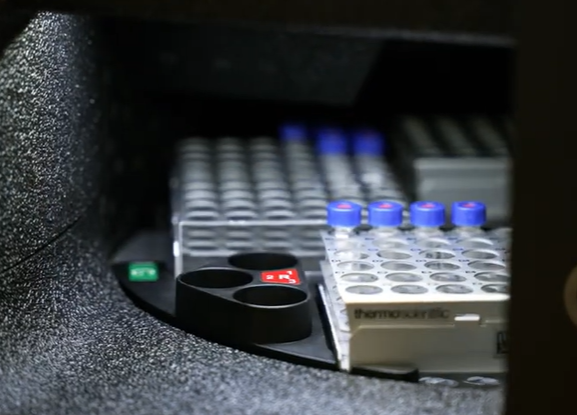
Biological samples placed inside the spectrometer.
“But
progress does not come from technology alone,” Prof Wang said.
“This gift also supports the development
of talented scientists and AI-driven metabolic research, bringing people and
tools together to translate discovery into real-world solutions. We are deeply
grateful for this timely and generous support. It helps us move the field
forward toward earlier intervention, better treatments and ultimately, better
outcomes for patients.”
The
spectrometer is not an end in itself.
It enables researchers to ask better questions, generate deeper insight and
move more quickly from discovery to impact. Through philanthropic support,
Duke-NUS is advancing a vision of medicine that intervenes earlier, acts more
precisely and improves lives before disease takes hold.
Click here to watch the video