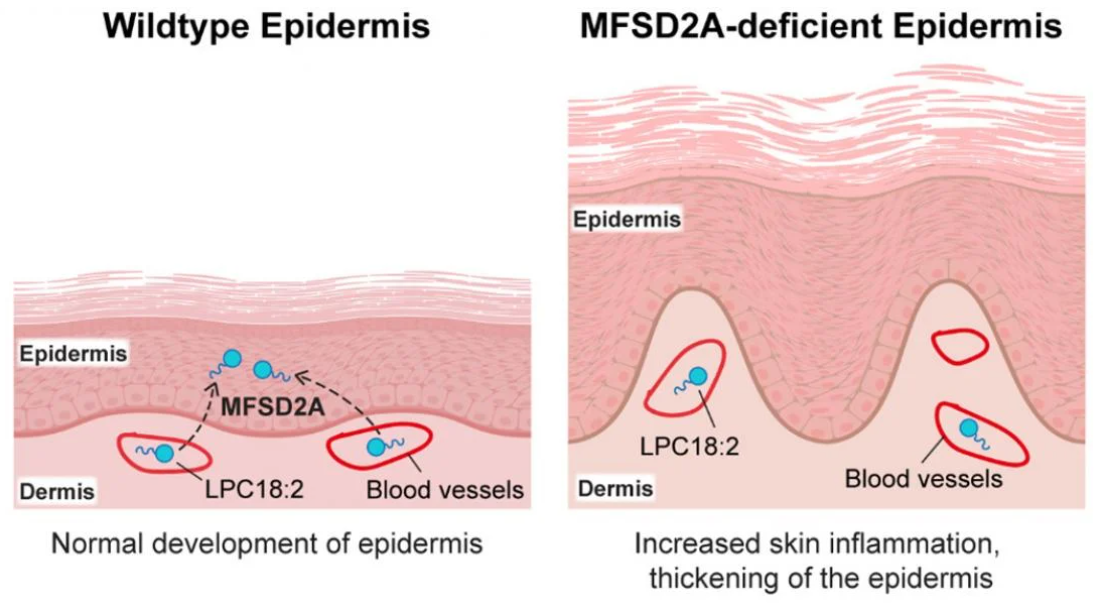
Singapore scientists have identified the transporter protein that allows essential fats in the bloodstream to enter the skin, reshaping understanding of how the skin maintains its protective barrier.
Duke-NUS Medical School scientists and their collaborators found that a transporter protein called MFSD2A enables skin cells to take up lysophosphatidylcholines (LPCs), a type of fat molecule circulating in the blood. These LPCs supply linoleic acid—an essential fatty acid needed to maintain and repair the skin barrier. Read more>>
Source: Duke-NUS/News Hub
Asia Research News