On October 28-31, 2025, the SDGHI Planetary Health Programme participated in the 18th Association of Pacific Rim Universities (APRU) Global Health Conference 2025 hosted by Universiti Malaya in Kuala Lumpur, Malaysia. The theme — “Towards Planetary Health Equity: A Global Call for Shared Solutions” — set the tone for four days of informative, insightful, and inspiring discussions on the intertwined challenges of global health, climate change, and equity.
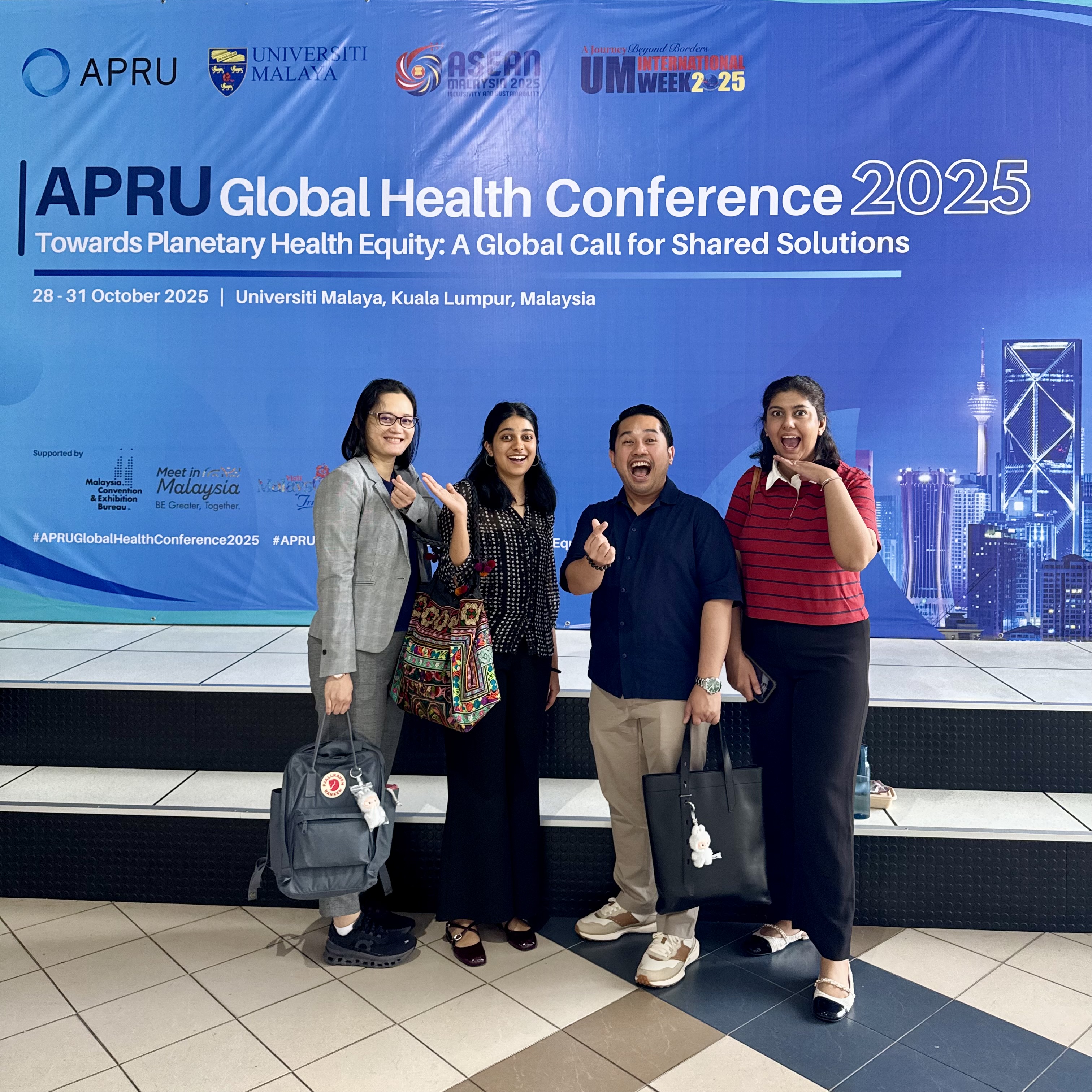
The SDGHI Planetary Health team having fun and feeling fulfilled at the APRU Global Health Conference 2025 in Kuala Lumpur, Malaysia
2025 has been a turbulent year for global health and Earth’s natural systems. As the global health community navigates disruptions in governance and funding, the planet continues to experience record-breaking temperatures, with the United Nations Environment Programme warning that we are on track to overshoot the Paris Agreement’s 1.5℃ target. Beyond climate change, scientists have found that 7 out of 9 planetary boundaries are now breached. The stakes are especially high for the regions surrounding the Pacific rim. Acutely vulnerable to climate shocks, countries surrounding the Pacific Ocean are now experiencing rising disease burdens, compounded by worsening pollution and biodiversity loss.
Yet amid these challenges, the conference buzzed with resolve. On our way to the conference venue, banners announcing the ASEAN Summit – which was also happening on the same week – lined the streets, and sirens signalled the movement of delegates. Are these reminders that nations – such as ASEAN Member States – are mobilising? Rather than fear for the evolving crisis, I felt a sense of curiosity and determination. How do we, as a region, turn knowledge of these problems into sustained transformational action?
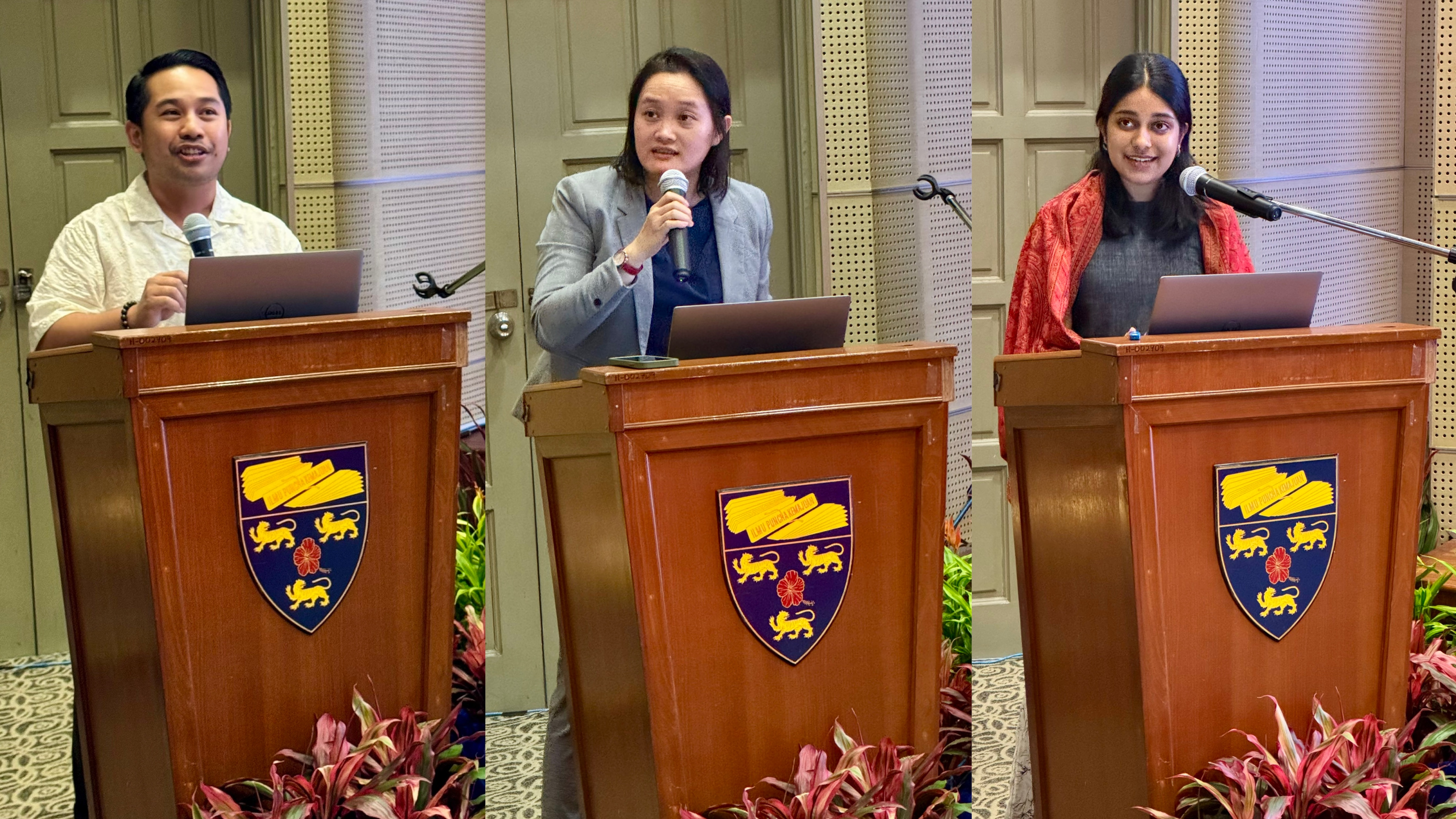
The SDGHI Planetary Health team uses their voice: Associate Professor Renzo Guinto delivering the closing keynote, urging conference attendees to be planetary health “pracademics”; Dr. May Ung talking about building climate-resilient health systems in her native Cambodia; and Tanisha Naqvi discussing the climate-migration-health nexus
From information to implementation
In Southeast Asia, Malaysia is leading by example. In her opening keynote, Professor Emerita Datuk Dr. Asma Ismail of the Akademi Sains Malaysia announced that the country had just launched the world’s first National Planetary Health Adaptation Plan, breaking ground in establishing planetary health as a policy priority.
During the poster sessions, our team shared preliminary findings from a global review of National Adaptation Plans, assessing how health is integrated in countries’ climate commitments. Several countries in the region, such as the Philippines, are starting to prioritize health issues, such as mental health and health workforce training, in national climate plans.
Meanwhile, planetary health action must happen not only at the national level but also at the level of clinics and communities – where healthcare providers and patients interact. In one of our posters, our team revealed how clinical specialties are starting to embrace climate resilience and environmental sustainability as part of their healing mission. In another poster – a review of case studies we conducted in collaboration with colleagues from the Singapore National Eye Centre – we showcased promising interventions pioneered by ophthalmologists and optometrists to promote greener eye care. Dr. Andika Pradana, our partner from Universitas Sumatera Utara (USU) – SDGHI’s Regional Collaborating Centre in Indonesia – also presented the initial findings of our ongoing research on the links between climate change, air pollution, and COPD-related hospitalisation in Medan, Indonesia.
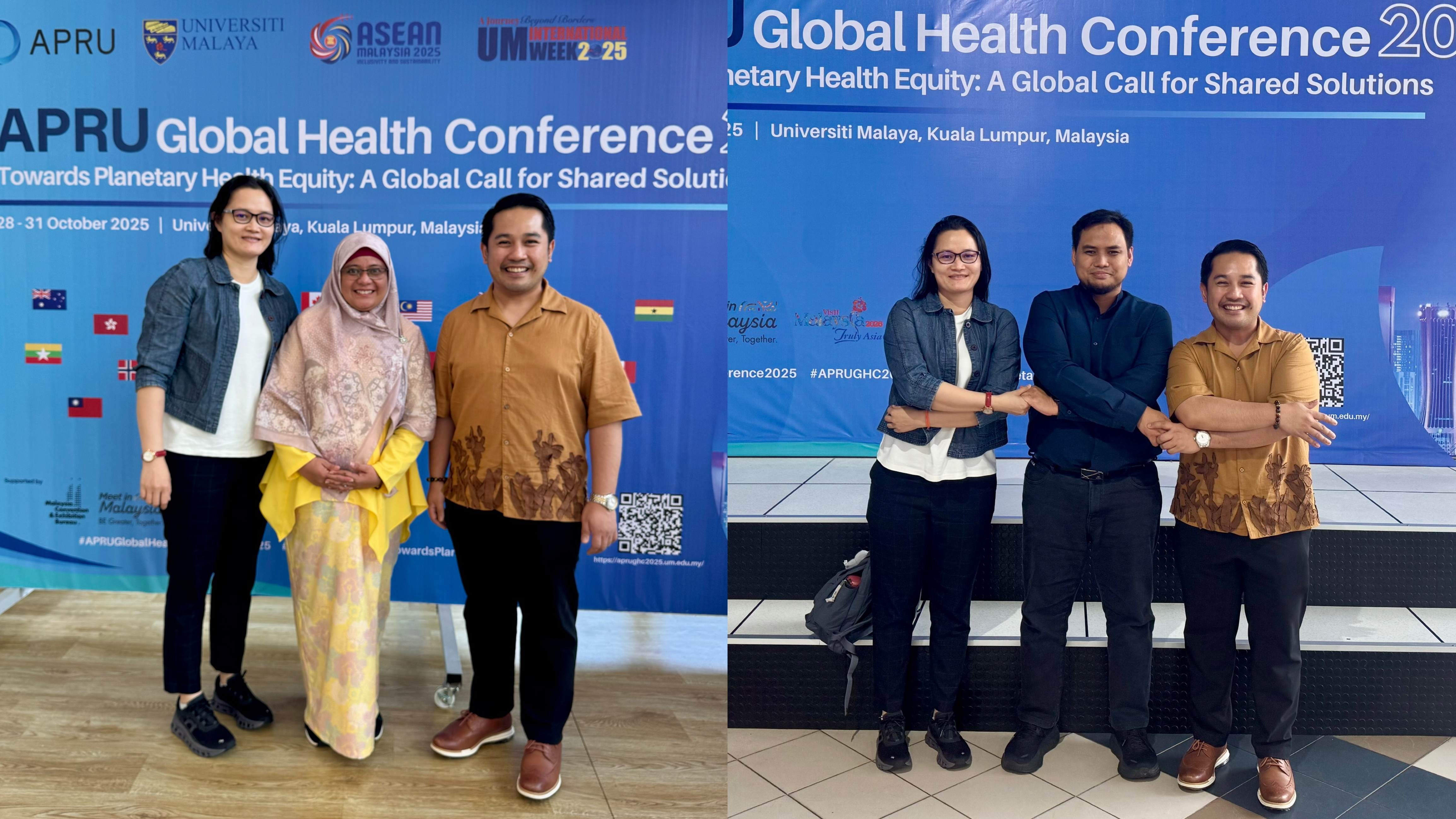
Associate Professor Renzo Guinto and Dr. May Ung with Dr. Eka Lestari Mahyuni and Dr. Andika Pradana - our planetary health collaborators from Universitas Sumatera Utara (USU) – SDGHI’s Regional Collaborating Centre (RCC) in Medan, Indonesia
Health equity in a warming world
One central theme of the conference was health equity. In our work at the SDGHI Planetary Health Programme, we ensure that health equity is at the centre - ensuring that climate change does not further widen existing inequalities, and that climate responses do not leave behind the most vulnerable.
The APRU conference provided us with a platform to present some of our emerging work in climate and health equity. During the session on migrant health, I had the privilege of presenting the highlights of a WHO-commissioned global review that we conducted, focusing on health system interventions for climate-affected migrants and displaced populations. The climate experience of people on the move is starting to be recognized, but more research and action are needed to make sure that their pressing needs are addressed and not forgotten.
Applying a health equity lens to the climate change helps identify specific communities that require extra attention and care. For instance, my colleague Dr. May Ung talked about her previous and emerging work with farmers and fisherfolks in coastal Cambodia who are affected by both increasing heat and rising sea levels. Dr. Eka Lestari Mahyuni, another collaborator from USU, also presented about our joint project with guava farmers in Medan. In planetary health research, we must also remember the elderly, children, women, Indigenous peoples, outdoor workers – and we must co-design climate-health solutions with and not for them.
In his closing keynote, our SDGHI Planetary Health Programme Lead, Dr. Renzo Guinto, gave this exhortation: “We must become good ancestors for the future children of the world, who are yet to be born, and whom we will never meet.” I think this is the heart of planetary health equity – ensuring that the planet we pass on to the next generation allows them to live and thrive.