At this year’s student-led camp, Duke-NUS medical students joined peers from NUS and NTU to create a weekend of games, creativity and friendship for children and youths from families supported by HCA Hospice Care.
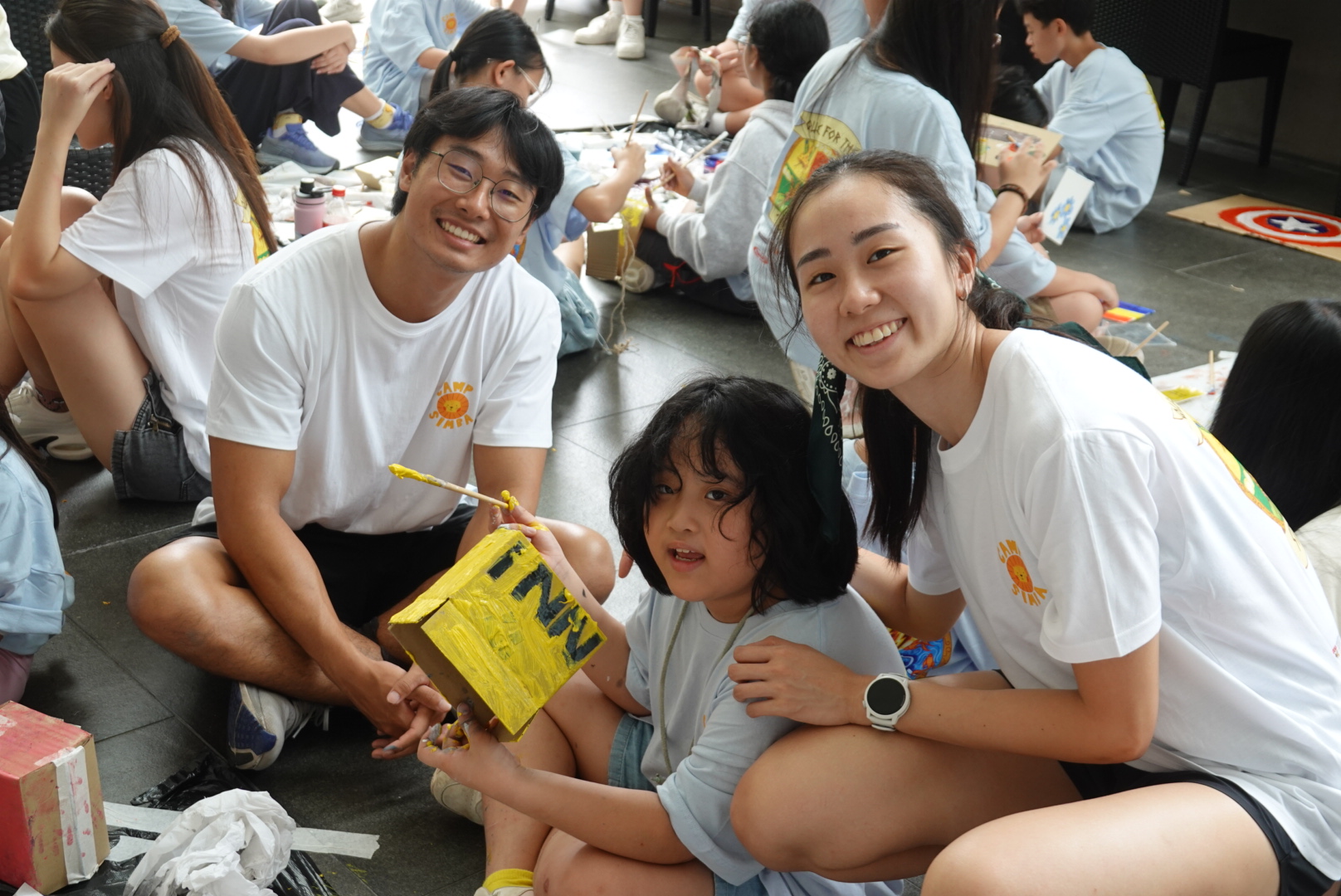 Camp Simba facilitators share a tender moment with a camper showing off her artwork.
For 62 children and youths whose families are navigating serious illness, Camp Simba offered a weekend of play, courage and connection, led by student volunteers determined to make childhood feel a little lighter.
This year’s Greek mythology-themed camp, Camp Half-Blood, offered something more precious than a lost relic—a safe and joyful space to play, make friends and simply be children.
Held from 26 to 28 June, Camp Simba supported campers aged seven to 16 through three days of games, creativity and quiet moments of connection.
Part of the annual support programme for the children of HCA Hospice Care’s patients, the event was jointly organised by students from Duke-NUS, the National University of Singapore’s (NUS) Yong Loo Lin School of Medicine and Nanyang Technological University’s (NTU) Lee Kong Chian School of Medicine.
Much like Hercules and his twelve labours, participants underwent a series of “trials” to complete this year’s camp. Grouped into four houses representing Zeus, Poseidon, Hera and Demeter, they used their creativity, problem-solving skills and teamwork to uncover clues to the location of the lost relic—the Simbacomb. Journeying alongside them were 73 student facilitators from Duke-NUS, NUS and NTU.
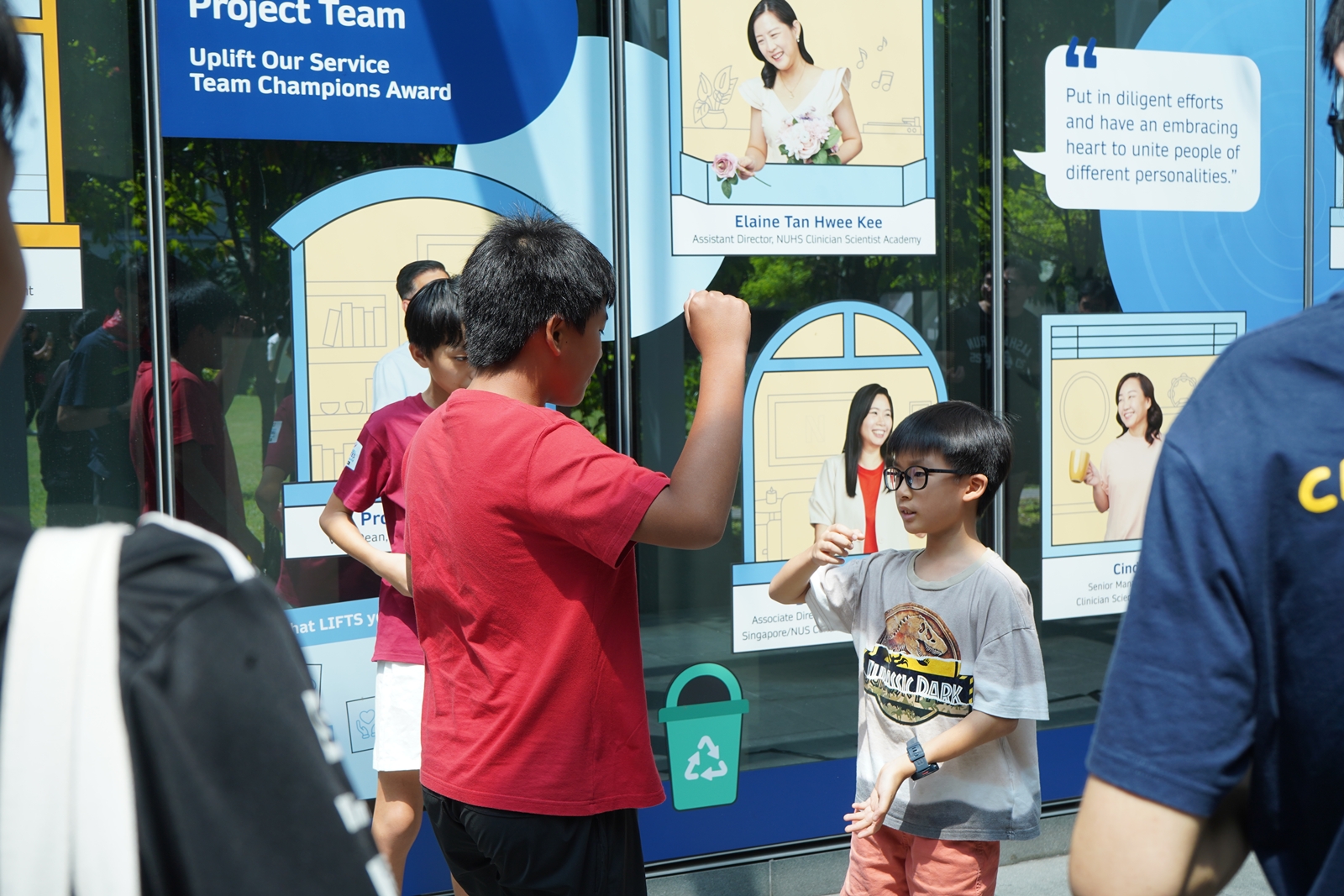 Campers playing Rock, Paper, Hula Hoop during Camp Simba’s Amazing Race.
In an Amazing Race across NUS, campers competed in a series of station-based games, including a new spin on rock, paper, scissors and a mission to safely cross a treacherous “river”. During the camp, they also preserved precious memories such as trips and birthdays in the form of paintings and designed sustainable costumes inspired by Greek mythology.
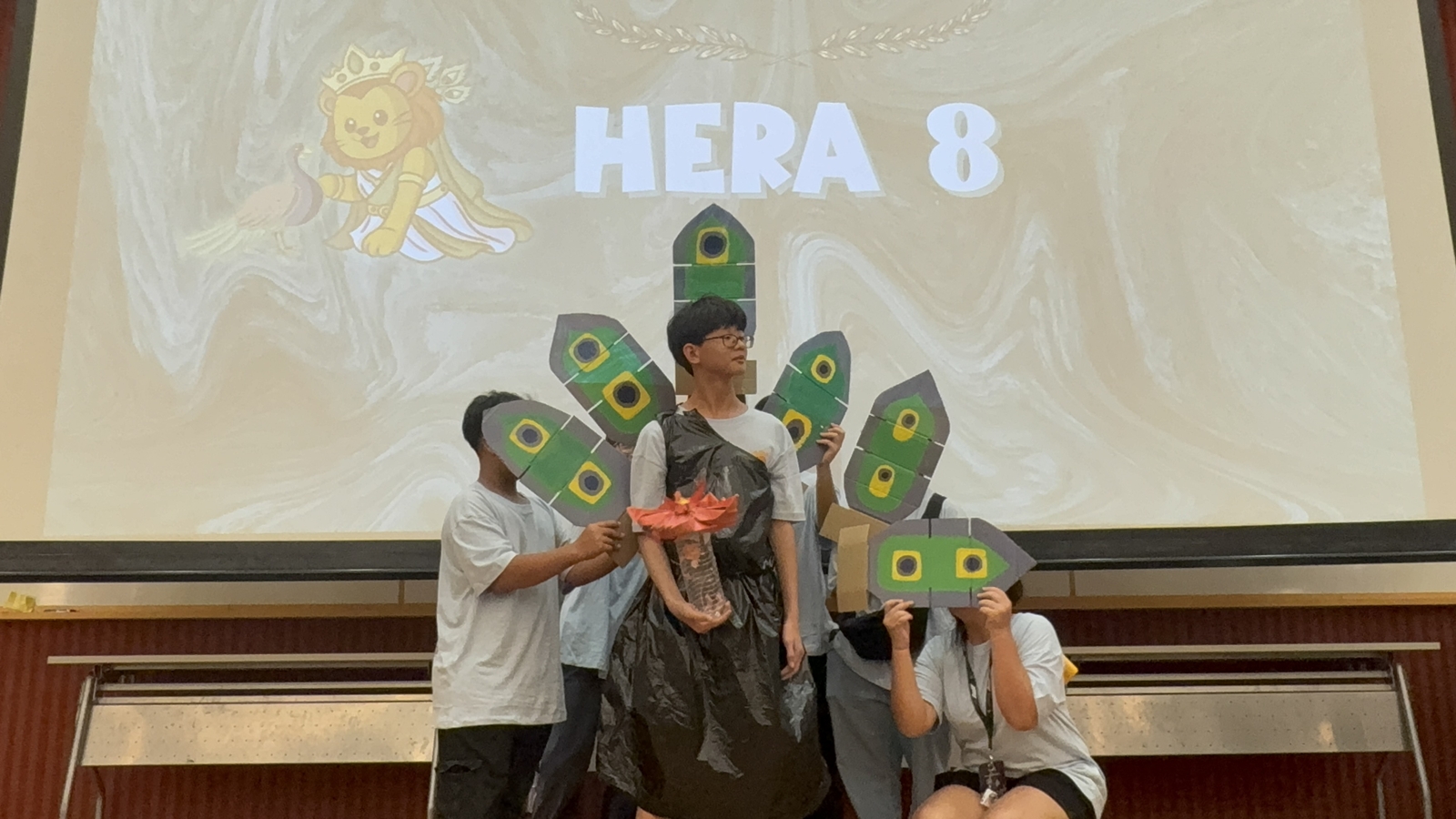
A team from house Hera shows off its self-made costume.
In one of the biggest highlights of the weekend, campers embarked on an excursion to Gardens by the Bay and the ArtScience Museum, where they spent half a day exploring interactive art exhibits, playing scavenger hunt-style games and reconnecting with nature.
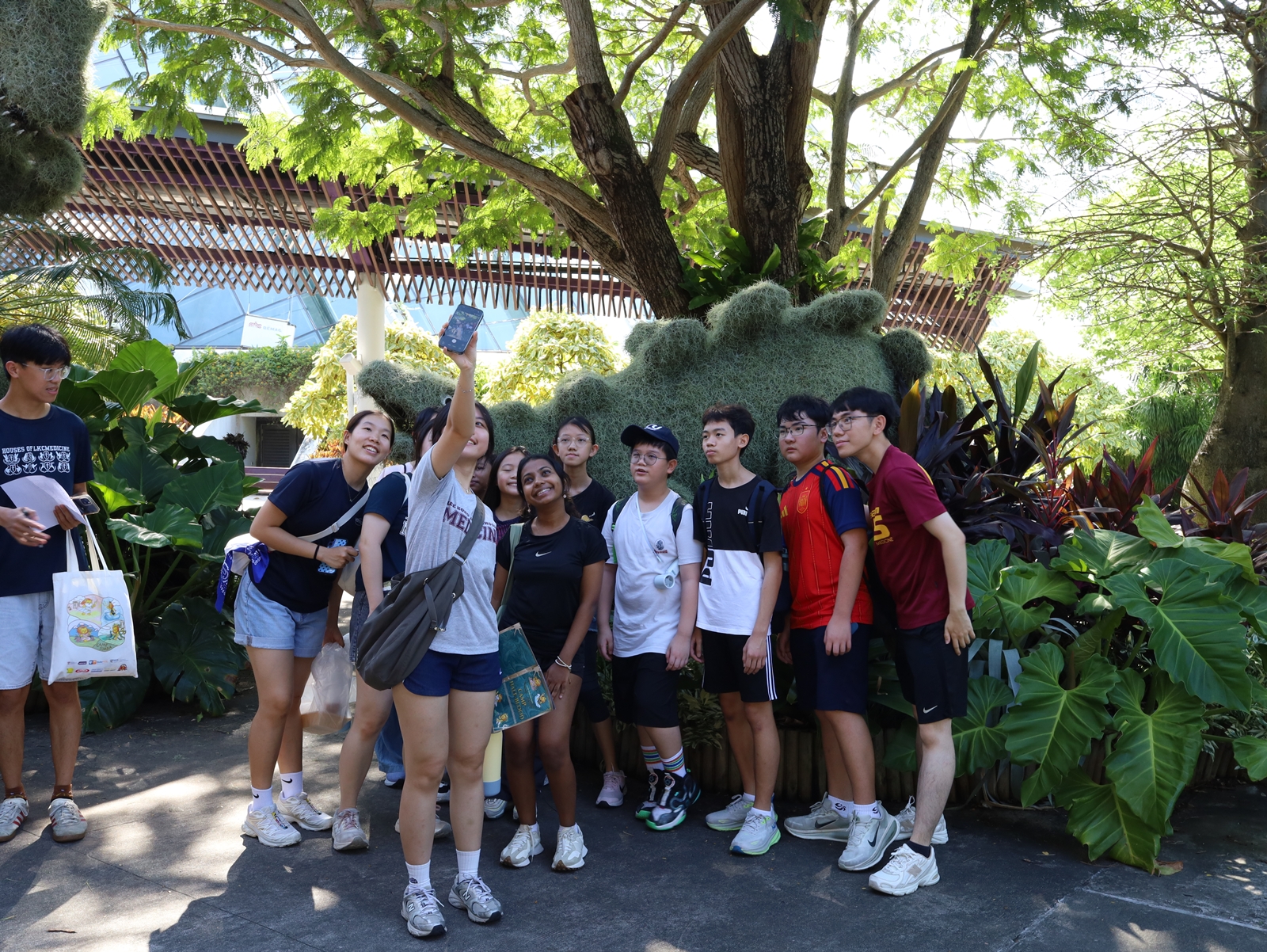
Campers and student facilitators pose for a wefie during an excursion to Gardens by the Bay.
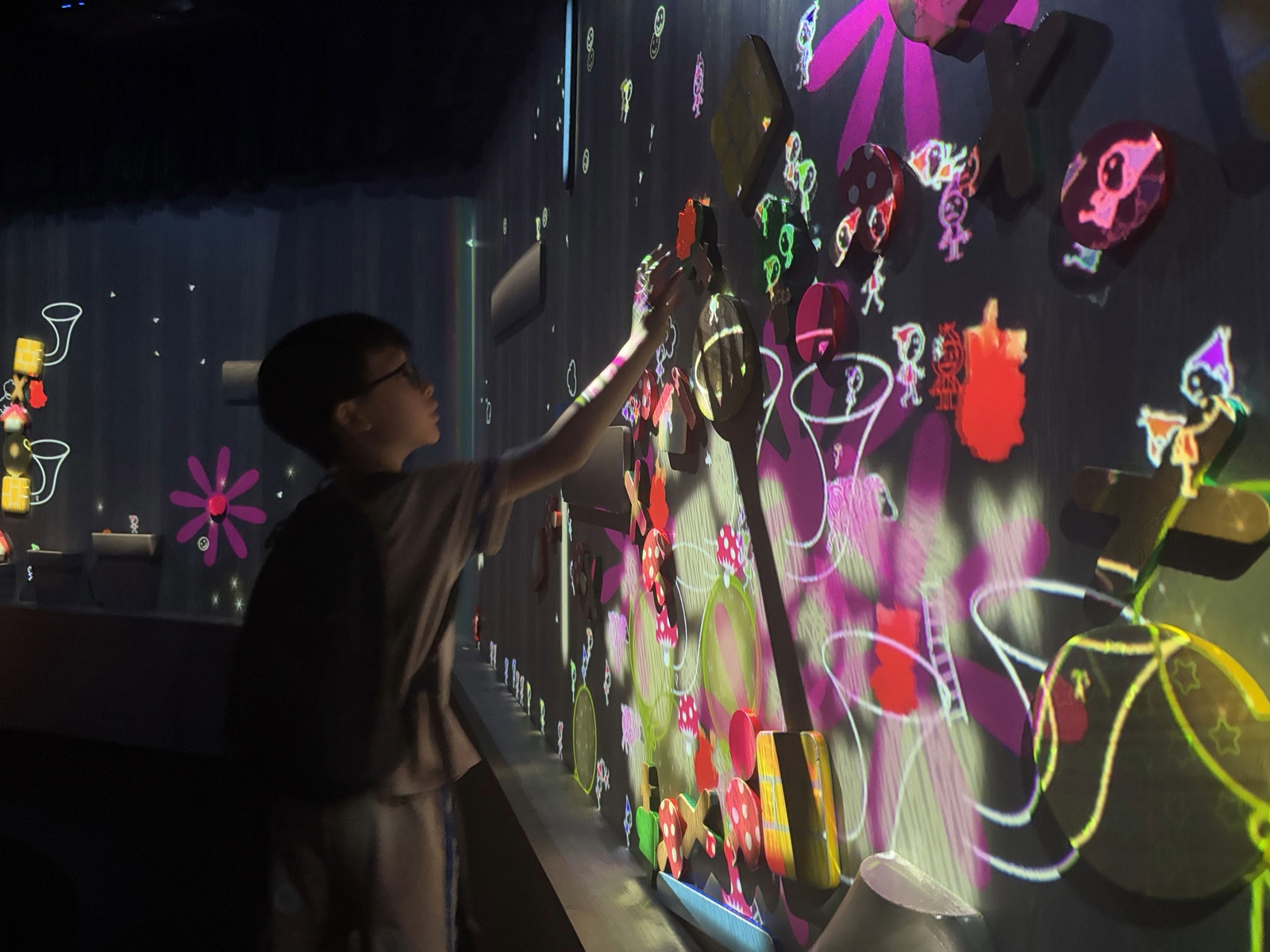
A camper interacts with an installation at the ArtScience Museum.
Besides offering a form of escapism to the participating children and youths, the camp’s activities and games were designed to teach them to support each other through play, said Camp Simba’s Programme Head Nicholas Kuu, who is from Duke-NUS’ MD Class of 2029.
He added that the invaluable experience of organising and running the camp exposed him to the more human side of clinical work:
“Going through camps like this really highlights why we're doing the things that we are doing, and seeing the kids have fun and bonding with them also gave more meaning to the things that I do. As I'll be seeing more of these kids in the future, I think it's important that I gained some skills that I normally won't be able to learn in a classroom setting.”
While some campers found it easier to let loose and have fun, others took time to warm up to those around them. For Head Facilitator Lee Swee Leng, from Duke-NUS’ MD Class of 2029, helping the latter group come out of their shell became her mission.
“I wasn't very extroverted when I was a child, so I understood where they were coming from when we asked them questions and they refused to answer. The key to breaking the barrier between us and them was to find common topics and interests,” she said, adding that it was rewarding to eventually hear these campers open up about their lives.
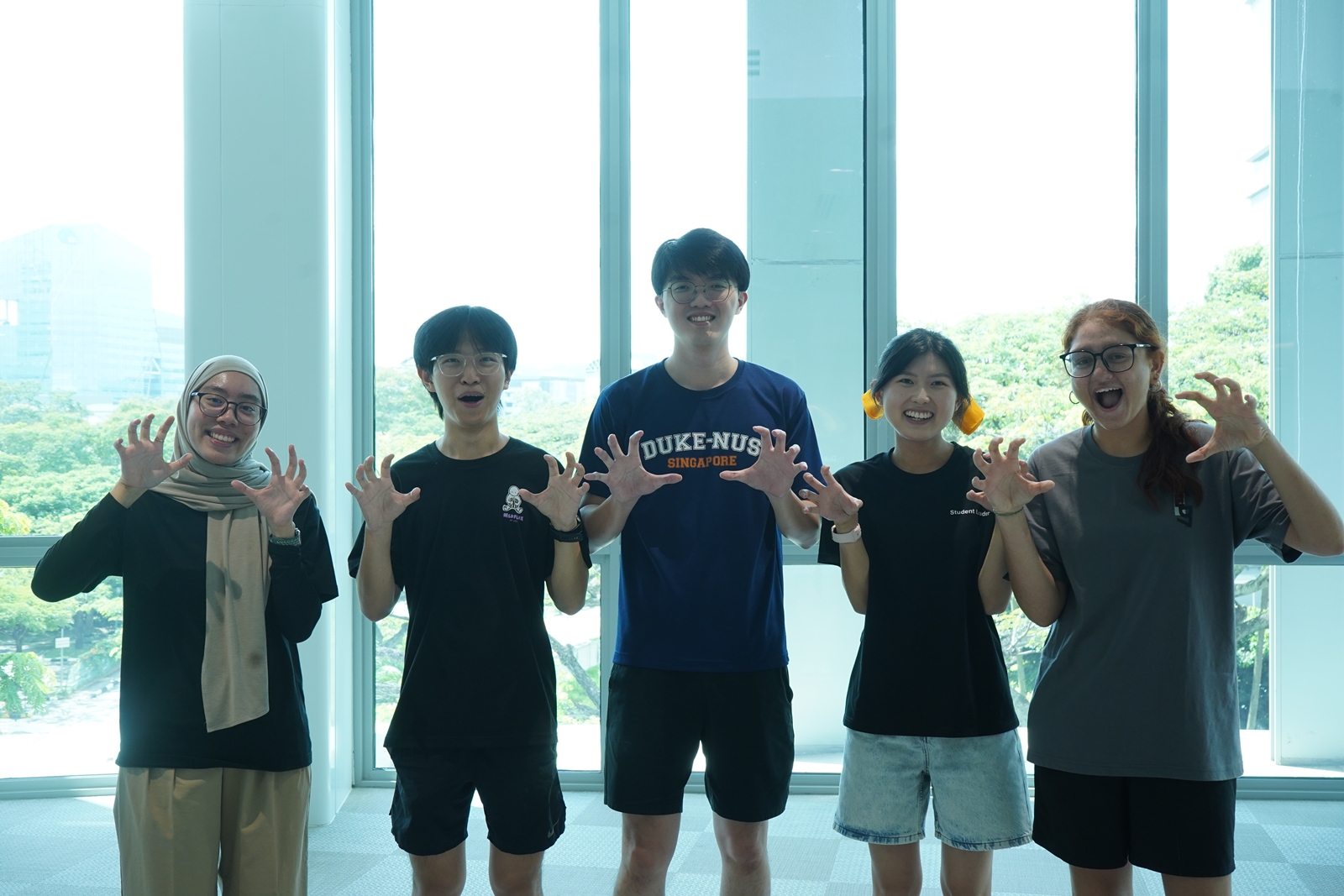
Camp Simba Project Director Inarah Farahah (first from left), Programme Head Nicholas Kuu (centre) and Head Facilitator Lee Swee Leng (second from right) with fellow camp committee members.
Having previously volunteered with the Children Cancer Foundation in her undergraduate years, Project Director Inarah Farahah, also from Duke-NUS’ MD Class of 2029, joined Camp Simba’s organising committee with the hope of connecting with children and youth in need and helping them to build meaningful connections.
She said that she was especially encouraged to see how much returning campers had grown since the last edition of the event:
“Kids who have come for the camp like for previous years have stepped up and became like the kokors (older brothers) and jie jies (older sisters) for those who are first timers to the camp, so I think that was very endearing to see.”
As the weekend came to a close, the champions of challenges and contests such as the Simbacomb hunt, Gameshow and Costume Showdown were crowned during a much-anticipated awards ceremony.
But the real measure of Camp Simba was quieter and more lasting: children and youths cheering for teammates they had met only two days earlier, returning campers caring for the younger ones and future doctors learning that care begins long before the clinic. For one weekend, Camp Simba became a small community of courage, play and belonging, and for many of its campers and facilitators, a newfound family.
All photos in this story are copyrighted to Duke-NUS Medical School.