What began as a meeting of minds between Singapore and Durham, North Carolina, has set the stage for a new chapter of collaboration across Duke University, Duke-NUS Medical School and the SingHealth Duke-NUS Academic Medical Centre (AMC).
.jpg?sfvrsn=48cfa06e_1)
Held from 2 to 4 June, the inaugural DASH summit launched the Durham and Singapore Horizon, a cross-Pacific initiative designed to build sustained research and education collaborations that can move promising ideas towards real-world impact.
In his opening remarks, Professor Patrick Tan, Dean of Duke-NUS, described DASH as a prototype for a new model for long-term collaboration.
“We believe that if we want science to become solutions, we need to ask the right questions early,” he said. This means bringing together stakeholders and partners from academia, industry and philanthropy from the outset, “so that we can converge academic medicine practice and innovation in an institutional way rather than in an incidental way”.
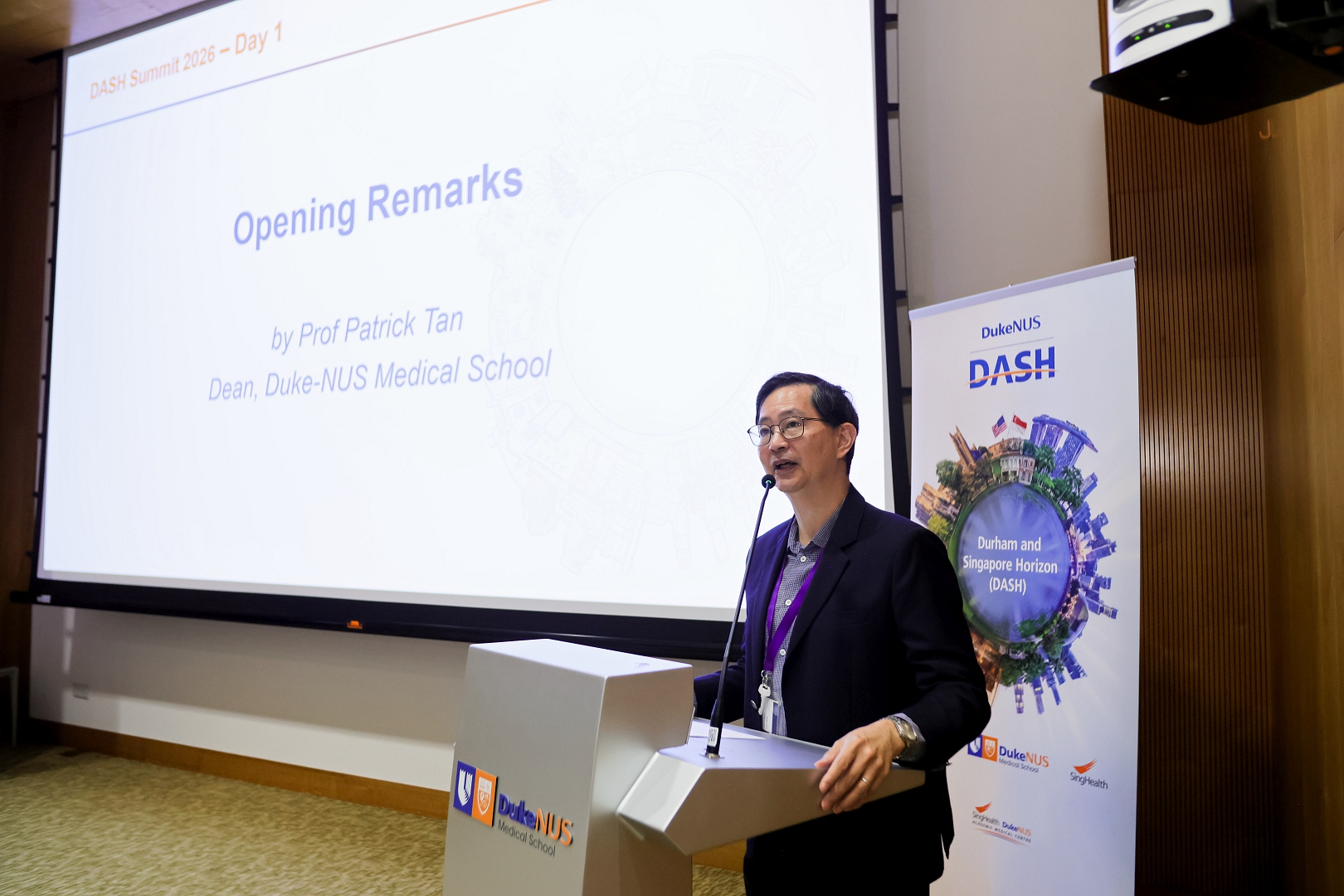
Professor Patrick Tan, Dean of Duke-NUS, delivers the opening remarks at DASH 2026
Professor Mary Klotman, Dean of Duke University School of Medicine, echoed this ambition in a recorded message. “The goal is to establish collaborative work that is greater than any one institution. Work that can grow, scale and ultimately attract the support needed to make a lasting impact,” she said.
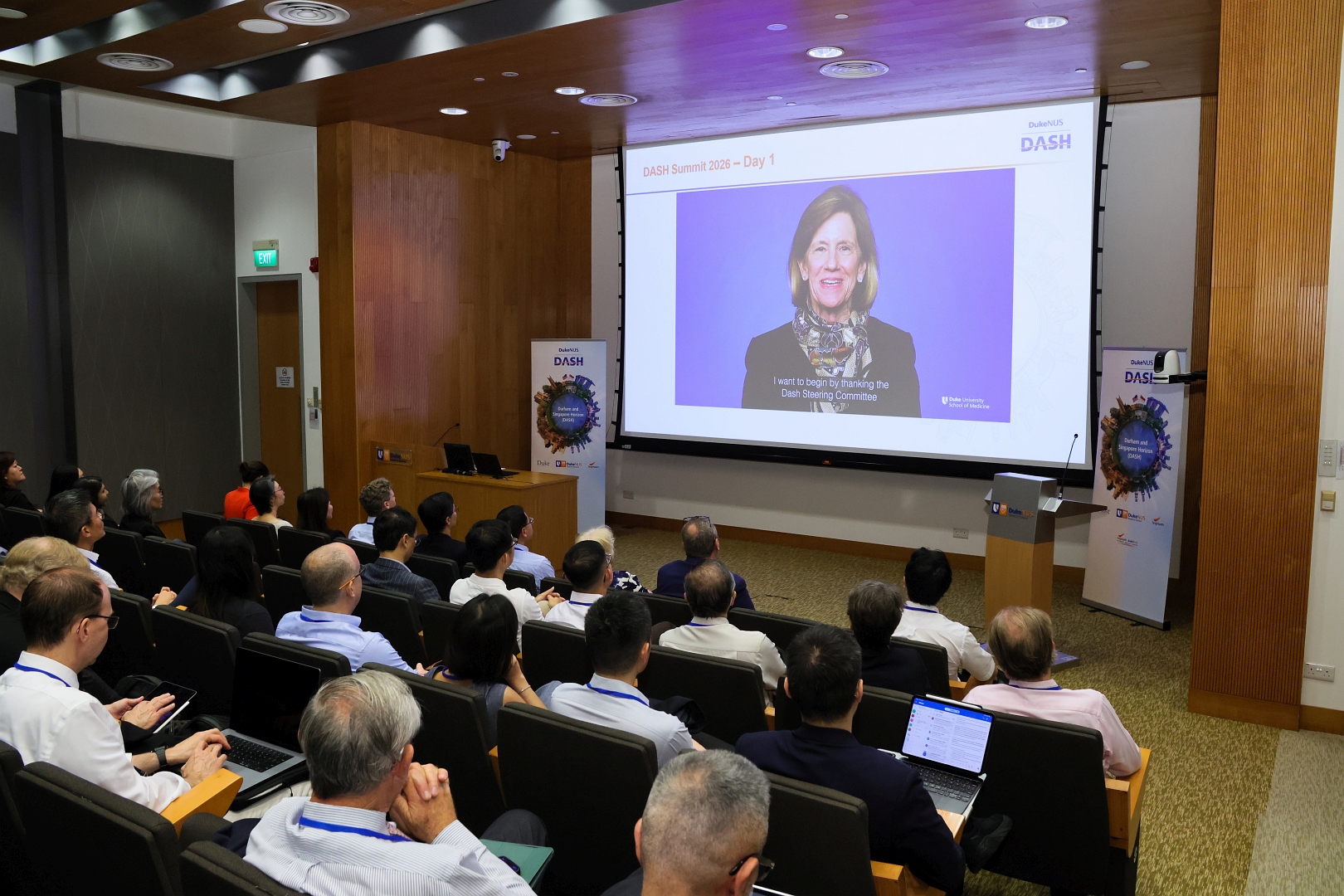
Professor Mary Klotman, Dean of Duke University School of Medicine, shares her vision for DASH
Through this unique initiative, DASH aims to create a more deliberate pathway for research and education collaborations that are sustained, scalable and grounded in real-world needs.
Professor Ng Wai Hoe, Group Chief Executive Officer of SingHealth, noted that DASH’s vision aligns closely with SingHealth’s focus on transforming ideas into impact through innovation and enterprise.
“We’ve undergone two decades of academic medicine. It is now time to transform ideas to real-life impact, and innovation and enterprise is the only way to create impact,” said Prof Ng.
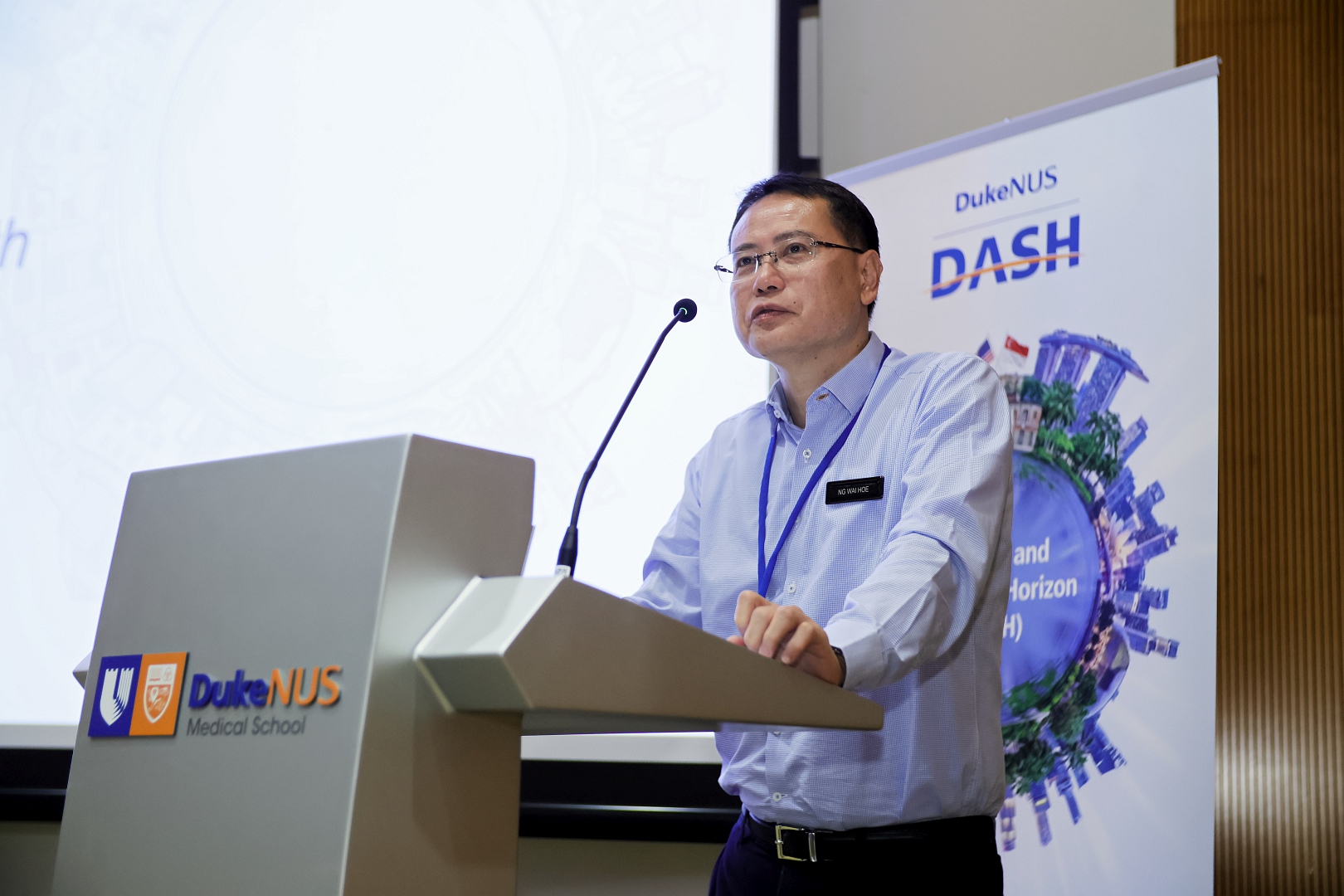
Professor Ng Wai Hoe, Group Chief Executive Officer of SingHealth, addresses the 100-strong audience
“We want DASH to create the space for these questions to be asked early, openly and constructively,” explained Prof Tan.
Over the three-day summit, experts from Duke University, Duke-NUS and across the SingHealth Duke-NUS AMC moved from initial presentations to cross-disciplinary brainstorming sessions.
Their discussions focused on key themes including integrated data tools for precision medicine and nucleic acid therapeutics. These topics were selected in close consultation with faculty from all three institutions and the DASH steering committee.
This culminated in two lighthouse sessions on the final day of the summit, where investors and industry partners provided strategic feedback on the projects pitched.
Rounding out the summit's three core themes, Professor Scott Compton, Senior Associate Dean for Medical Education, presented the Duke-NUS Office of Education’s future vision of precision education.
Professor Victor Dzau, President of the US National Academy of Medicine, underscored the timeliness of the launch in his keynote address. “I think the timing of DASH is meaningful not only scientifically, but also historically, because it’s launching in a milestone year—60th anniversary of diplomatic relations between Singapore and the United States, underscoring the significance of cross-Pacific scientific and medical partnership,” he said.
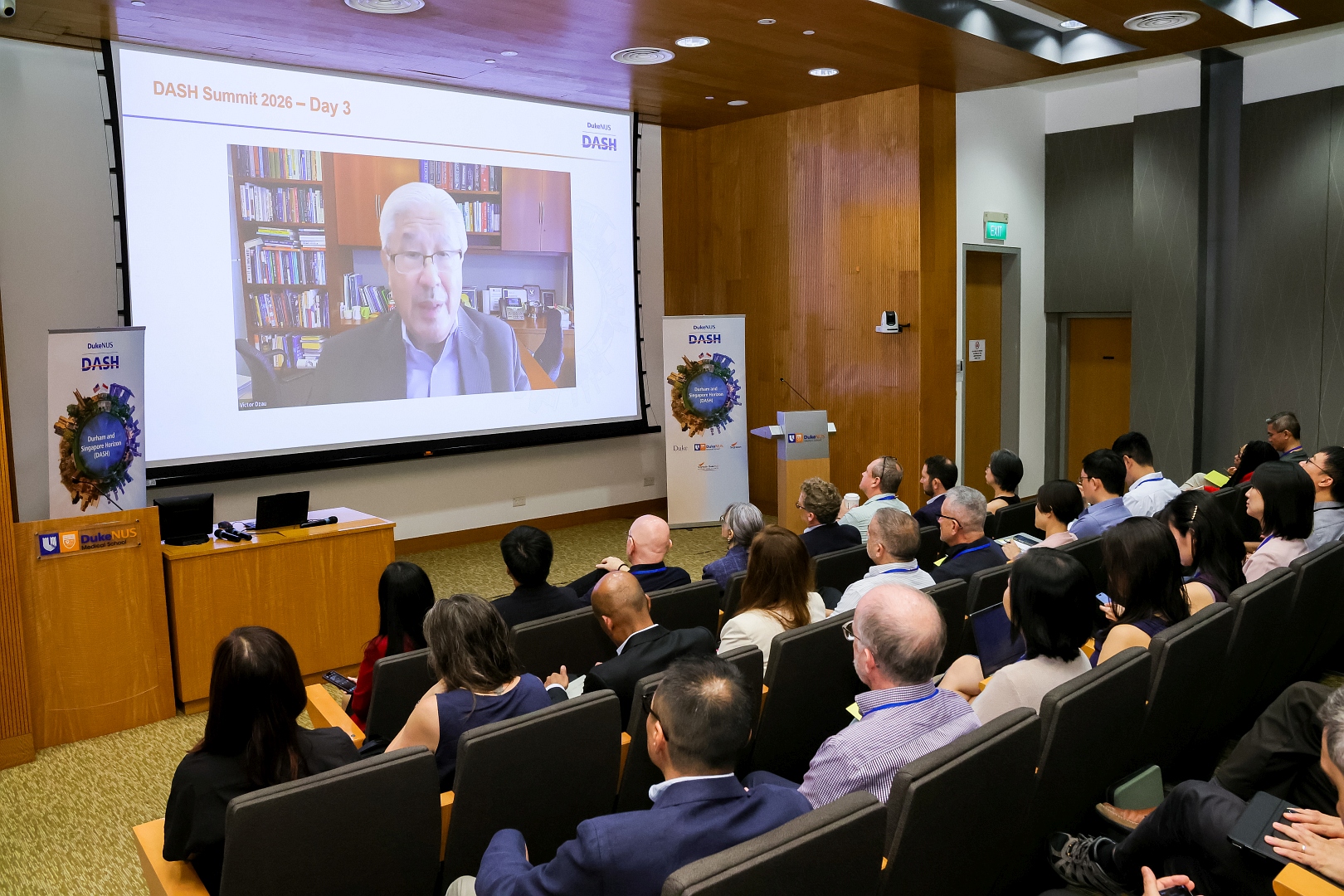
In his keynote address, Professor Victor Dzau acknowledged the individuals and teams whose efforts were pivotal to the launch of DASH
In the coming months, the respective project teams will submit their finalised proposals for review by the DASH steering committee. Phase 1 of selected projects is expected to commence in September this year.
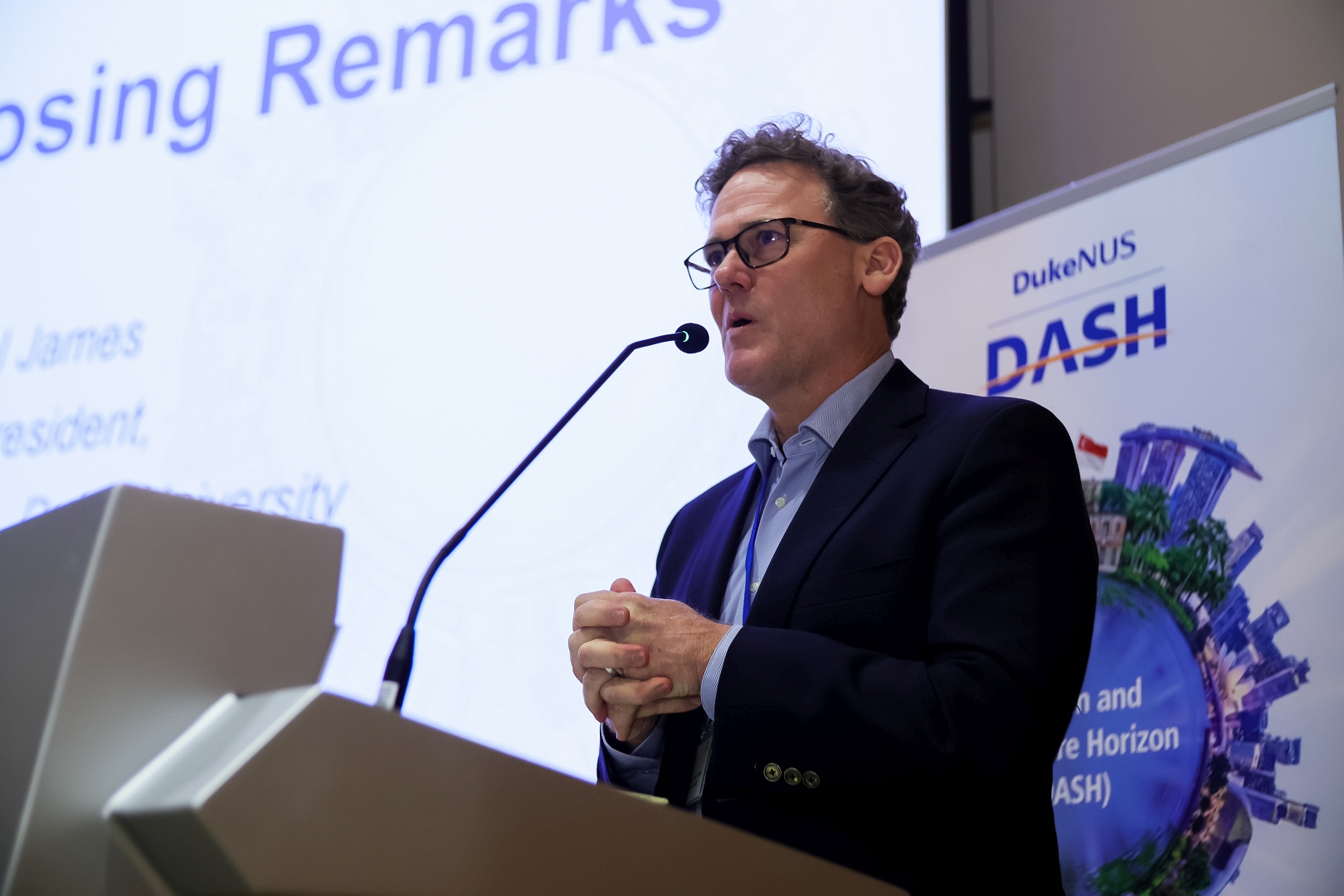
DASH advisor Professor Luke James, Assistant Vice President of Duke-NUS Affairs, explains how DASH marks culmination of two years of conversations and efforts of multiple stakeholders from Duke, Duke-NUS and the SingHealth Duke-NUS AMC
“I hope the projects and ideas developed here will grow into clearly defined, unique, and exciting proof-of-concept prototypes, that can evolve into larger programmes, external partnerships, and eventually centres of excellence that can deliver meaningful impact,” concluded Prof Tan.
By bridging diverse expertise and perspectives from day one, DASH has established a scalable prototype for collaboration, setting a new benchmark for how cross-Pacific partnerships can be designed for impact from the start.
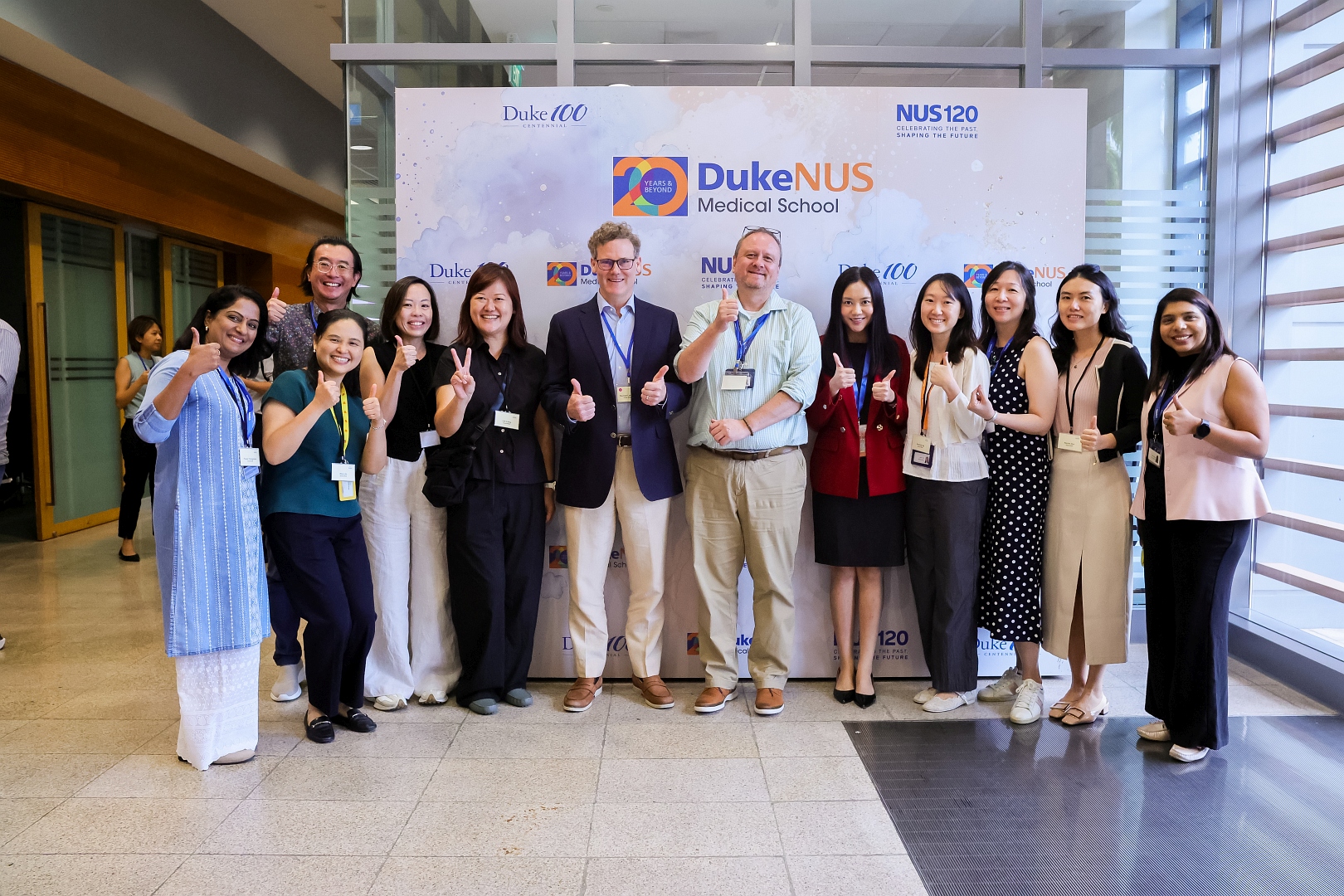
Members of the organising committee celebrate the successful launch of DASH