For one afternoon, the Duke-NUS atrium became more than a gathering space—it became a window into the future of medicine.
At Research Day 2026, 72 students from the Class of 2027 presented the outcomes of nine months of rigorous inquiry, each project reflecting a deeper question at the heart of academic medicine: how do we generate knowledge that meaningfully improves patient care?
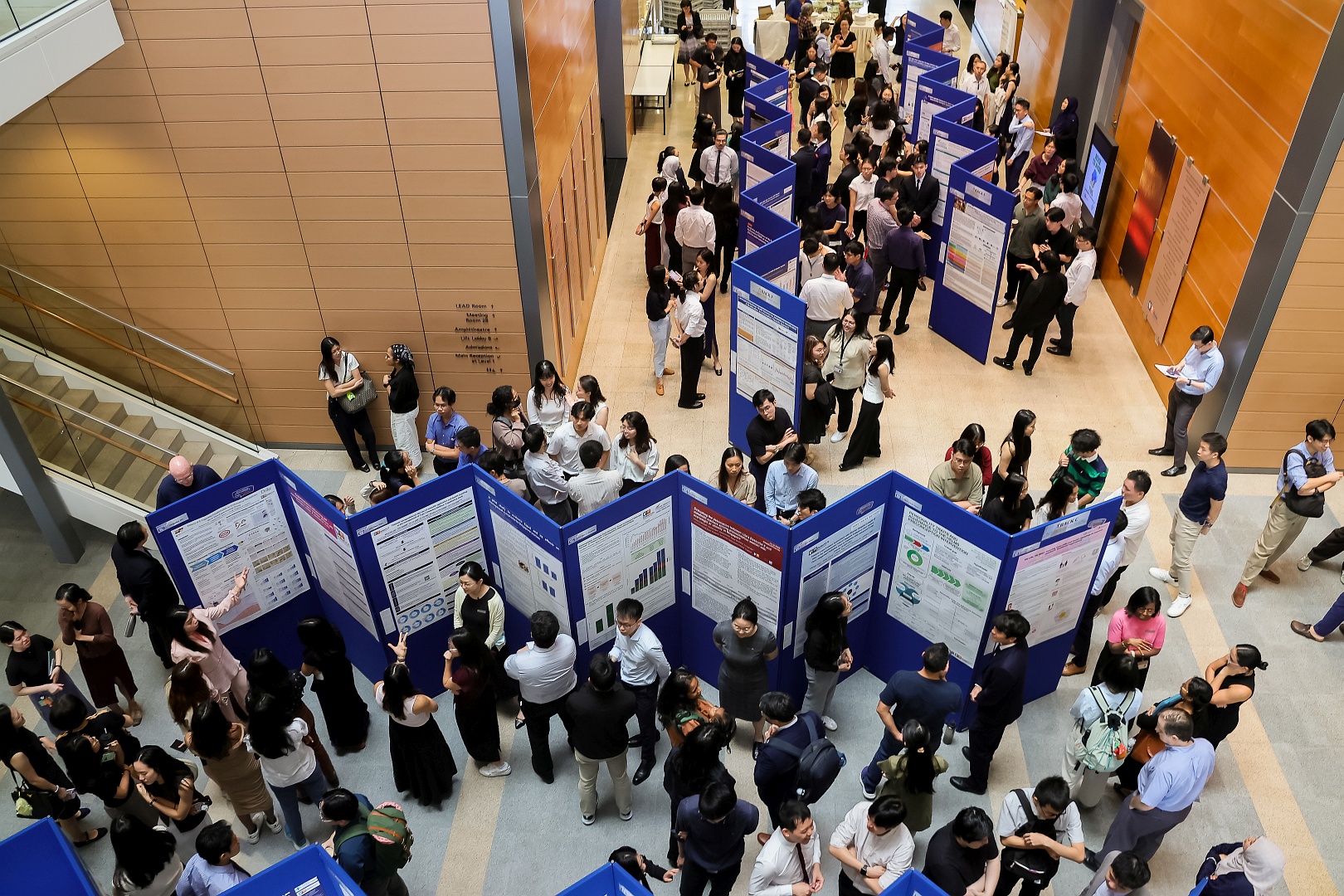
Held on 27 March, the event drew an engaged audience across all cohorts, from first-year students to graduating seniors, alongside faculty mentors who guided this journey. Together, they celebrated not just completed projects, but the process of learning how to ask better questions, test ides, and translate insight into impact.
This immersive research experience has remained a cornerstone of the Duke-NUS MD curriculum since the School’s founding, said Duke-NUS Dean Professor Patrick Tan, who noted that the School’s ecosystem is intentionally designed to immerse students in discovery as clinician-researchers and innovators.
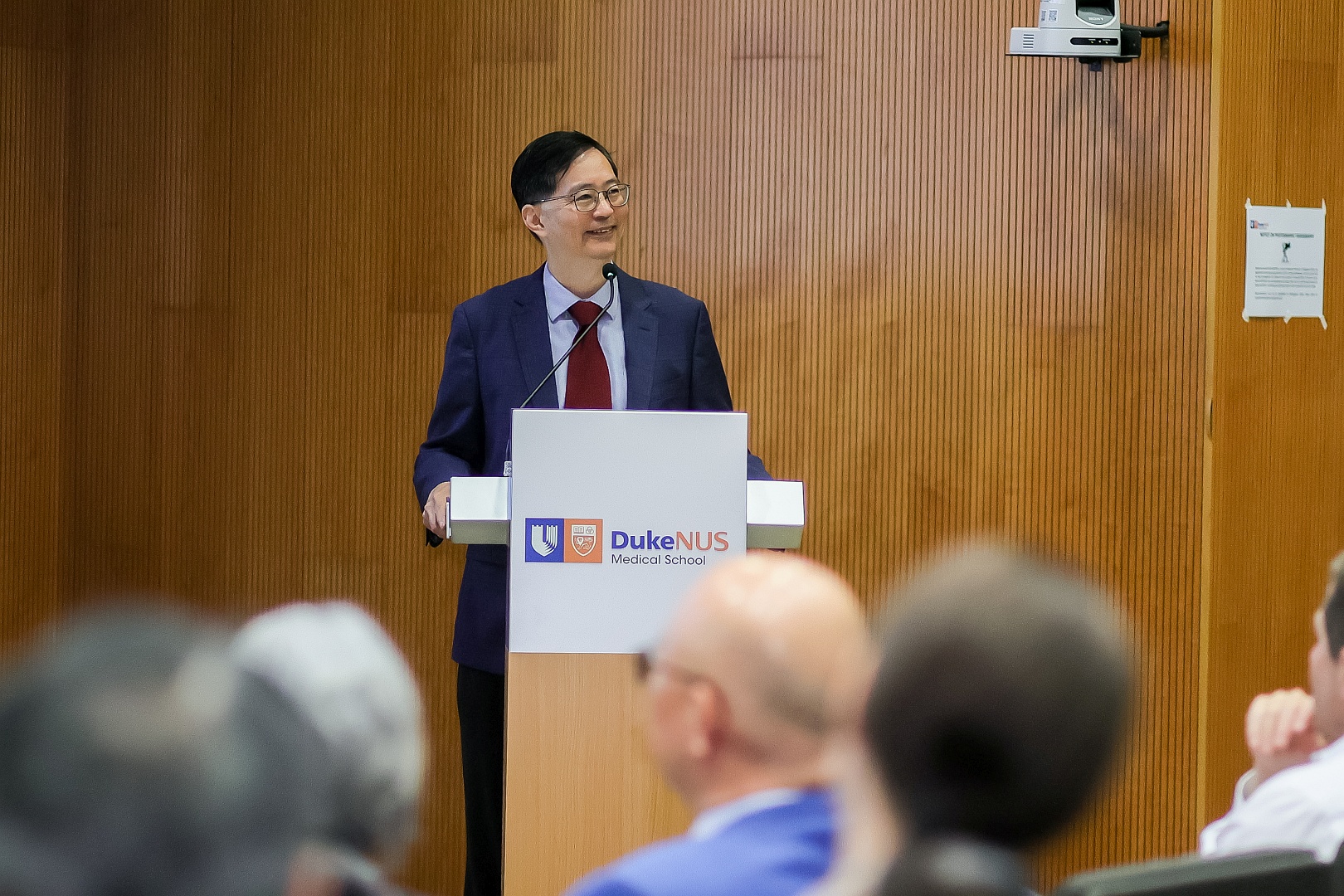
Dean Professor Patrick Tan delivers the welcome remarks
The groundwork for this experience is laid as early as in the first year of study, through initiatives such as “Research in Action”, that connect students with potential mentors from a network of 227 experts across the School and the SingHealth Duke-NUS Academic Medical Centre (AMC), in addition to courses that equip students with skills in critical thinking before they embark on this 9-month research journey.
For Ms L Krishaa (Class of 2027), the experience enabled her to collaborate with doctors around the world, in addition to experts from within the AMC.
Under Assistant Professor Troy Puar’s guidance, Ms Krishaa conducted a multinational study evaluating an alternative confirmatory test for primary aldosteronism, a disorder where the adrenal glands produce excessive hormones causing high blood pressure, and low potassium.
She was among six students who were selected from across the cohort to give an oral presentation of their research projects spanning the School’s five signature research programmes and the AMC’s 15 academic clinical programmes (ACP).
In addition to the oral presentations, there was also a poster session where the students shared key insights and findings from their research.
A snapshot of the oral presentations taking place in the LEAD room
Keynote speaker, Assistant Prof Ku Chee Wai shares his journey into research
The students also heard from keynote speaker, Duke-NUS double alumnus Assistant Professor Ku Chee Wai from KK Women’s and Children’s Hospital.
For Asst Prof Ku, it was a passion to translate his findings to clinical practice that led him to pursue his medical education and training at Duke-NUS.
Reflecting on his journey navigating the demands of clinical practice and research, Asst Prof Ku highlighted key lessons, including asking the right questions, persisting through failures and finding mentors.
“You need more than one mentor to be able to open doors for you and starting to identify with some of them early on in your career is extremely important,” he stressed.
This theme of mentorship was highlighted again during a panel discussion moderated by Professor Daniel Laskowitz, Assistant Dean for Scholarly Education at Duke University School of Medicine, and Professor Pierce Chow, Co-Chair of the Duke-NUS Research & Scholarship Committee and Academic Vice Chair of Research for the SingHealth Duke-NUS Surgery ACP.
Joining them in conversation were Asst Prof Troy; Professor Ooi Eng Eong, Associate Dean for Early Research Career Development and Associate Professor Sharon Sung, a clinical advisor for third-year students.
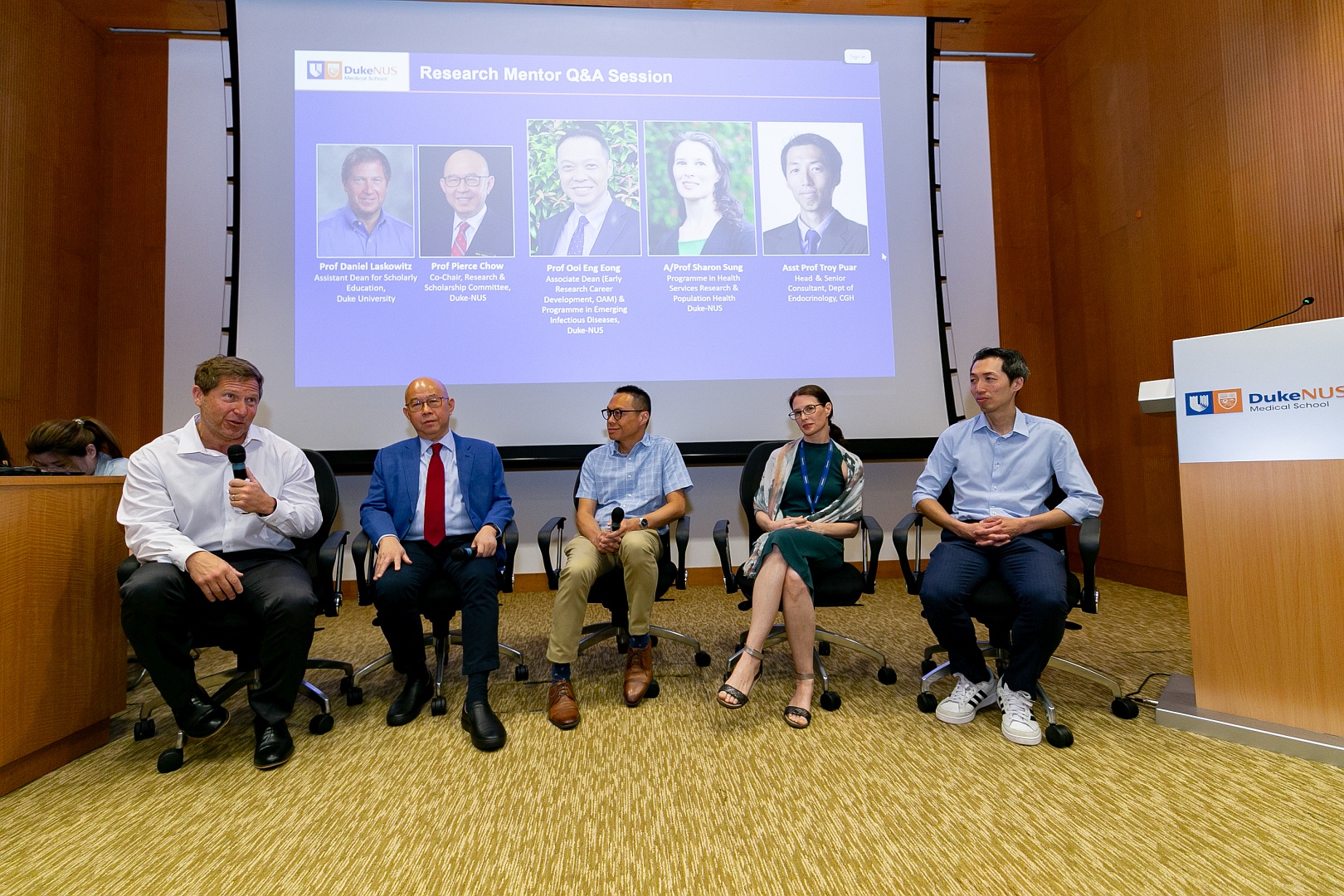
The insightful panel discussion featured from L-R: Prof Daniel Laskowitz, Prof Pierce Chow, Prof Ooi Eng Eong, Assoc Prof Sharon Sung and Asst Prof Troy Puar
The panel emphasised the importance of the mentor-mentee relationship and shared their perspectives on fostering effective mentor–mentee relationships.
“The reason that the whole academic medicine culture works, is because we have a series of mentors, faculty who have committed their lives to working with medical students, often well above and beyond the research project,” noted Prof Laskowitz.
Capping off the day’s festivities was an award ceremony for recipients of the AM-ETHOS Duke-NUS Medical Student Fellowship LEAP Awards for the Class of 2026, Outstanding Research Presentation Award and Oral Presentation Award. Beyond the student awards, the event also recognised the contributions of five mentors.
Recognising our research mentors: Prof Chow, and Prof Low Lian Heng
While Research Day marks the culmination of a nine-month journey, it is, in many ways, only a beginning. The questions explored, methods learned and collaborations formed will continue to shape how these students approach medicine in the years ahead.
As Professor Tan reflected, research is not confined to a single project or year of study, but it is a mindset that defines the future of medicine, and one that this next generation will carry forward.
In that sense, Research Day is not simply a showcase of student work. It is a reflection of what Duke-NUS seeks to build: clinicians who do not only practise medicine, but continually question, refine and advance it.
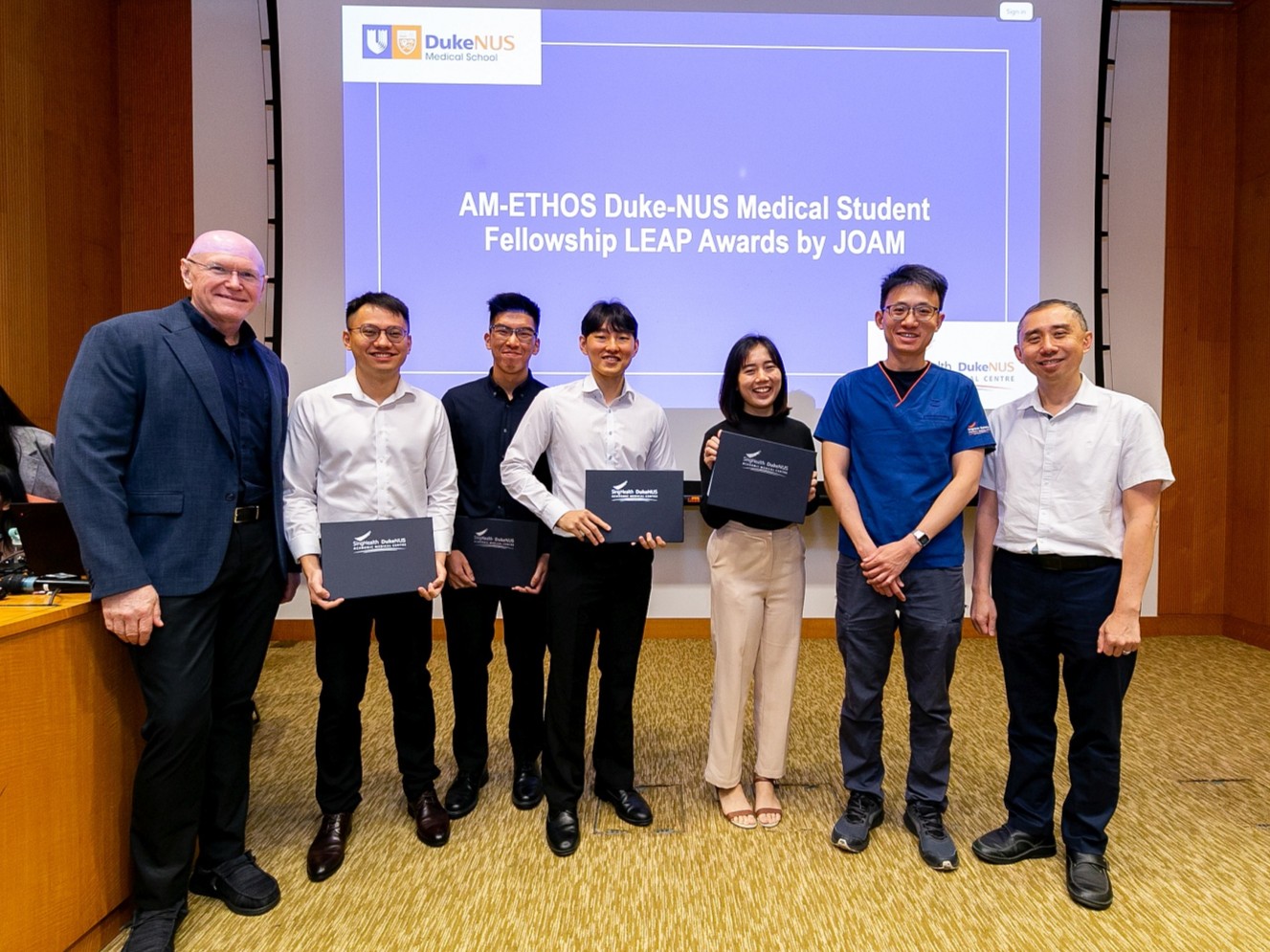
Winners of the AM-ETHOS Duke-NUS Medical Student Fellowship LEAP awards with Senior Associate Dean (Medical Education) Professor Scott Compton (first from left) and Senior Associate Dean, Associate Professor Charles Chuah from the Duke-NUS Academic Programmes Management Department (first from right)
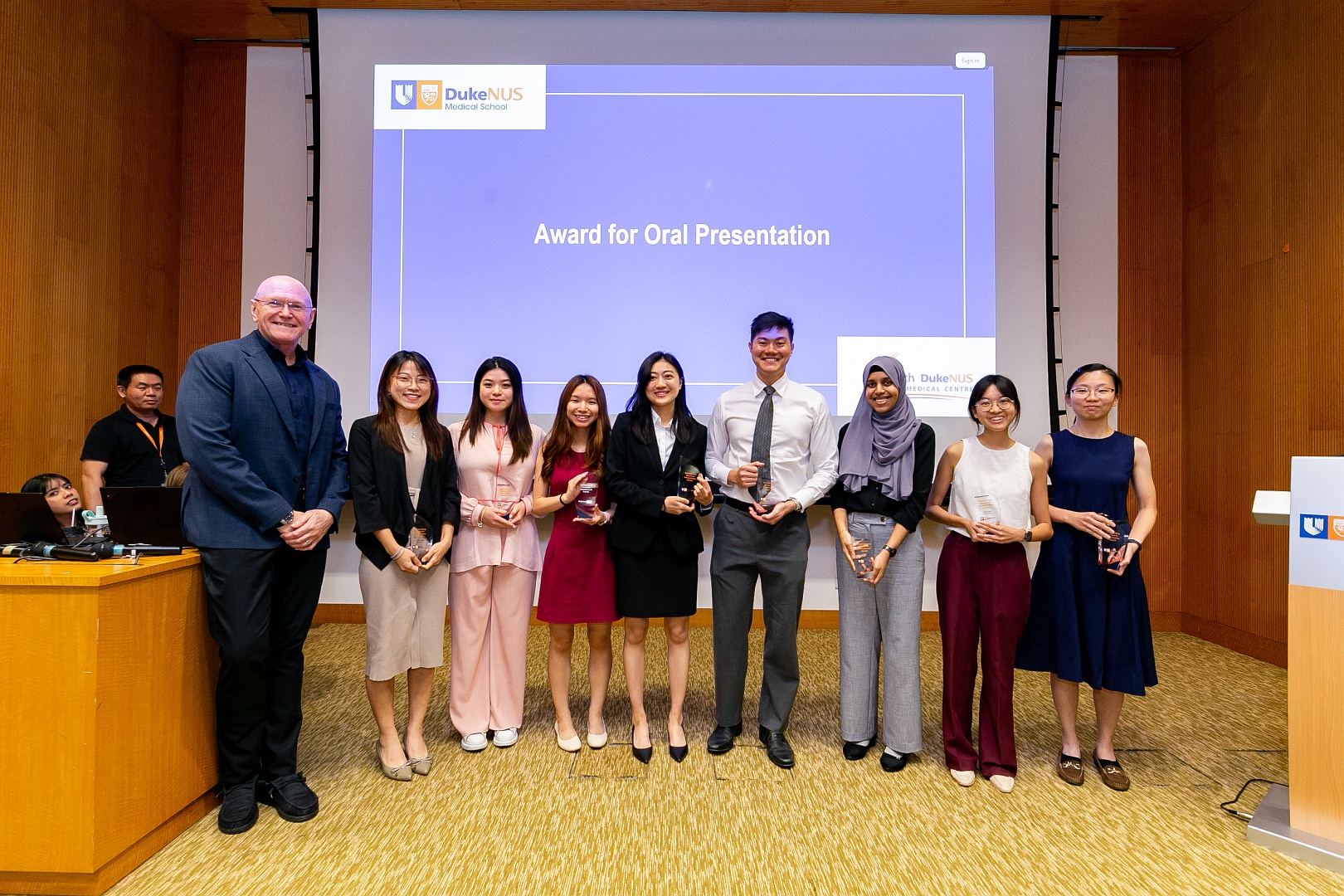
Prof Scott Compton with the winners for the Outstanding Research Presentation Award
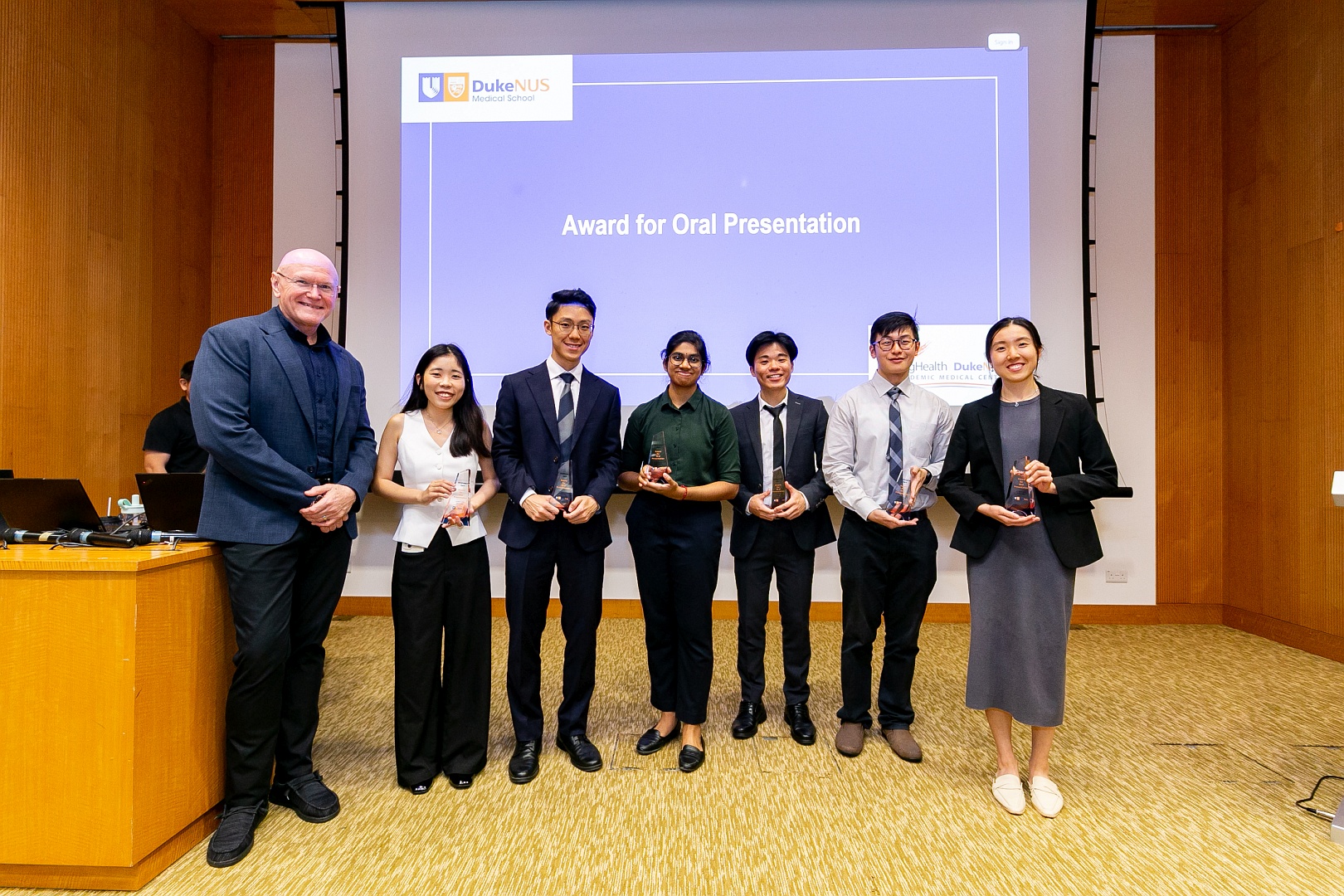
Prof Scott Compton with the winners for the oral presenters for the day
All photos in this story are copyrighted to Duke-NUS Medical School.