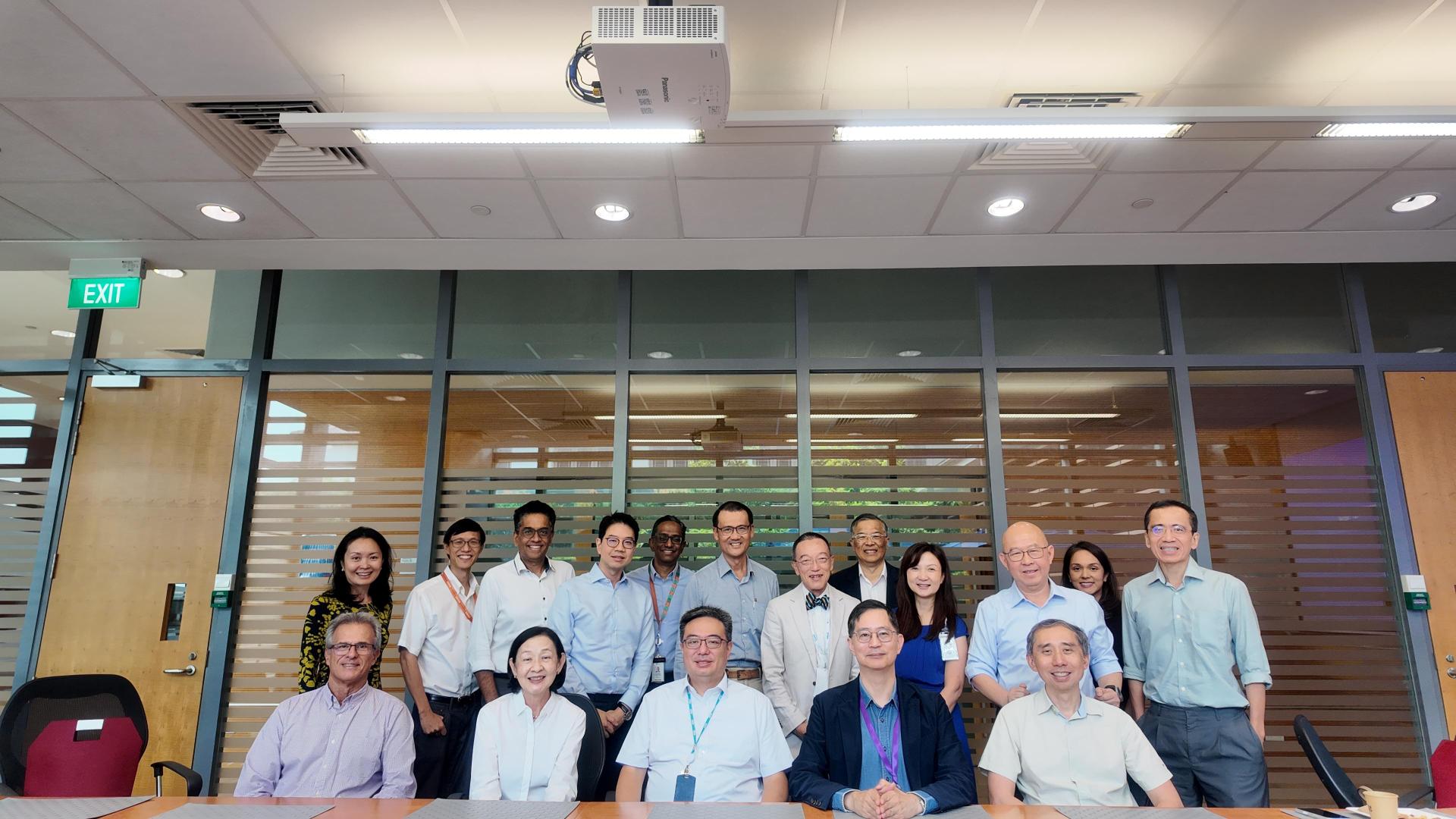
It was an afternoon devoted to recognising senior faculty and celebrating the ties that bind the academic medicine community across the SingHealth Duke-NUS Academic Medical Centre (AMC) as Duke-NUS honoured its named donor professors and tenured faculty on 16 October.
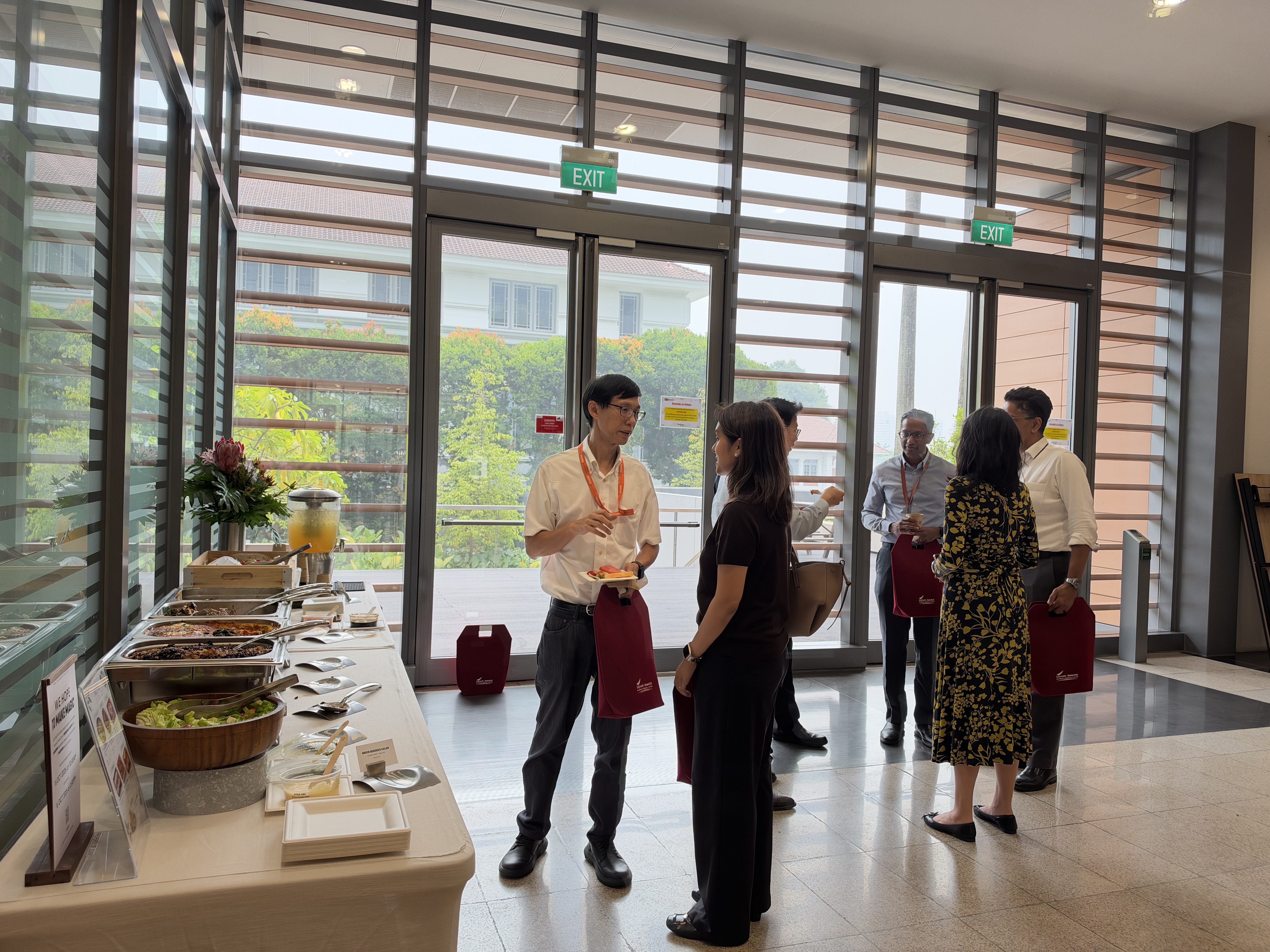
The session opened with a networking lunch, giving colleagues a chance to reconnect and exchange perspectives
Hosted by the Joint Office of Academic Medicine – Academic Programmes Management Department (JOAM–APMD), the event included a networking lunch, a briefing on the support for academic clinicians, and an open conversation with the School's leadership. The tone was deliberately informal—less a formal recognition ceremony than a chance for colleagues to exchange perspectives and reflect on how far the community has come.
Recognising excellence across the AMC
In his welcome address, Professor Julian Thumboo, Group Director of Academic Medicine at SingHealth and Senior Associate Dean of Duke-NUS’ Office of Academic Medicine called the session an important occasion "not only to connect, but also to recognise the invaluable contributions each of you make to academic medicine".
He congratulated the newly appointed named donor and faculty professors, including Professor Leung Wing Hang, Professor Derek Hausenloy, Clinical Professor Ivy Ng Swee Lian, Clinical Associate Professor Iris Rawtaer and Associate Professor Grace Yang.
He also recognised the tenure faculty in attendance, including Professor Melvin Chua, Assistant Professor Ong Hon Shing and Assistant Professor Rachel Chong.
Their appointments, he said, are "a testament to their outstanding contributions and commitment to advancing academic medicine", adding that their leadership would help shape its future.
Support at every step of the academic journey
Prof Thumboo also emphasised the importance of ensuring that faculty can focus on "what matters most”—teaching, research, mentorship, and patient care.
Associate Professor Charles Chuah Thuan Heng, Senior Associate Dean of JOAM–APMD, then went into detail of the Office's new initiatives designed to support academic clinicians at every step of their journey.
His overview spanned three broad areas: academic programmes support—including ACP and philanthropic-funded grants, medical student awards and PhD scholarships; talent development—nurturing young clinician-researchers, clinical trialists and clinician-investigators; and community-building initiatives that connect faculty across the AMC.
From an idea to a community
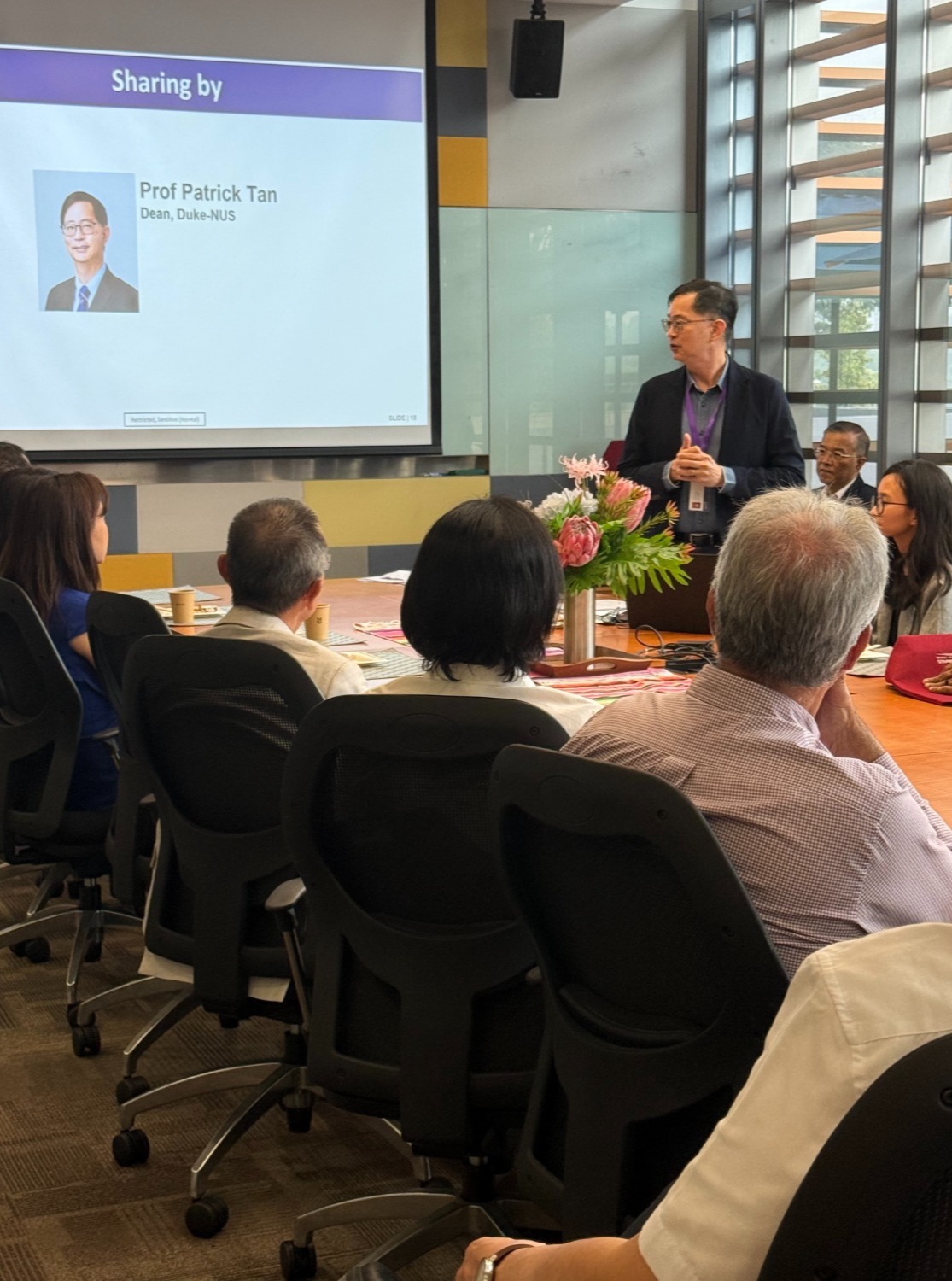
Professor Patrick Tan addressing the named donor professors and tenure faculty at the session
Dean Professor Patrick Tan tied the afternoon together by reflecting on how far academic medicine in Singapore has come. He invited guests to think back to a time before Duke-NUS existed.
While it may now feel natural that a medical school sits within a healthcare campus, he reminded the room that "none of this was inevitable". The ambition, he said, was to create “an additional capability: an environment where clinical care, research and education could strengthen one another” and “where questions arising from patients could move more readily into research and better care”.
That vision, built through a sustained partnership between Duke-NUS and SingHealth, gradually became a community.
Today, Prof Tan noted, the Academic Medical Centre (AMC) brings together thousands of clinical faculty across Academic Clinical Programmes, Disease Centres and Joint Institutes—and, more importantly, has made academic medicine “part of how many people across SingHealth think about their work”.
A path for those who follow
Turning to the faculty in the room, Prof Tan described the Named Donor Professorships and tenure as “a visible sign that this academic community has matured”.
But recognition, he added, carries an obligation. In academic medicine, reaching a professorship or a position of seniority “cannot simply be the end point. It also creates an obligation to make the path clearer for those coming behind us”—through mentoring younger faculty, opening doors, giving honest advice, and encouraging clinician-educators whose contributions are not always immediately visible.
Prof Tan also pointed to the School's efforts to support that culture, including the establishing of the Office of Faculty Affairs earlier this year, helping to make promotion pathways clearer and strengthen mentorship and career development.
"The pioneers built the foundations of this AMC," he said. "Your generation has helped it mature. Our responsibility now is to make sure the next generation can take it further."
The session closed with a lively discussion and group photographs—a fitting end to an afternoon celebrating the people who continue to strengthen the SingHealth Duke-NUS AMC.