Taking a leading role in advancing health preference research and shaping its translation into healthcare policy across Asia, Duke-NUS Medical School hosted the 17th Annual Meeting of the International Academy of Health Preference Research (IAHPR) on 5–7 October 2026, marking its Southeast Asian debut.
The three-day conference brought together methodologists, economists, regulators and policymakers, who gathered around a deceptively simple question: What do people value when they make healthcare decisions and what trade-offs are they willing to make?
The question has never been more pressing. Healthcare systems are gathering unprecedented amounts of patient preference data but translating it into policy remains a bottleneck. As Singapore confronts a rapidly ageing population and moves healthcare from hospitals into the community, aligning health systems with patient trade-offs is vital. This convergence of global talent discussed how healthcare systems cannot simply scale by expanding existing models but must evolve to align care delivery with the true priorities of the populations they serve.
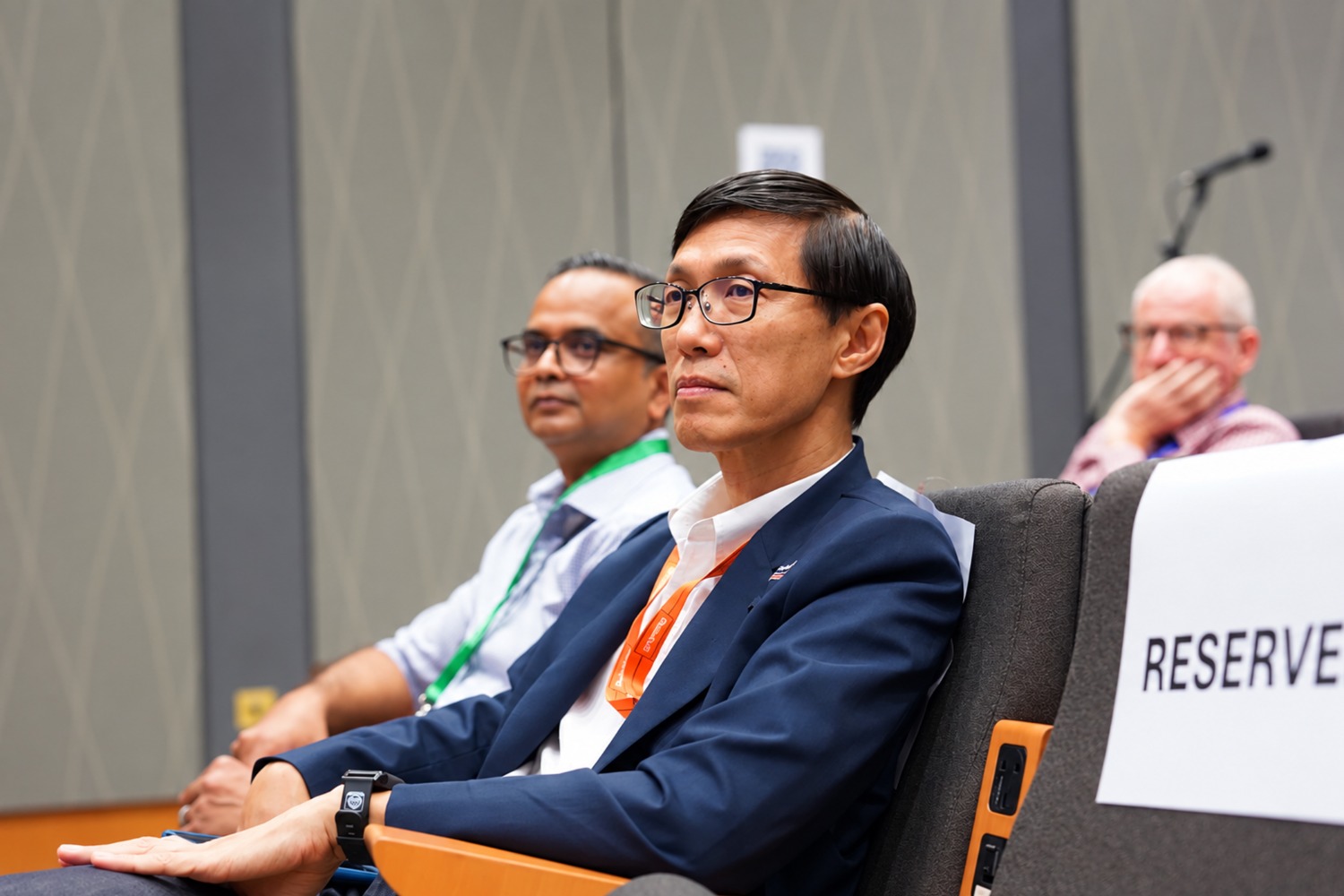
During his welcome address, Prof Marcus Ong, Director of HSRPH at Duke-NUS, highlighted the shift toward focusing on upstream healthcare services, noting that successfully scaling community care models depends on understanding what patients value
Redefining care models through patient priorities
Incorporating patient preference into healthcare policy is not a new idea. Health preference research has existed in academic and policy circles for around 80 years, but increasing pressure posed by rapidly ageing populations worldwide has quickly revealed an urgent need for a structural shift in how care is delivered.
“We have seen a big shift over the last five years towards focusing more on upstream healthcare services,” said Professor Marcus Ong, Director of the Signature Research Programme in Health Services Research and Population Health (HSRPH) at Duke-NUS. “We understand that it is not just about providing more healthcare services to meet growing demand, as the demand for healthcare will only continue to increase.”
Drawing on his experience as an emergency department physician managing 50 to 100 lodged patients waiting for beds on any given day, Prof Ong noted that expanding acute beds alone cannot solve system congestion. Instead, scaling community models — such as the Hospital-at-Home (H@H) programme, telehealth, and home-based palliative care — depends on understanding what patients value.
“This has a very key role with health preferences, with more patient-centred outcomes,” Prof Ong emphasised, “and moving away from just treating the clinical disease to actually treating people as a whole, and a population as a whole.”
One solution aimed at addressing the shortfall of hospital beds is the H@H programme, a model that delivers acute, hospital-level care directly in a home-based setting.
In fact, when care at home is designed around patients’ needs, it may not simply ease pressure on hospitals — it may be what patients prefer.
Associate Professor Sanjeewa Kularatna, a health economist with HSRPH at Duke-NUS and lead organiser of IAHPR 2026, conducted a study utilising a discrete choice experiment (DCE) to investigate how patients in the H@H programme weighed trade-offs. Assoc Prof Kularatna found that at-home care programmes can be genuinely preferred over hospital admission if they deliver standards of care comparable to that offered in hospitals and offer pathways to readmission should it be necessary. Tools like the DCE offer a structured, evidence-based map of trade-offs that matter to patients, replacing guesswork for policymakers navigating structural shifts in how care is delivered.

Dr Simon Fifer, founding partner and Director of Research at Community and Patient Preference Research (CaPPRE), delivered a keynote speech on meaningfully integrating patient preferences into real-world healthcare decision-making
Adapting global methods for Asian realities
Local initiatives like the H@H programme stand to benefit immensely from exchanging best practices with established health technology assessment bodies across Europe, Australia and the UK. Yet, applying these frameworks in Asia requires more than adopting Western templates, because choices around care settings, caregiver roles and end-of-life trade-offs are deeply shaped by regional values and cultural dynamics that do not neatly map onto Western sensibilities. This makes locally generated evidence particularly important in Asia.
Singapore is well placed to develop this evidence and translate it into practice. Through strong collaborations with SingHealth, our academic medicine partner and government ministries, Duke-NUS researchers play a leading role in understanding what matters to patients in the local context and bringing those insights into decisions about how care and health policy are designed. This creates a virtuous cycle in which global best practices can be adapted to the needs of the local population and swiftly translated into policy.
“Holding IAHPR at Duke-NUS offered us a valuable opportunity to bring together a diverse group of people doing health preference research and learn across diverse cultures and health systems,” said Professor Jason Ong, an IAHPR board member and professor at Monash University. “During the three days, we heard about the healthcare challenges facing Singapore and reinforced our shared ambition to ensure that what matters to patients informs decisions about healthcare, and that the preferences of communities across Asia help shape the future of healthcare.”
Ultimately, integrating preference-based evidence ensures healthcare reforms remain both sustainable and human-centred. By convening global expertise, Duke-NUS fosters the interdisciplinary dialogue needed to turn preference data into policy action, shifting the focus from treating individual diseases to caring for populations.
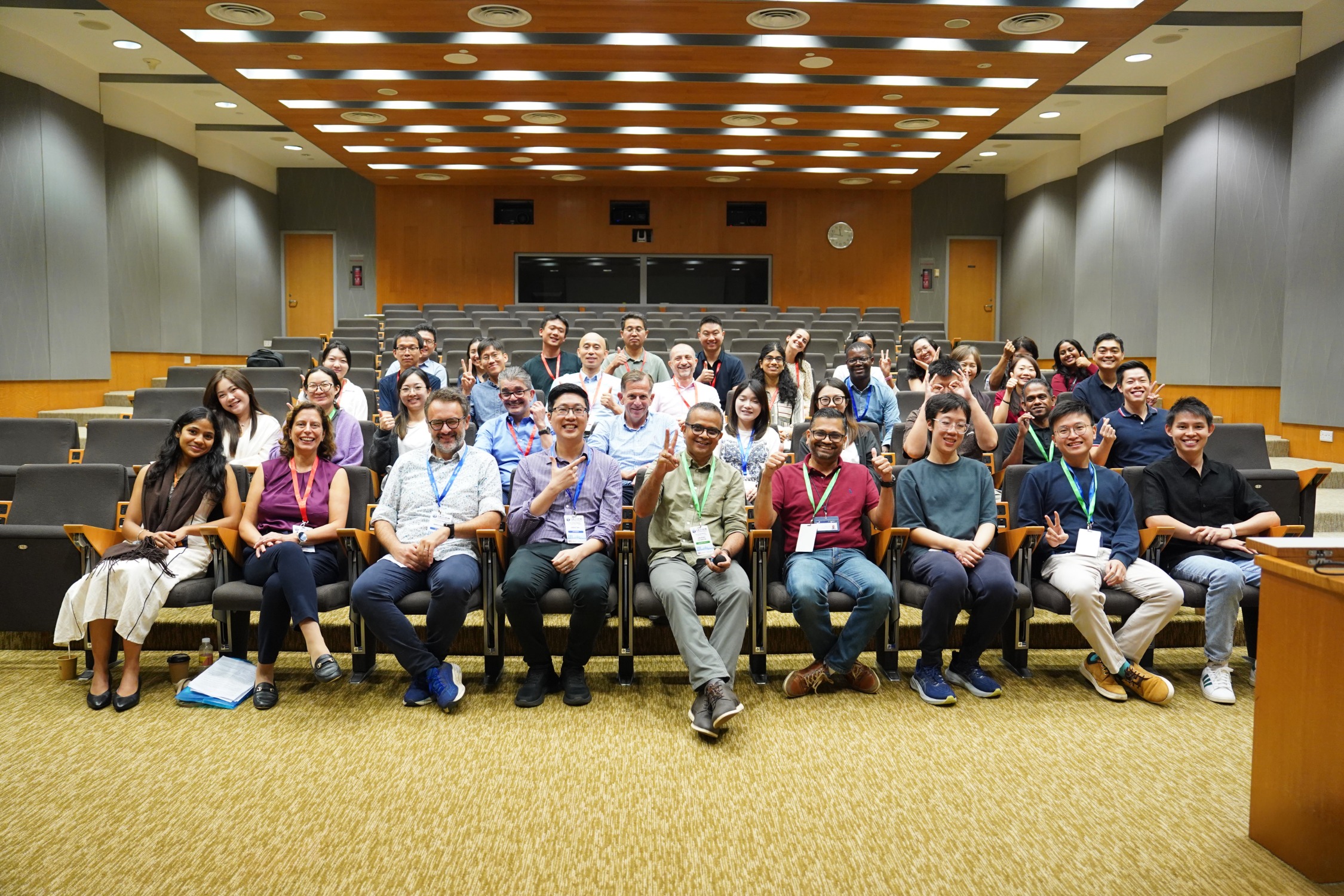
Attendees gathered for a group photo during the closing ceremony of the IAHPR 17th Annual Meeting
All photos in this story are copyrighted to Duke-NUS Medical School.