One of the most arresting images I have ever encountered is not framed on a gallery wall. It lives inside the human eye.
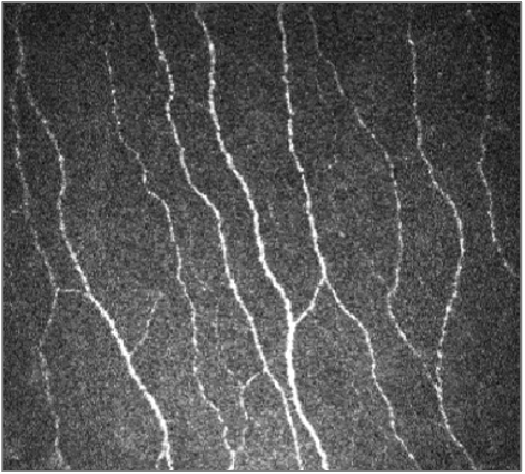 An In Vivo Confocal Microscopy image revealing high-resolution detail of corneal nerve plexus // Credit: Courtesy of Liu Yu-Chi
In 2017, while working as a clinician scientist at the Singapore National Eye Centre (SNEC), I was reviewing a series of corneal scans when I paused, unexpectedly captivated.
There, revealed in fine detail, was a delicate lattice of nerves, intricate and almost ethereal. Its quiet beauty was as compelling as any work of art.
I was using in vivo confocal microscopy, a powerful imaging technology that can magnify the eye up to 600 times and reveal the cornea structure and nerve network in extraordinary detail. Through its lens, the eye disclosed itself in a new way.
The scans were not only beautiful. They were deeply informative. Each one carried a wealth of clinical insight: different eye diseases revealed themselves through distinct patterns and presentations, while even subtle signs, such as beading or swelling, told a story about the patient’s underlying condition.
This incident was one of the reasons why I became so fascinated by corneal disease.
The cornea, a clear, protective layer at the very front of the eye, contains the highest density of nerves anywhere in the body. When this delicate network is disrupted, it can cause significant discomfort and even visual impairment.
 At Asia Dry Eye Summit in 2024 // Credit: Courtesy of Liu Yu-Chi
Increasingly, I see patients whose symptoms are linked to nerve-related problems, including pain, dryness, sensitivity to light or wind, cold sensations and persistent burning. Some patients experience ocular pain even though, on routine examination, the surface of the eye often appears entirely normal. In these cases, the source of the discomfort lies deeper within the corneal nerves themselves. This is known as neuropathic corneal pain.
Only with advances in imaging technologies have we been able to visualise this hidden network and begin exploring potential treatments for corneal nerve diseases and neuropathic pain.
Current treatment options remain limited and are often only symptomatic. Eye drops, for example, are commonly prescribed to relieve dryness and discomfort, but they do not address the underlying problem, which lies in the nerves themselves.
That gap is what drives my research. I hope to develop treatments that are not only effective, but also accessible and affordable for patients.
A major focus of my work is nerve regeneration, which is notoriously difficult. My team is exploring potential drug therapies, delivered as eye drops, that could stimulate and support the regrowth of corneal nerves.
My research in this area began in 2015 and continues to evolve. What I find most inspiring is seeing signs of nerve regeneration after treatment, a quiet but powerful indication that the therapy may be making a real difference. We have now identified several drug candidates and are planning a clinical trial.
 Graduating in 2015 from the National University of Singapore’s Master of Clinical Investigation programme // Credit: Courtesy of Liu Yu-Chi
In parallel, I also set up a global registry for neuropathic corneal pain to deepen our understanding of this condition. To date, it has brought together more than 61 collaborators across over 18 countries, spanning the United States, Europe and Asia. Contributors share detailed patient data, from imaging scans to symptoms and treatment outcomes. By pooling these insights, we can begin to identify patterns, uncover potential biomarkers and explore new therapeutic approaches.
We aim to use the information from the registry for earlier diagnosis, improved disease monitoring, and more precise risk stratification.
Such exciting developments are also why I was drawn to the field of ophthalmology in the first place.
The fine, delicate and exacting nature of microsurgery in ophthalmology—precise and minimally invasive—also felt far more suited to me.
I never expected that my journey would eventually bring me to Singapore, where I would go on to study and treat eye conditions.
I am from Taiwan and completed my Ophthalmology and corneal specialist training in 2012. In 2013, I undertook an international fellowship at the Singapore Eye Research Institute, and in 2015, I completed a Master of Clinical Investigation at the National University of Singapore, while continuing my research work.
 Among the first batch of students to graduate from Duke-NUS’ PhD programme in Clinical Sciences in 2022 // Credit: Courtesy of Liu Yu-Chi
I had always intended to pursue a PhD after my Master’s. So when the senior leadership recommended a new programme designed specifically for clinician-scientists, I did not hesitate to join the inaugural intake of Duke-NUS’ PhD programme in Clinical Sciences. As they put it, since I was already doing research, I might as well build on the data and results through a formal degree.
It was especially encouraging that, in the same year I graduated, I was also awarded the Clinician Scientist Award from the National Medical Research Council in 2022.
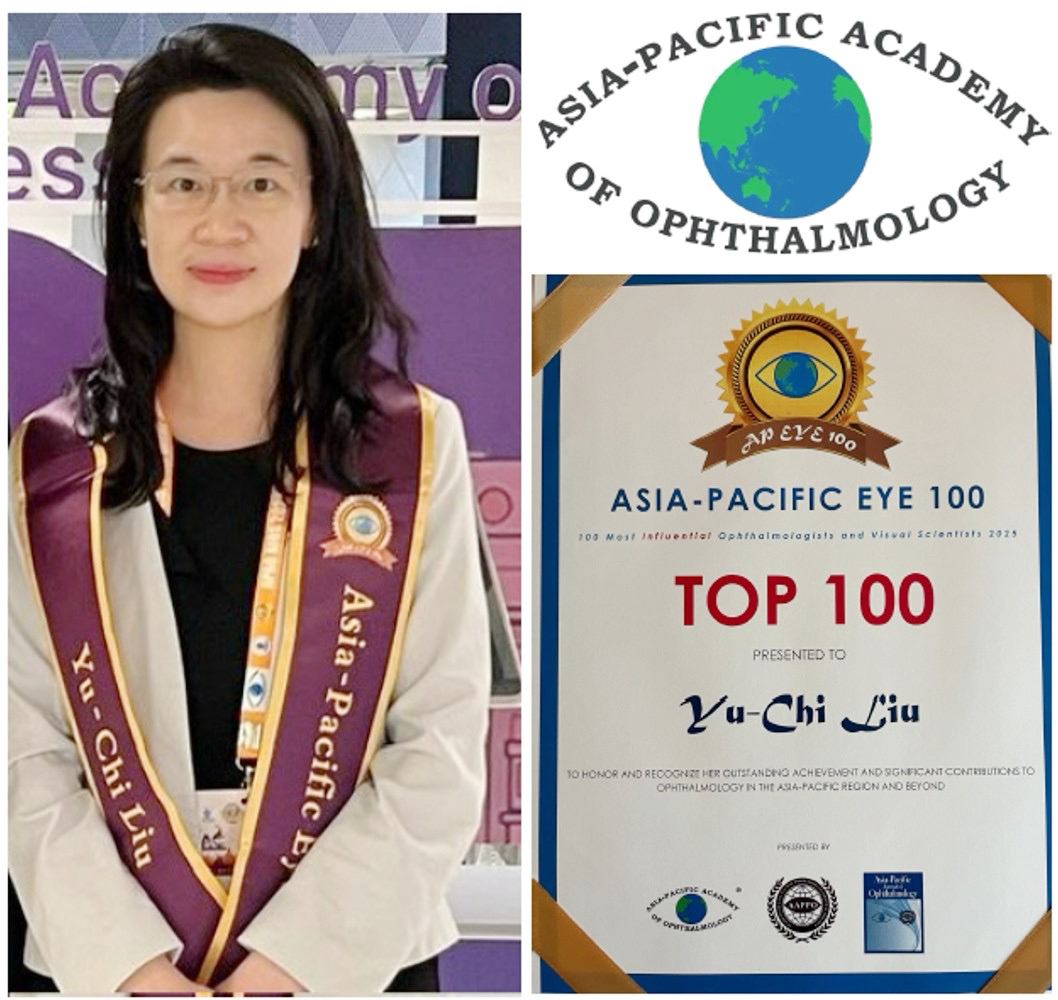 Humbled and honoured to be in the Asia Pacific Eye 100 list, which recognises those who make significant contributions to Ophthalmology in the Asia-Pacific region // Credit: Courtesy of Liu Yu-Chi
Since then, I have continued to sustain my research through grants and competitive funding applications. Last year, I was awarded the Clinician Scientist-Individual Research Grant by the National Medical Research Council, and I remain grateful for the opportunity to continue this work.
The journey, however, has not always been smooth.
While I do have protected time for research, clinical responsibilities still need to be carefully managed alongside it. There is no perfect balance. Instead, it requires constant prioritisation and a clear plan that is structured, yet flexible.
For example, I try to carve out time between research sessions to handle administrative work, such as replying to emails and attending meetings. At times, when I need uninterrupted focus for reviewing mentees’ papers or preparing grant applications, I adjust my schedule accordingly.
Even so, I continue to place great value on my clinical sessions and my interactions with patients. Speaking with them directly allows me to hear first-hand about their experiences and perspectives.
Ultimately, patients are the driving force behind my research. My goal is always to translate the findings back to clinical practice in ways that benefit them.
I am also grateful for the support of my institution and peers, which keeps me grounded and resilient. Without that support, it can be easy to feel distracted or discouraged.