In late January 2026, the Ngee Ann Kongsi Auditorium welcomed neither keynote speakers nor symposium attendees, but movie lovers instead.
Over two evenings, the inaugural Singapore Global Health Film Festival 2026 brought together a diverse audience ranging from clinicians to students, policymakers to researchers came together to share the popcorn and reflect on two powerful documentary films: Unseen Enemy and 2040 exploring outbreak preparedness, climate change and the future of planetary health.
Confronting the Unseen Enemy
The first evening opened with Unseen Enemy, a 2017 documentary by Emmy-winning director Janet Tobias that pulls back the curtain on the terrifying reality that the next pandemic is already on the way.
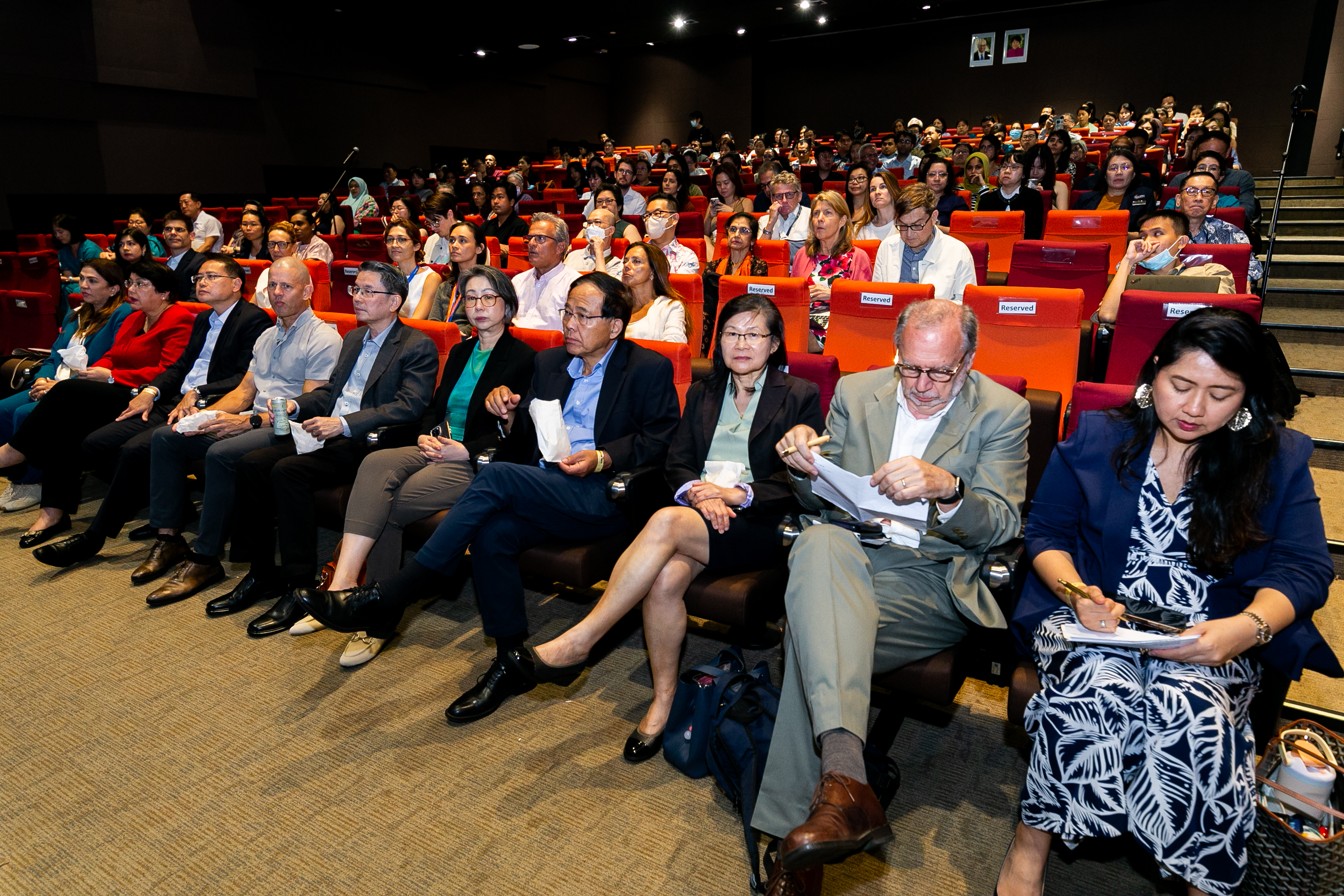
Day 1 at the inaugural Singapore Global Health Film FestivalOrbiting around the stories of those whose lives have been affected by Ebola, Zika and Influenza, the film argues that conditions in the 21st century and in our interconnected world have created a perfect storm for disease emergence. From a mother in Brazil learning to cope with raising a child with microcephaly to a Liberian doctor struggling to treat Ebola victims amid social stigma and unrest, the human stories reminded viewers of the complexities of managing epidemics and treating patients.
Imagining 2040
If the first evening sounded a warning, the second extended an invitation—to envision a hopeful future together.
2040, a 2019 film by Australian filmmaker Damon Gameau, is something of a visual letter to the director’s four-year-old daughter Velvet. Combining documentary footage with dramatised sequences and visual effects in what the director calls “fact-based dreaming”, the film presents a viable and sustainable future built on environmental solutions that exist today. Rather than focusing on the doom and gloom surrounding the climate emergency, 2040 invites us to start acting boldly today for a brighter, healthier future.
Discussing Global Health
Each of the films was followed by a panel discussion that considered the themes of the films in the broader regional and global contexts.
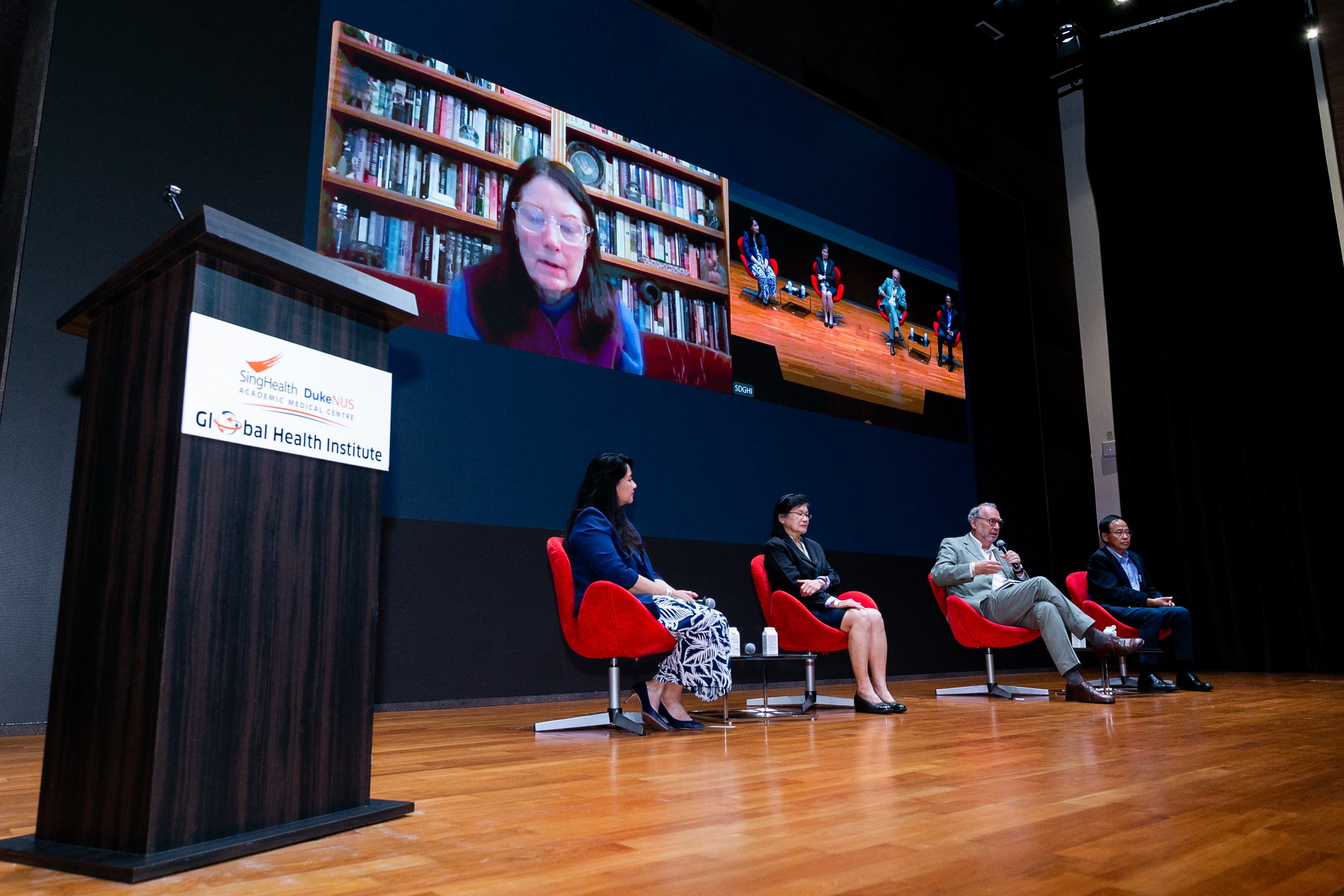 Panel discussion on the first day of the Film Fest
The first evening’s conversation on outbreak preparedness brought together a distinguished group of leaders in the field of infectious diseases, including Professor Leo Yee Sin, Senior Consultant, National Centre for Infectious Diseases (NCID); Dr N Erlyani Abd Hamid, Head of Strategy, Planning & PR Hilleman Laboratories; Professor Peter Piot, former Director, London School of Hygiene & Tropical Medicine; and Professor Wang Linfa of the Signature Research Programme in Emerging Infectious Diseases at Duke-NUS.
Together, they grappled with urgent questions: How can a global hub like Singapore defend itself against the next pandemic? Is Asia ready for what’s coming? Have we learnt the lessons of COVID-19? It was an enriching conversation between global health leaders such as Prof Piot, who remarked: “We also enjoyed the event and I was moved to watch the film again after many years. Great job to raise awareness for global health!”
The second evening shifted the focus to climate and planetary health, featuring a panel that bridged research, global policy, and sustainability practice. Mr Andrea Bruni, Regional Advisor Mental Health South-East Asia World Health Organisation was joined by Dr Jo‑Anne Yeo, Clinical Sustainability Lead, Changi General Hospital (CGH), Singapore; Muskaan Khepla, Research Associate, Planetary Health Programme – SingHealth Duke-NUS Global Health Institute; and Ms Sumi Dhanarajan, Managing Director, Asia, Forum for the Future.
This post-film panel discussed how climate action is health action, and even reflected on the intersection between mental health and climate change—reminding us that the ecological crisis is not only a physical but psychological as well.
Bruni reflected on the occasion, saying: “I thank you for the exciting opportunity to be part of such a great initiative and contribute raising awareness on mental health and climate change.”
Conversations and Connections
Conversations continued to unfold after the screenings in the foyer, moving easily between science and systems, between climate and community, between risk and responsibility.
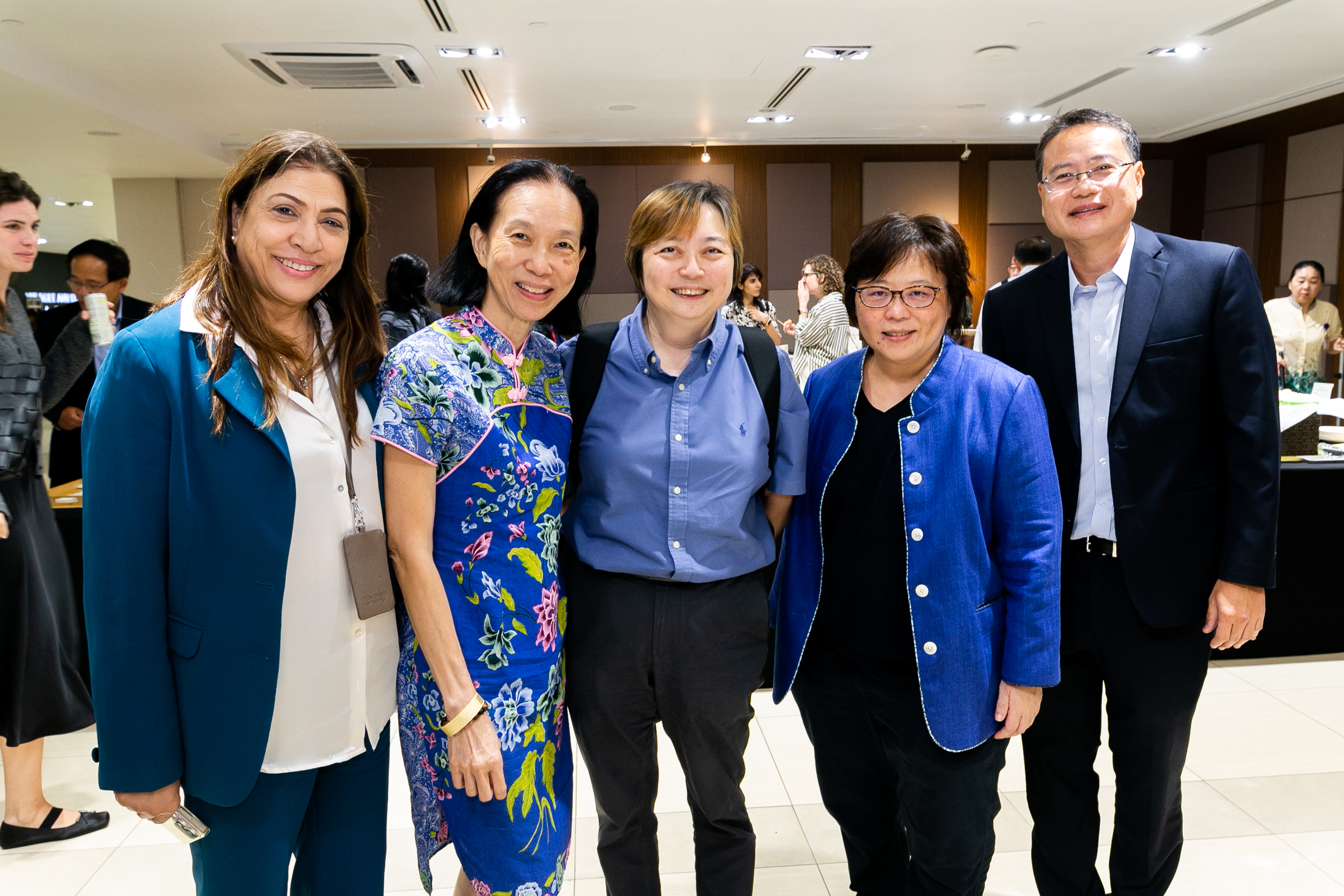
SingHealth representatives, including Director of International Collaboration Vijaya Rao (far left), Asian HEAL Lead Professor Ong Biauw Chi (second from left) and Group CEO Professor Ng Wai Hoe (right)Antoine Monod, Associate Director, Head of Sustainability Practice (Asia), Positive Impact (Global), attended the Film Festival and remarked that: “I thoroughly enjoyed and gained valuable insights from the Singapore Global Health Film Festival 2026. The film selection, panel discussions, and the people I met underscored the importance of preparedness, the convergence with climate change, and the key role of clear communication. A truly impactful experience and I look forward to next year’s festival.”
When we create space for thoughtful engagement, people lean in.
A Convenor for Global Health
The Film Fest was made possible through the work of the SingHealth Duke-NUS Global Health Institute (SDGHI), acting not only as implementers of programmes or partners in research but as convenors, inciting dialogue and discussion, conversation and connection.
The Singapore Global Health Film Festival was never intended to be a one-off event. It is part of a broader vision: to cultivate a vibrant global health community in Singapore and across Asia, and inspire greater participation in the work ahead.
These two evenings showed us that when stories move hearts, mindsets shift, and in time, systems follow.
We look forward to building the next edition—together.