Chan Kuan Rong is a happy man. You can hear it in the lift of his voice and see it in the smile he carries into conversation. It does not take long to sense that he genuinely enjoys what he does.
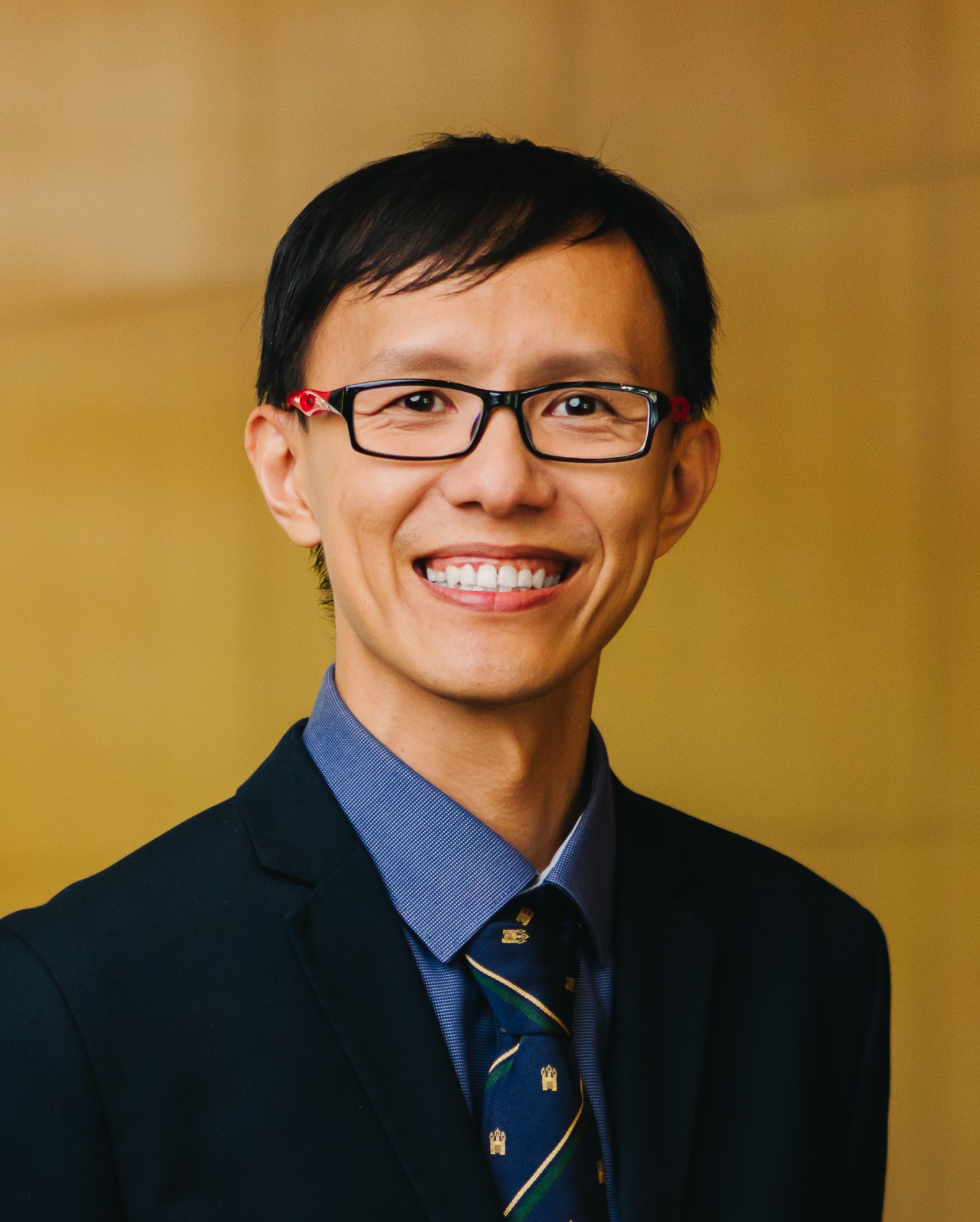 DENVI faculty member Dr Chan Kuan Rong is Senior Principal Research Scientist in the Signature Research Programme in Emerging Infectious Diseases at Duke-NUS
As Senior Principal Research Scientist at Duke-NUS Medical School, Chan is one of six faculty members in DENVI, the School’s Dengue Virology & Immunology group, alongside about 25 other members. Together, they bring an unusually broad mix of expertise to one of the world’s most stubborn infectious diseases: basic science, experimental medicine and clinical trials, and computational biology, all working along the same translational pipeline.
That breadth matters, because dengue is not a problem that yields easily.
The weight of the problem
As DENVI’s bioinformatics lead, Chan describes a major part of his work as trying to discern the signal from the noise. He is building up a data pipeline that allows the group to make sense of a multifaceted problem through many streams of information, from viral genomes and host transcriptomics to diagnostic biomarkers and population data. In a way, the work mirrors dengue itself: vast, layered and too complex to pin down.
When speaking about dengue, DENVI faculty member Dr Eugenia Ong, Principal Research Scientist at ViREMiCS (the ISO-accredited Viral Research and Experimental Medicine Centre at the SingHealth Duke-NUS Academic Medical Centre), returns to one word: “burden”. With up to 400 million new infections each year, dengue affects an enormous number of people worldwide, with outcomes ranging from the asymptomatic to the severe.
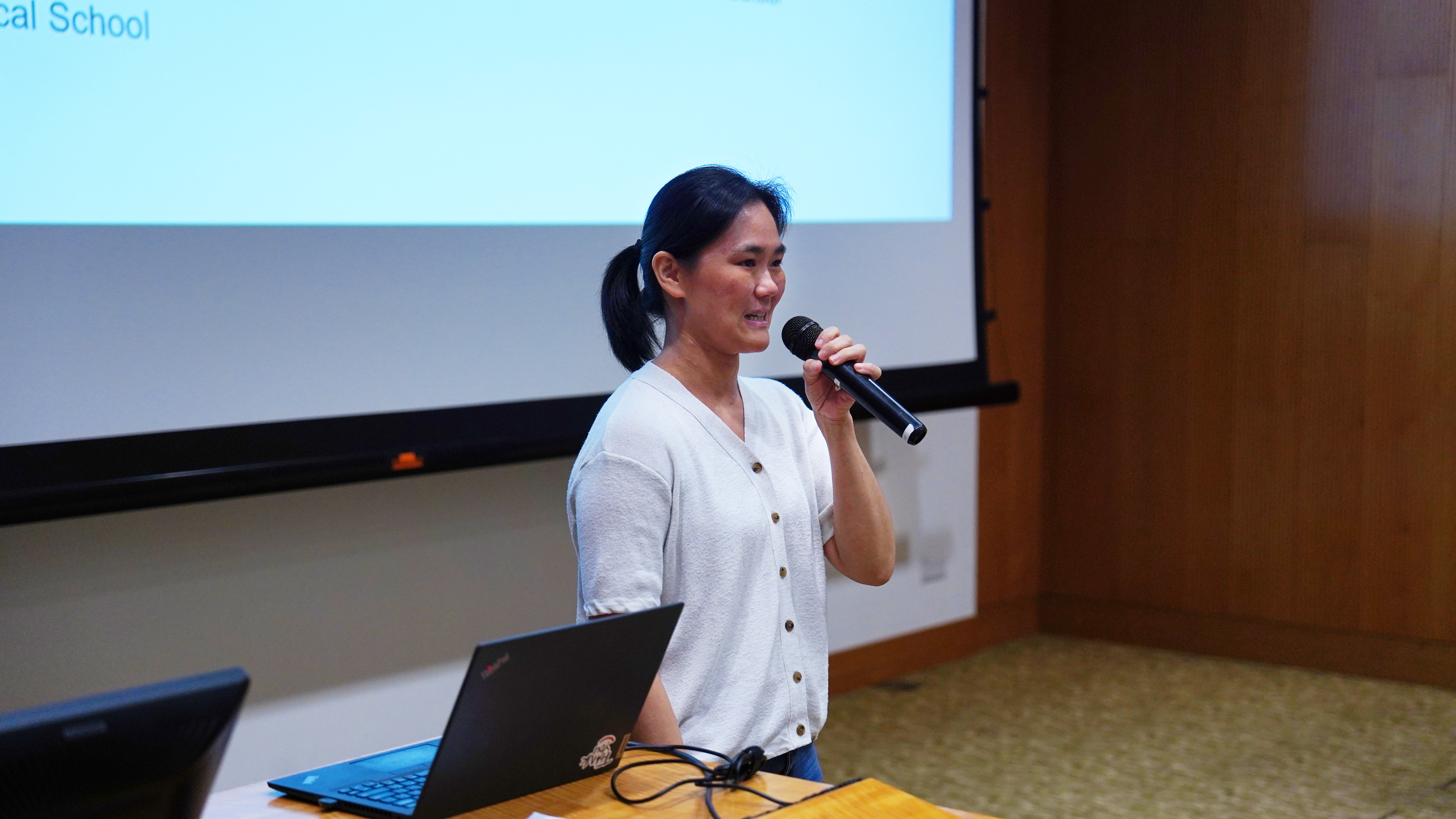 Dr Eugenia Ong, Principal Research Scientist, Signature Research Programme in Emerging Infectious Diseases, is one of DENVI's six faculty members
Its complexity goes well beyond scale. Dengue is commonly described as having four serotypes, but that shorthand can obscure how different they really are. As Professor Ooi Eng Eong of Duke-NUS explains, “We didn't have that kind of sequencing tools that we have today, but now that we know the sequences, we know that these are genetically four different viruses.”
That matters not just biologically, but clinically and immunologically too. The body responds differently to infection for each dengue virus, and vaccine design becomes far more complicated when one vaccine has to target what is effectively four distinct viral threats.
Even that is only part of the challenge. Climate change is expanding dengue’s geographic reach into more temperate and high-altitude regions across the world. At the same time, the demographics of the disease are also shifting. While typically affecting young adults and adolescents disproportionately, the incidence of dengue in older age groups has also increased, leading to complications from severe dengue in elderly patients.
Speak to enough members of DENVI and a simple truth becomes obvious: no single person has the tools, time or the resources to tackle dengue in its entirety. Explaining the group’s efforts in the greater context of dengue, Ong remarks: “When we think about vaccines and antivirals—a lot of it converges on understanding how immune responses work, understanding how inflammation works. These are all intricately interdependent concepts. When we think about vaccination, we think about allowing the body to generate a good immune response and so on. The group is trying to work out how all these mechanisms interact.”
Why DENVI matters
Big healthcare issues demand big solutions, and DENVI has the full package: basic virology, molecular biology, clinical trials, vaccine research, therapeutic possibilities, and bioinformatics. As faculty member Shirin Kalimuddin, Assistant Professor in the SingHealth Duke-NUS Medicine Academic Clinical Programme, describes: “We have the breadth of expertise within the group to potentially bring something from the bench all the way into the clinic.” Not only does this ensure the right combination of scientific knowhow, it also creates translational pathways for the research to reach the real world. DENVI also includes senior consultant infectious diseases physicians Professor Jenny Low and Dr Candice Chan from the Singapore General Hospital, who match the basic science with their clinical understanding.
Training clinician-scientists is one of the defining features of education at Duke-NUS, and collectively, the DENVI group builds on the same mindset. Ooi explains that while they might work in the same broad field of medicine, scientists and clinicians in fact are crucially dissimilar, with different priorities and different approaches to understanding the same data or medical issues—almost as if they were speaking two languages. Bridging this divide is one of the core strengths of this group.
Such collaboration is at the heart of DENVI. Members of the group describe it as coming together organically—they have worked together for many years, after all. It begs the question of what the purpose of formalising the group is. As Kalimuddin explains, one of the primary reasons for doing so is to have an outward-facing identity and make it easier for potential external collaborators to explore partnerships.
Furthermore, while a very young group formally speaking—with their first retreat taking place in February 2026 and the website launched in March 2026—their many years of working together has allowed them to work on research across long threads.
This has also meant a familiarity with each other stretching back for—in some cases—two decades. To be able to tap this familiarity and mutual understanding of each other’s area of expertise and working style lends the group a crucial agility. As Chan Kuan Rong describes, DENVI can respond quickly to new information and adapt to evolving circumstances. In the field of infectious diseases, the ability to respond rapidly to an outbreak is invaluable.
Telling the story
As he elaborates on both the origins of the group and its purpose, Ooi talks about science in the terms of journeys. He mentions how he could not have predicted the directions his scientific research would have taken 10 years ago, explaining how he could not have foreseen his early work on immunology in Japanese encephalitis and yellow fever leading him to research on dengue immunity.
"Having this group allows us to tell this story that cannot be told by just one person."
Prof Ooi Eng Eong
Similarly, it is the work of Professor Antonio Bertoletti’s lab at Duke-NUS in understanding the role of T-cells in the body’s immune response that paved the way for faculty members such as Kalimuddin in understanding the human body’s immune response to dengue.
It is their individual and collective journeys that have led them to this moment, placing them in a position to tackle such pressing questions in healthcare. It is also their shared journey that they are embarking on now to grapple with dengue in its various complexities.
In this sense, another compelling reason for formalising the group is that it makes this story of medical research and scientific inquiry legible. As Ooi says: “Having this group allows us to tell this story that cannot be told by just one person. At the end of the day, we want to be able to take all these things together and assemble it into a more cohesive picture.”