Past Issues

Go
About the masthead: The connected paths of discovery at Duke-NUS: linking research, education, care and partnership [AI-generated image] — read more here

Brian Chan: The road ahead to neurosurgery

Dr Brian Chan (Duke-NUS MD Class of 2017) reflects on the life-or-death decisions, persistence and humility that shaped his unconventional path into neurosurgery.

By Dr Brian Chan (MD Class of 2017, Duke-NUS Medical School); Year 2 Resident, Singapore Integrated Programme (SGIP) for Neurosurgery.

“Surgery demands focus, but humility keeps me steady. There’s no room for ego in the operating theatre—mistakes can affect the patient and their family for life.” – Dr Brian Chan // Credit: Duke-NUS Medical School

He arrived at the Accident & Emergency department barely breathing, his head soaked in blood.


Renowned neurosurgeon Prof Eduardo Ribas (middle) from Brazil was in Singapore for a course and took the opportunity to visit the neurosurgery department of Khoo Teck Puat Hospital // Photo credit: Brian Chan

Only minutes earlier, the man in his twenties had been making his daily motorcycle commute across the Causeway from Malaysia into Singapore, when he got into a serious traffic accident.

By the time he reached the hospital, a severe brain bleed had pushed him into a coma. I feared he would not survive.

As the neurosurgery registrar on duty at Khoo Teck Puat Hospital, the decision fell onto me. I had only seconds to assess him and recommend the best course of action.

He needed surgery immediately, but we could not reach his family in Malaysia for consent. With the risk increasing by the minute, we were on the brink of proceeding with the surgery when, at the last possible moment, we finally got through.

What followed was a four-hour operation to remove half his skull bone on one side to clear the blood clot, and then replacing the bone flap.

The stakes were immense, with the life and future of someone so young hanging in the balance.

Yet, against the odds, he pulled through. Within weeks, he was discharged and walked out of the hospital. Months later, at a follow-up appointment, I was deeply reassured to find him doing well, with no lasting side effects.

That was in 2024, and I had been a staff physician at the hospital for three years. 

 
Dinner with other residents to celebrate the lasting friendships and cherished memories from our Singapore General Hospital posting // Photo credit: Brian Chan

Dinner with other residents to celebrate the lasting friendships and cherished memories from our Singapore General Hospital posting // Photo credit: Brian Cha


Why the brain?

I’ve always been fascinated by the brain. To me, it’s one of the last frontiers in medicine. Of all the different organ systems and diseases, we still know relatively little about the brain.

Neurosurgery is also a uniquely challenging specialty, requiring doctors to be multi-disciplinary. We need to have knowledge and skills in areas such as critical care, radiology and neurology.

We are also working in the crucible of identity—a catastrophic brain condition can rob someone of who they are in a heartbeat.

Despite my passion, my path to specialisation was convoluted and unconventional.

After graduating from Duke-NUS Medical School in 2017, I tried for six years to get into the specialist training programme for neurosurgery. Six years of asking myself the hard questions: How badly did I want to be in this specialty? Should I settle for something else? 

Ultimately, I decided to keep trying.

I continued working as a staff physician in Khoo Teck Puat Hospital’s neurosurgery department. Over three years, I gained invaluable experience.

Then, an opportunity came. I applied and was accepted to do specialist training in the Singapore Integrated Programme (SGIP) for Neurosurgery. The residency comprises a six-year training programme under centres like the National Neuroscience Institute and National University Health Systems. And I’m now in my second year of the programme.


January 2025 Chinese New Year lo hei celebrations with the neurosurgery team at Khoo Teck Puat Hospital // Photo credit: Brian Chan

During my residency at Singapore General Hospital, I also visited my teachers and old friends across the road at Duke-NUS // Photo credit: Brian Chan

During my residency at Singapore General Hospital, I also visited my teachers and old friends across the road at Duke-NUS // Photo credit: Brian Chan
Reconnecting and recharging over supper after our A&E night shift // Photo credit: Brian Chan


Grabbing a coffee with co-residents before night duty at Singapore General Hospital when I started residency in July 2025 // Photo credit: Brian Chan

It hasn’t been the easiest path. Most of my friends who graduated at the same time had already completed their specialisation training while I still felt stuck in time.

But a delayed path is not necessarily a closed one. Sometimes, a different door opens onto the same calling.

Here I am today, doing what I’ve always wanted to do, with the privilege of serving some of our most vulnerable and critically ill patients daily.
 

Beyond the operating theatre

I’ve also had the opportunity to be involved in a couple of research projects.

One of the studies I’m most excited about is the placement of an artificial bone construct in the skull after surgery to help patients improve their quality of life and function.

We have just obtained ethics and funding approval and are looking forward to recruiting our first participants.

Managing clinical work, training and research is a heavy load, but I remind myself to stay grounded and hold fast to humility.

Surgery demands focus, but humility keeps me steady. There’s no room for ego in the operating theatre—mistakes can affect the patient and their family for life. Excellence is the goal, but self-awareness is essential. If you’re tired, inexperienced, or uncertain, asking for help isn’t weakness—it’s responsibility.

In the end, it’s never about pride; it’s about a patient’s life and well-being.
 

Finding balance
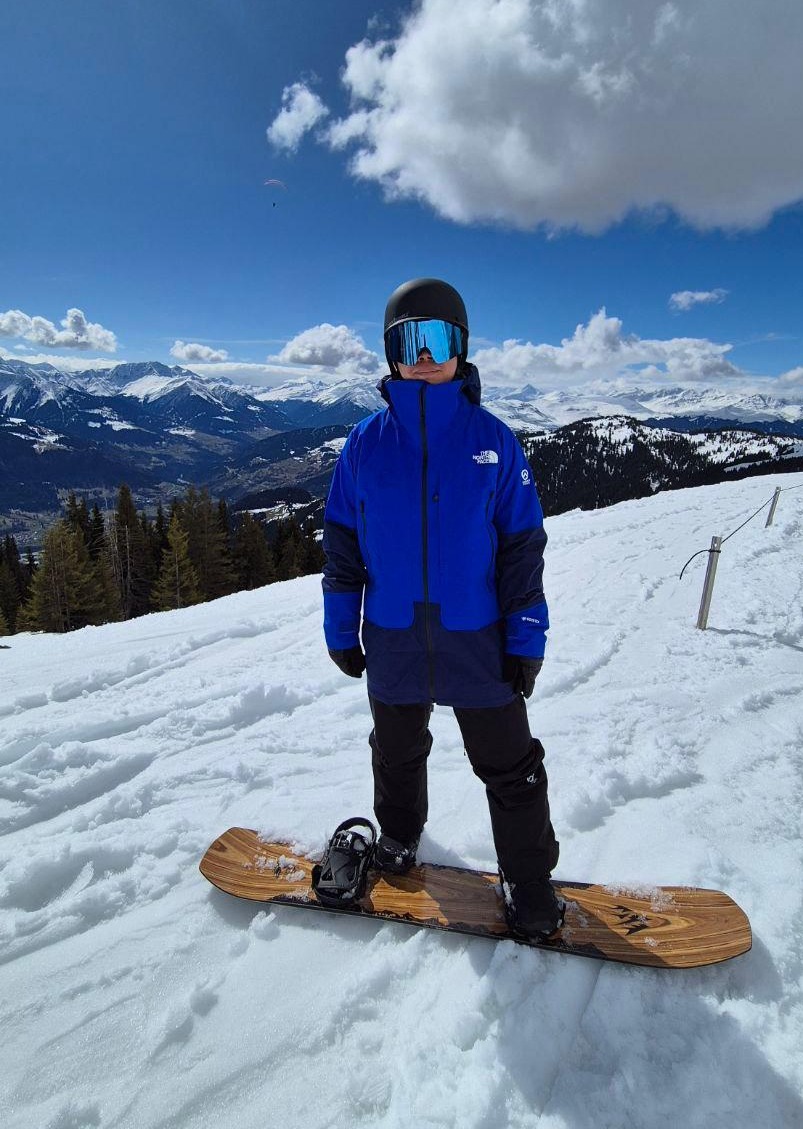

Snowboarding in Switzerland in March 2025: mountains and me // Photo credit: Brian Chan

To aspiring doctors: take that first step. Don’t be afraid to seize an opportunity—it may never come by again.

Even though it’s easy to be overwhelmed by the demands of the job, I try and set aside time for myself.

I’m an avid snowboarder. It’s one of my favourite things to do—I’ve never been sad while snowboarding. 

My most recent ski trip was in January when I went with a few friends to Japan, to the northern outskirts where there’s more open space and fewer crowds.

These moments on the mountains help me de-stress and stay focused on the long path ahead.

While life in medicine is challenging, it is also profoundly rewarding. I hope to be able to inspire others and care for patients with the same dedication and compassion that have guided me throughout my journey.


As told to Alice Chia, Senior Media & Content Specialist

Get the latest news and features delivered to your inbox.

Browser not supported

Modern websites need modern browsers

To enjoy the full experience, please upgrade your browser

Try this browser