Visit shows how connections across people, disciplines and institutions are shaping medical education, research and innovation in Singapore.
SINGAPORE, 26 NOVEMBER 2026 – Nearly two decades after being closely involved in Duke-NUS Medical School’s early journey, President Tharman Shanmugaratnam returned to the School to learn how Duke-NUS is harnessing its connections across Singapore, the region and the world to train future doctors, advance biomedical discovery and tackle increasingly complex health challenges.
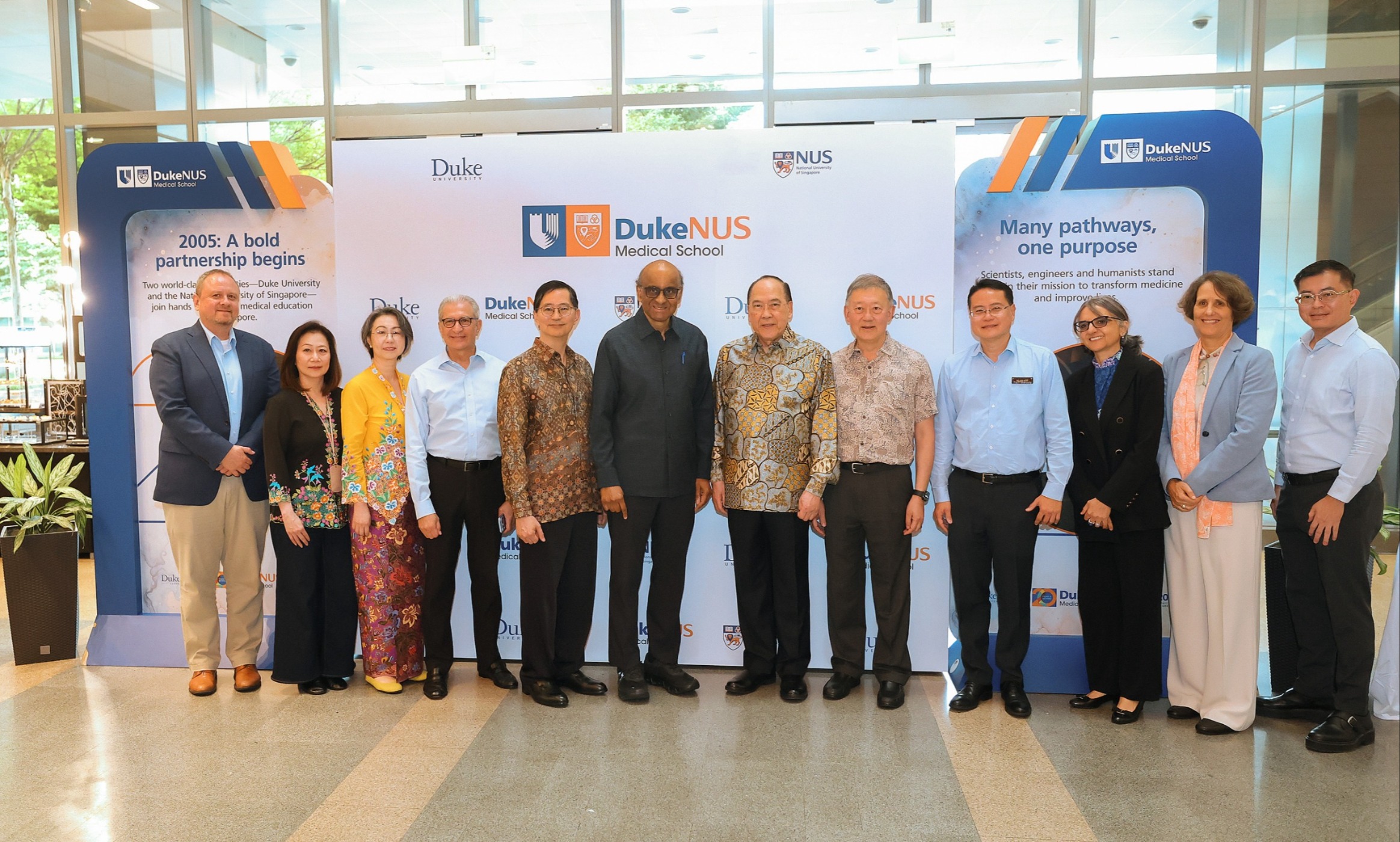
President Tharman Shanmugaratnam with leaders from the SingHealth Duke-NUS Academic Medical Centre. // Photo credit: Ministry of Digital Development and Information
Partnership has been central to Duke-NUS from the start. Established in 2005 by Duke University and the National University of Singapore (NUS), the School was designed to complement Singapore’s undergraduate medical schools by bringing graduates from diverse academic and professional backgrounds into medicine, strengthening biomedical research and building stronger links between scientific discovery and clinical impact.
Today, Duke-NUS has produced more than 1,100 graduates and developed an ecosystem spanning NUS, the SingHealth Duke-NUS Academic Medical Centre, industry and international partners.
During his visit on 25 November 2026, President Tharman met students and alumni, heard how a discovery originating at Duke-NUS has progressed towards clinical development, and visited laboratories working on cardiovascular and neurological diseases.
Different perspectives into medicine
Among the students President Tharman met was Riccia Lim, from the MD Class of 2028, who studied Architecture and Sustainable Design at the Singapore University of Technology and Design before pursuing medicine. Her work with the design team for Eastern General Hospital sparked an interest in how the built environment can influence health and healthy ageing.
He also met student Kole Utzinger, who studied biology and global health before entering medical school, as well as alumni Dr Olivia Tan, a cardiologist who previously worked in management consulting and private equity, and Dr Ku Chee Wai, a reproductive medicine specialist and clinician-scientist.
Their different paths reflect a central idea behind Duke-NUS’ graduate-entry model: that people who bring different experiences and perspectives into medicine can add to Singapore’s healthcare system in different ways, as clinicians, researchers, educators, innovators and leaders.
From a different question to a potential treatment
President Tharman also heard how research at Duke-NUS can move from scientific discovery towards potential clinical impact.
One example was research by Professor Stuart Cook, Assistant Professor Anissa Widjaja and their colleagues on interleukin-11, or IL-11. When their experimental findings did not fit the accepted understanding of IL-11, the team pursued a different question. Their work contributed to the development of BI 765423, an investigational anti-IL-11 antibody that entered Phase IIa clinical trials in January 2026 for idiopathic pulmonary fibrosis.
The project illustrates a broader approach at Duke-NUS: connecting fundamental science with clinical expertise, innovation capabilities and industry partners to move promising discoveries closer to patients.
The School’s innovation activities have so far generated 352 patent filings, 75 executed licences and 21 active spin-off companies.
From the beating heart to the brain
President Tharman later saw some of the School’s research up close.
In Professor Wang Yibin’s laboratory, he viewed live human cardiac cells beating under a microscope while learning about research into cardiovascular and metabolic disease. He then visited the laboratories of Professor Wang Hongyan and Associate Professor Hyunsoo Shawn Je, where researchers demonstrated mini-brain organoids and live neuronal activity used to study neurological and neurodevelopmental conditions.
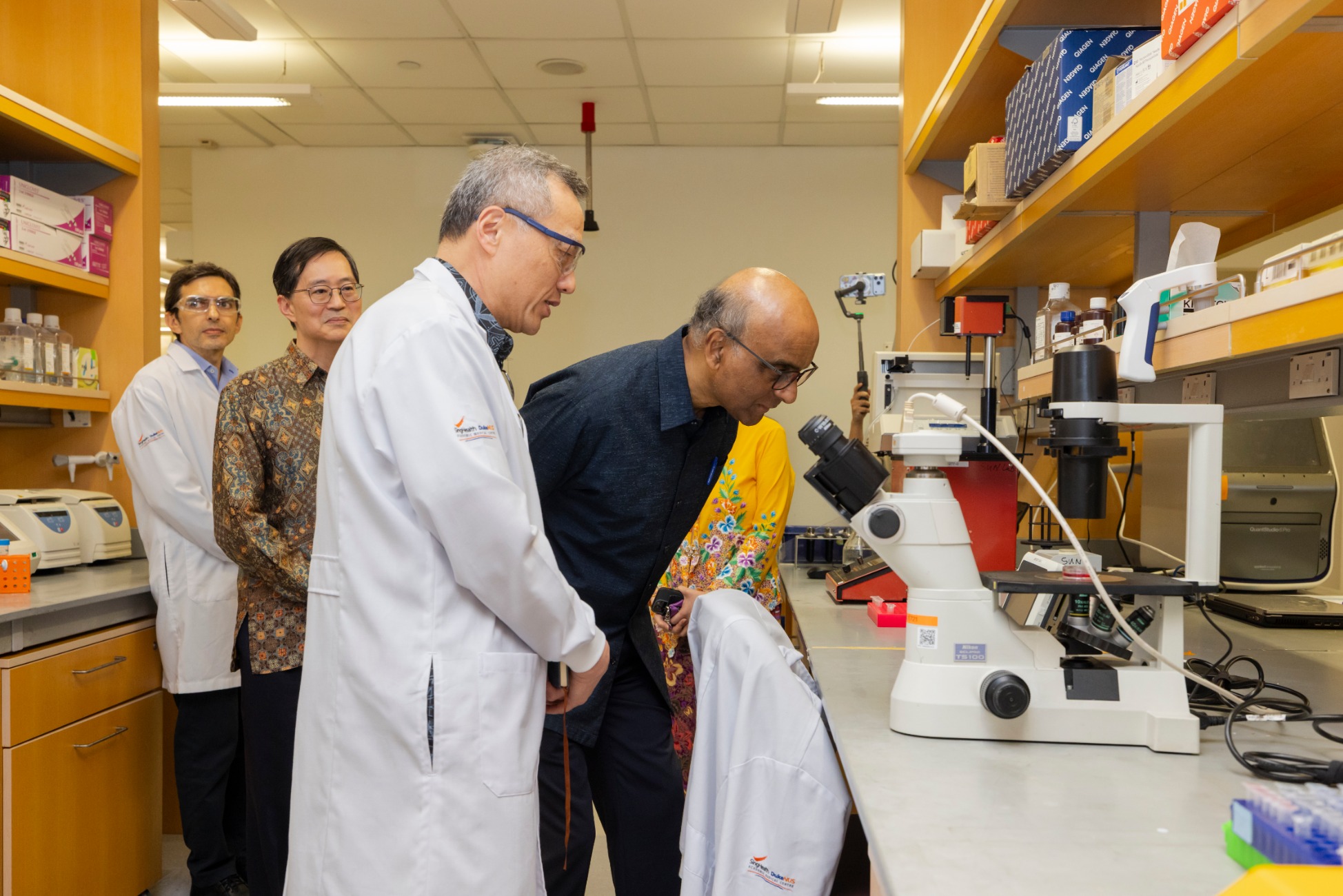
President Tharman Shanmugaratnam is invited to observe live, beating cardiac cells under the microscope. // Photo credit: Duke-NUS Medical School
Professor Patrick Tan, Dean of Duke-NUS Medical School, said: “President Tharman was with us in Duke-NUS’ early journey, so it is especially meaningful to welcome him back nearly 20 years later.
“Duke-NUS was created to bring something different to Singapore’s medical and biomedical landscape: different pathways into medicine, a strong emphasis on research and discovery, and deep connections across universities, healthcare and industry.
“What matters now is that we continue to use those strengths where Singapore needs them most, whether in preparing future doctors, advancing discoveries towards better treatments or bringing together the people and capabilities needed to tackle increasingly complex health challenges.”
Duke-NUS’ partnership model today extends across the SingHealth Duke-NUS Academic Medical Centre, NUS and international partners, connecting medical education, research and clinical care.
As Singapore’s health needs evolve, the School is expanding its work in areas including healthy longevity, AI-enabled medicine, precision health and regional health security.
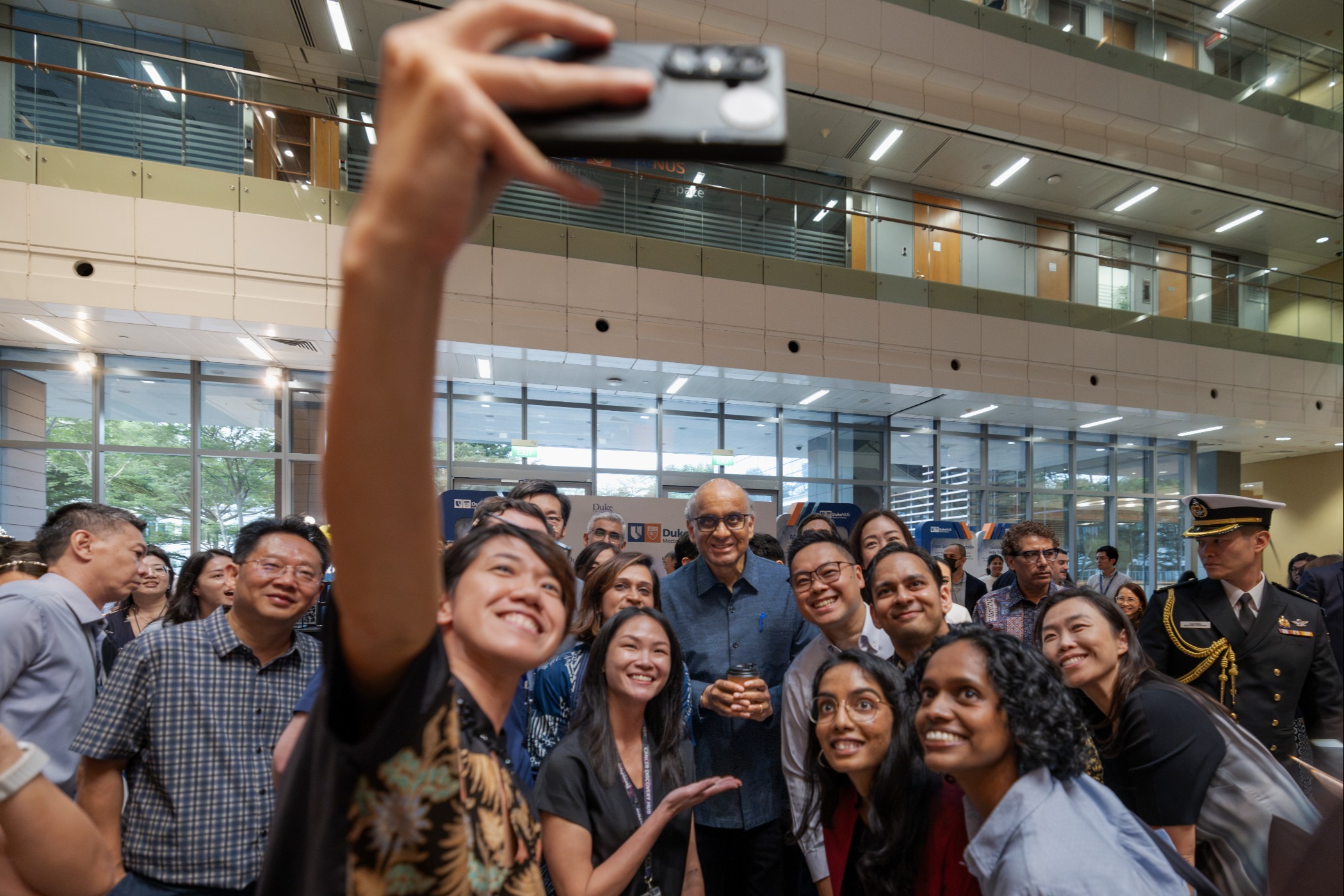
President Tharman Shanmugaratnam takes a selfie with Duke-NUS faculty, students, alumni and staff. // Photo credit: Duke-NUS Medical School
For media enquiries, please contact Duke-NUS Communications.