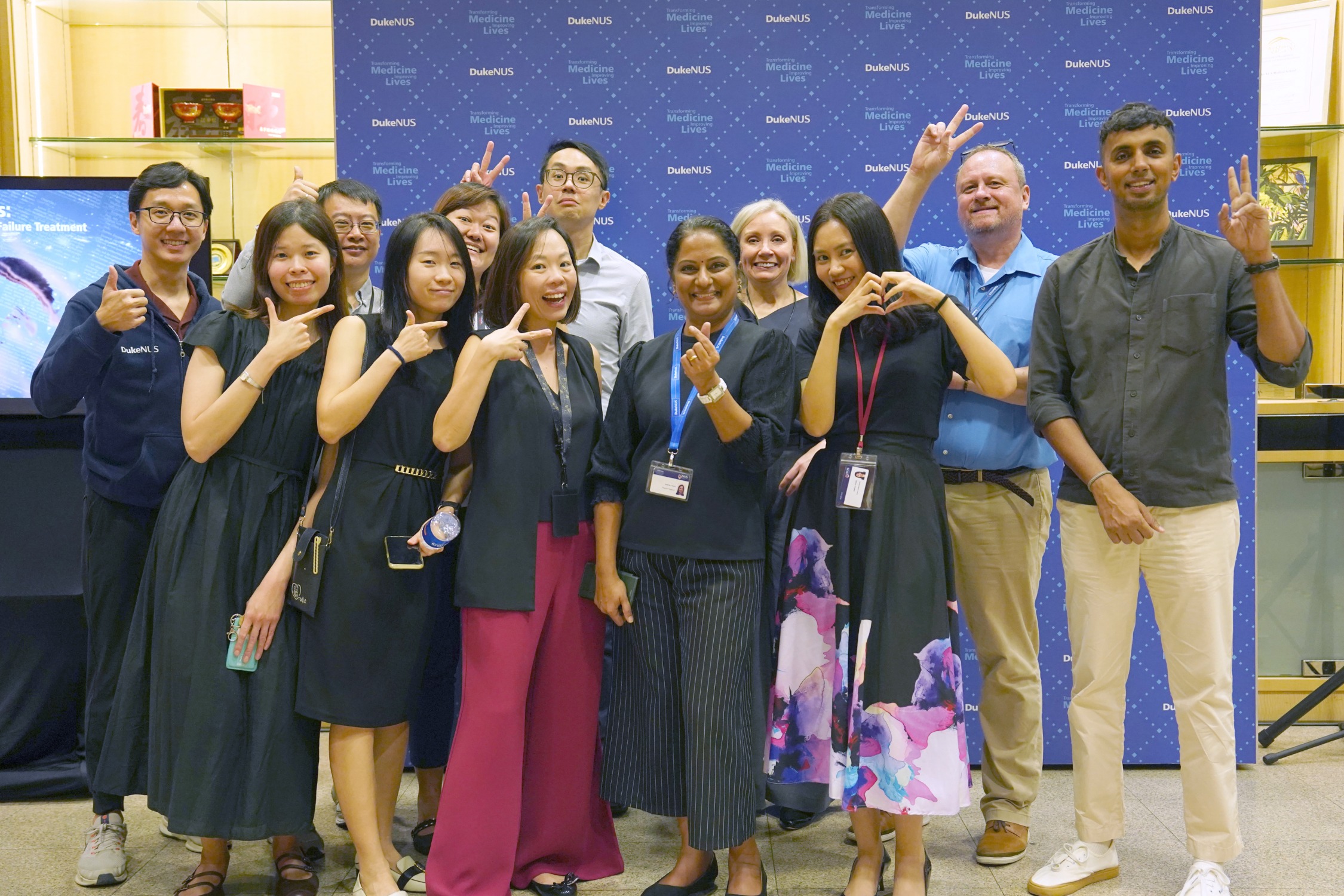
Team OIE gathers for a group photo to mark this milestone in the Office’s next chapter of innovation
What does 20 years of advancing medicine through innovation look like?
At the launch of Duke-NUS’ first Office of Innovation & Entrepreneurship (OIE) Impact Review, the answer was clear: people partnerships and a shared willingness to move promising ideas beyond the lab.
Held before a 70-strong audience of researchers, industry partners, investors, entrepreneurs and leaders from across the public, private and innovation sectors, the event marked both a milestone for OIE and the beginning of its next chapter.
People and partnerships as catalysts for innovation
In his welcome remarks, Dean Professor Patrick Tan emphasised the importance of this broad mix of stakeholders while acknowledging their collective efforts in moving promising discoveries beyond the laboratory.
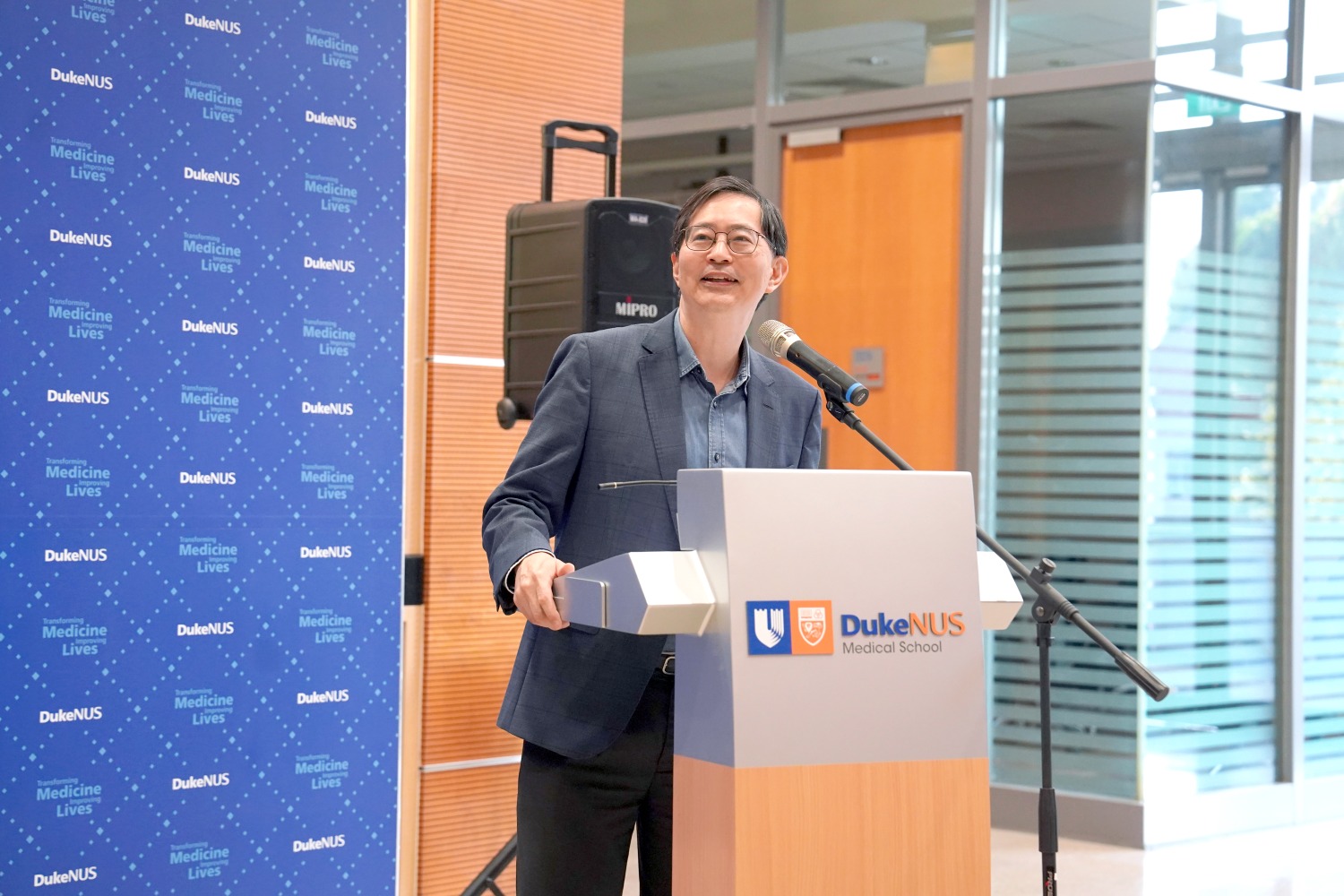
In his welcome remarks, Dean Professor Patrick Tan elaborates on Duke-NUS’ unique design as a catalyst for innovation
Pointing to Duke-NUS’ unique design as a catalyst for innovation, he added: “We are deliberately small, research-intensive and deeply connected to our partners. These qualities allow us to move quickly, bring different disciplines together and test ideas that can subsequently be adopted more widely.”
Next, Dr Lewis Hong, Vice President, Discovery Research and Site Head Singapore, Paratus Sciences, highlighted Paratus’ partnership with Duke-NUS as an example of how innovation is built on meaningful partnerships.
The partnership which began in 2023 was based on research into bat immunology arising from Professor Wang Linfa’s lab at the Duke-NUS Emerging Infectious Diseases Programme.
It has since led to the development of PS-1001—a potent, long-acting inflammasome inhibitor designed to tackle a wide range of chronic inflammatory diseases—that will be advancing towards a first-in-human trial in 2027, said Dr Hong.
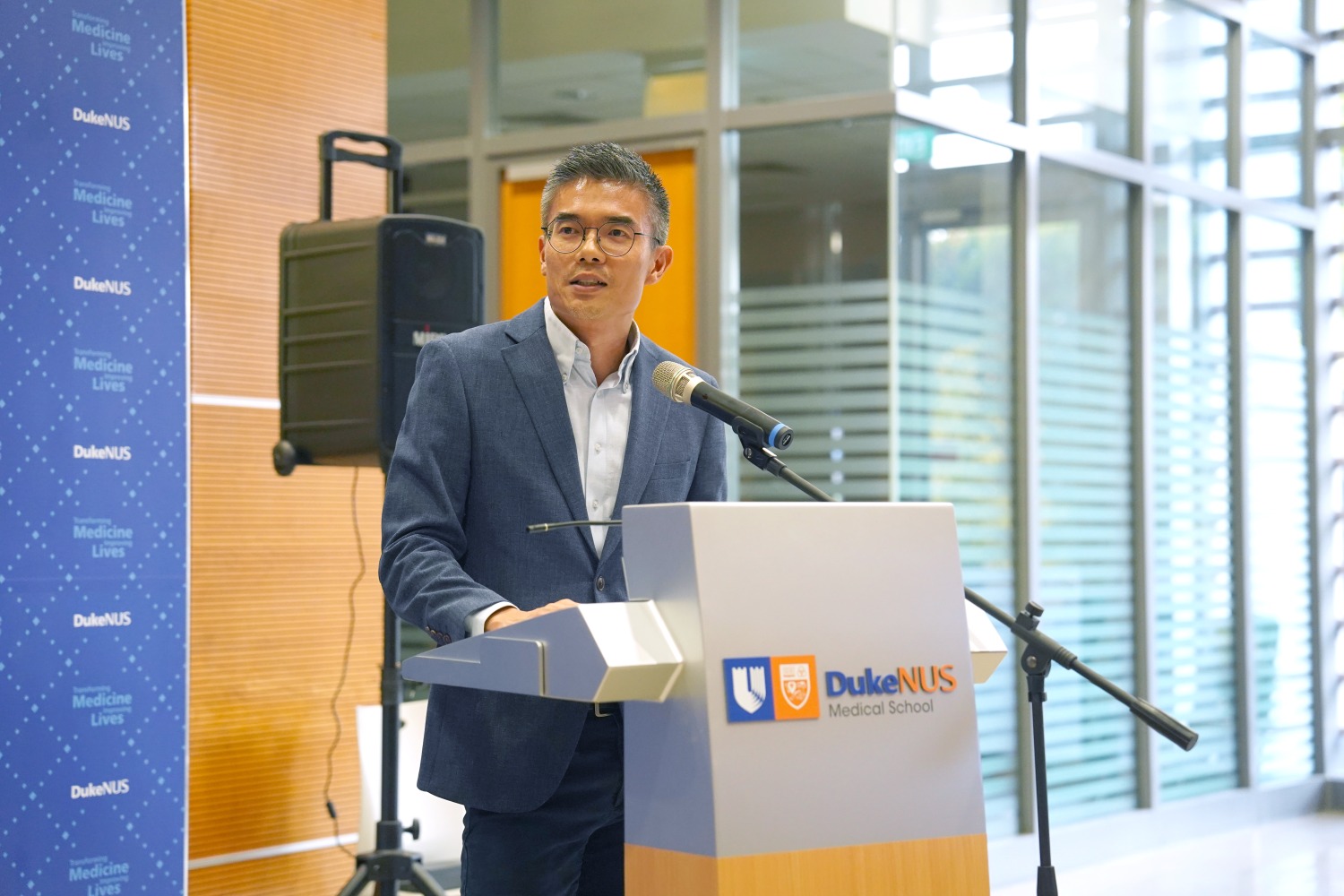
Dr Lewis Hong, Vice President, Discovery Research and Site Head Singapore, Paratus Sciences reflects on Paratus’ partnership with Duke-NUS
In his speech, Dr Hong shared three key ingredients for innovation: the importance of investing in curiosity-driven basic science, enabling the “science to leave the building” through partnerships with industry and the people that make it possible, from the researchers in the labs to the team at OIE.
Creating a culture of innovation
In addition to people and partnerships, fostering an innovation culture where addressing real-world problems is encouraged is also important, stressed Prof Tan.
To support budding innovators in the ecosystem, the School has rolled out initiatives such as the Duke-NUS Health Innovator Programme (D-HIP)—a nine-month flagship programme for medical, engineering and business students, and the Commercialisation and Entrepreneurship Certificate (CEC) course for early career discovery scientists, clinician researchers and industry professionals.
Dr Eugenia Ong, a course participant and principal research scientist with Duke-NUS’ Emerging Infectious Diseases Programme and the Viral Research and Experimental Medicine Centre at SingHealth Duke-NUS, shared how the CEC course had kickstarted her journey in innovation and entrepreneurship.
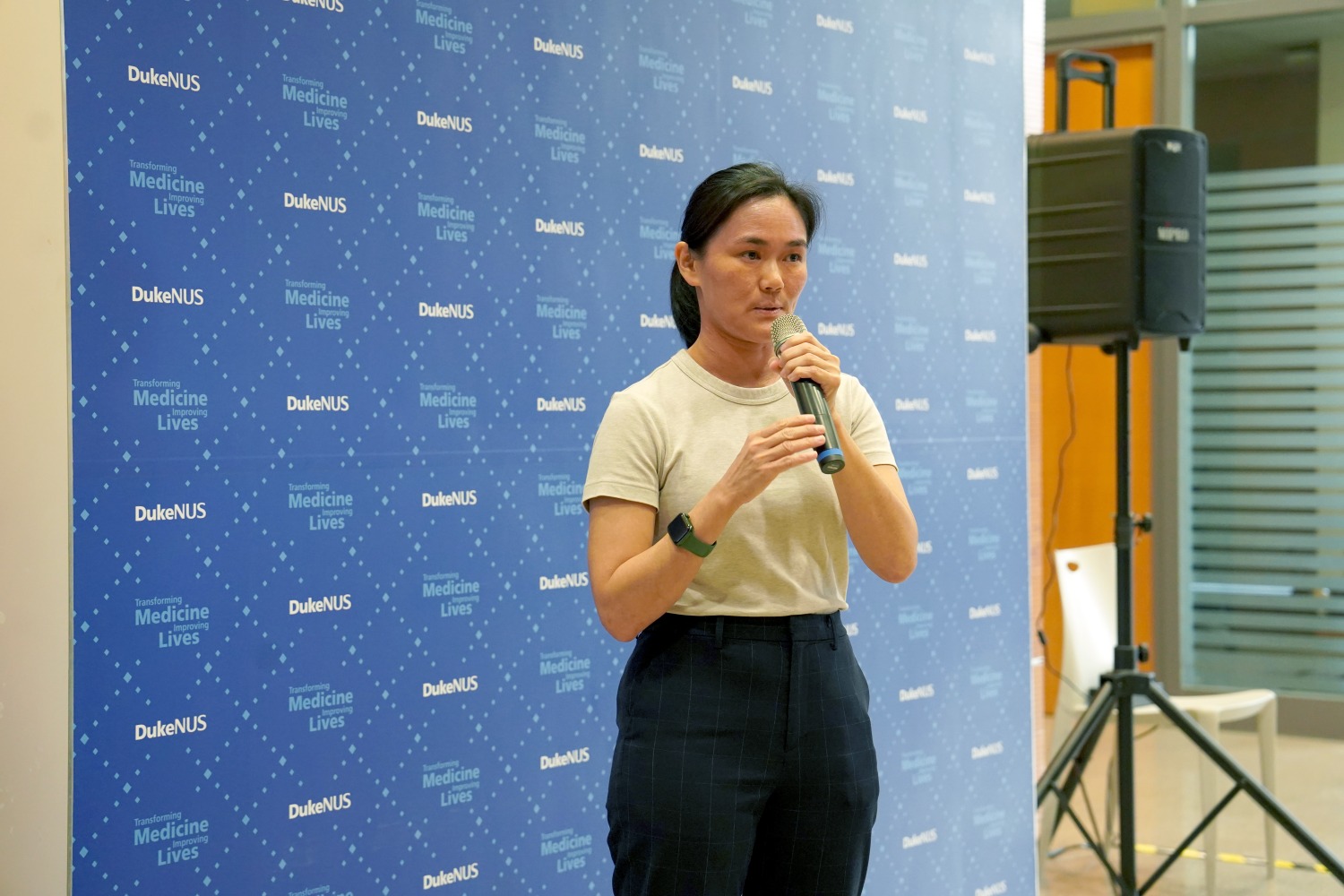
Principal research scientist Dr Eugenia Ong, a first-batch participant for the Commercialisation and Entrepreneurship Certificate (CEC) course shares how she has applied the skills she has learnt in translational research
“That was one of the best decisions that I made,” said Dr Ong, as she reflected on how meeting stakeholders through the course had enriched her perspectives in commercialising her research. She also expressed her gratitude to OIE for supporting her journey through helping her secure bridge funding for her projects.
A continuing story of innovating for human health
Rounding up the evening was Associate Professor Christopher Laing, Vice-Dean for Innovation and Entrepreneurship at Duke-NUS.
“Innovation is really never just about the numbers,” said Assoc Prof Laing. “Behind those meaningful outcomes are people, and maybe more importantly, relationships and this willingness to work across boundaries.”
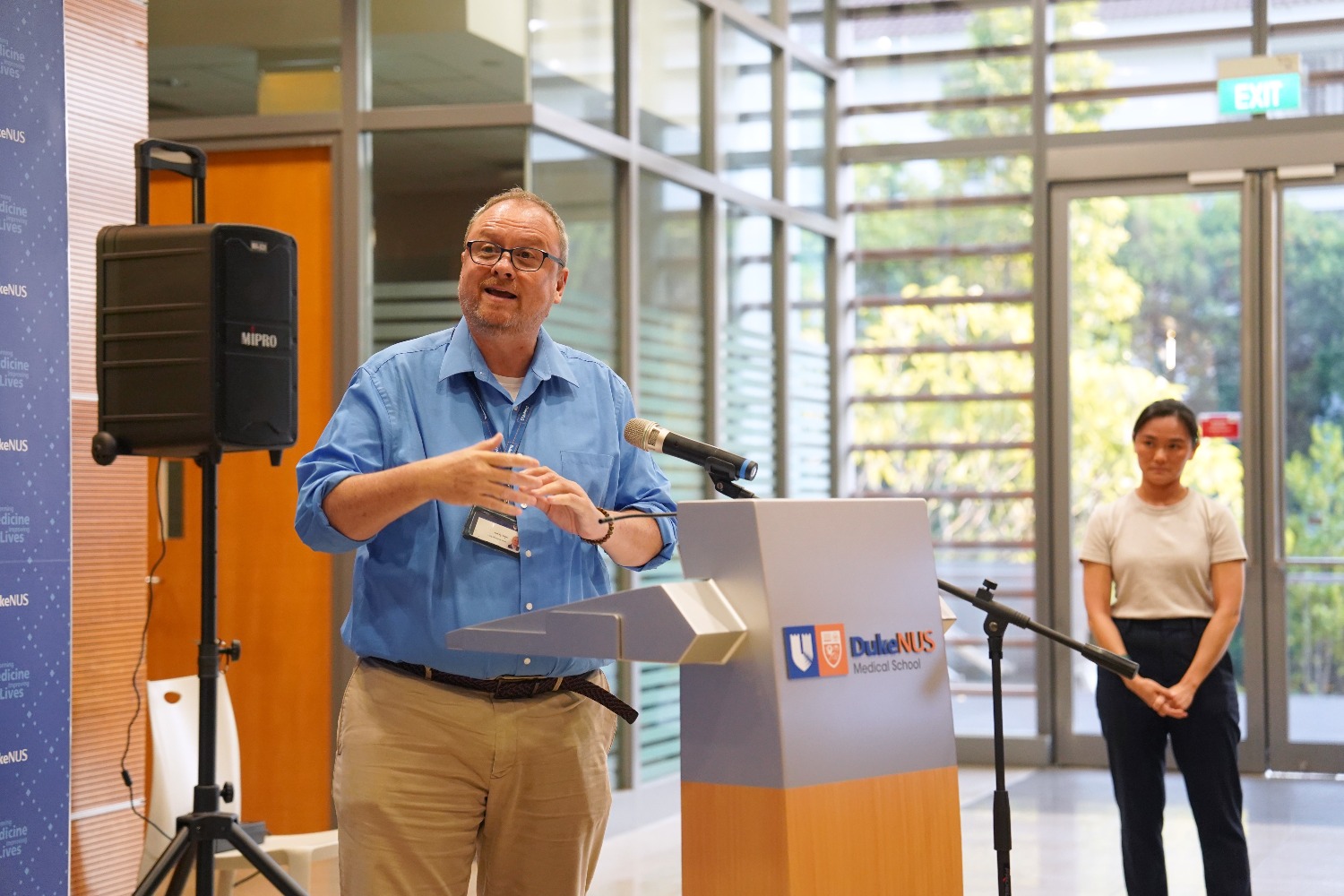
Associate Professor Christopher Laing, Vice-Dean for Innovation and Entrepreneurship invites the audience to scan the QR on display to explore the newly launched OIE impact review
This point was expressed poignantly through Assoc Prof Laing’s tribute to the late Dr David Epstein, former Vice-Dean for OIE. Dr Epstein’s vision and hard work were pivotal in launching the office—an initiative that began with the establishment of the Centre for Technology and Development (CTeD) in 2013 before OIE’s official launch in 2016.
With more than 60 per cent of Duke-NUS faculty involved in commercialisation efforts or industry collaboration, Assoc Prof Laing noted that this reflects the importance the School places on real-world problem solving.
Before concluding his speech, he invited the audience to scan the QR on display to explore the newly launched OIE impact review, which chronicles the School’s key milestones in innovation.
“We’re hoping that not only will it show where we’ve been, but that it will give you a glimpse into our strong ambition to continue innovating for human health for the next 10 years,” said Assoc Prof Laing.
While the celebrations may have concluded, the School’s next chapter in innovation will continue to be written by its people, its partnerships, and a culture of innovation where people are prepared to cross boundaries, manage uncertainty and stay with an idea through setbacks to move discoveries from the bench to bedside.
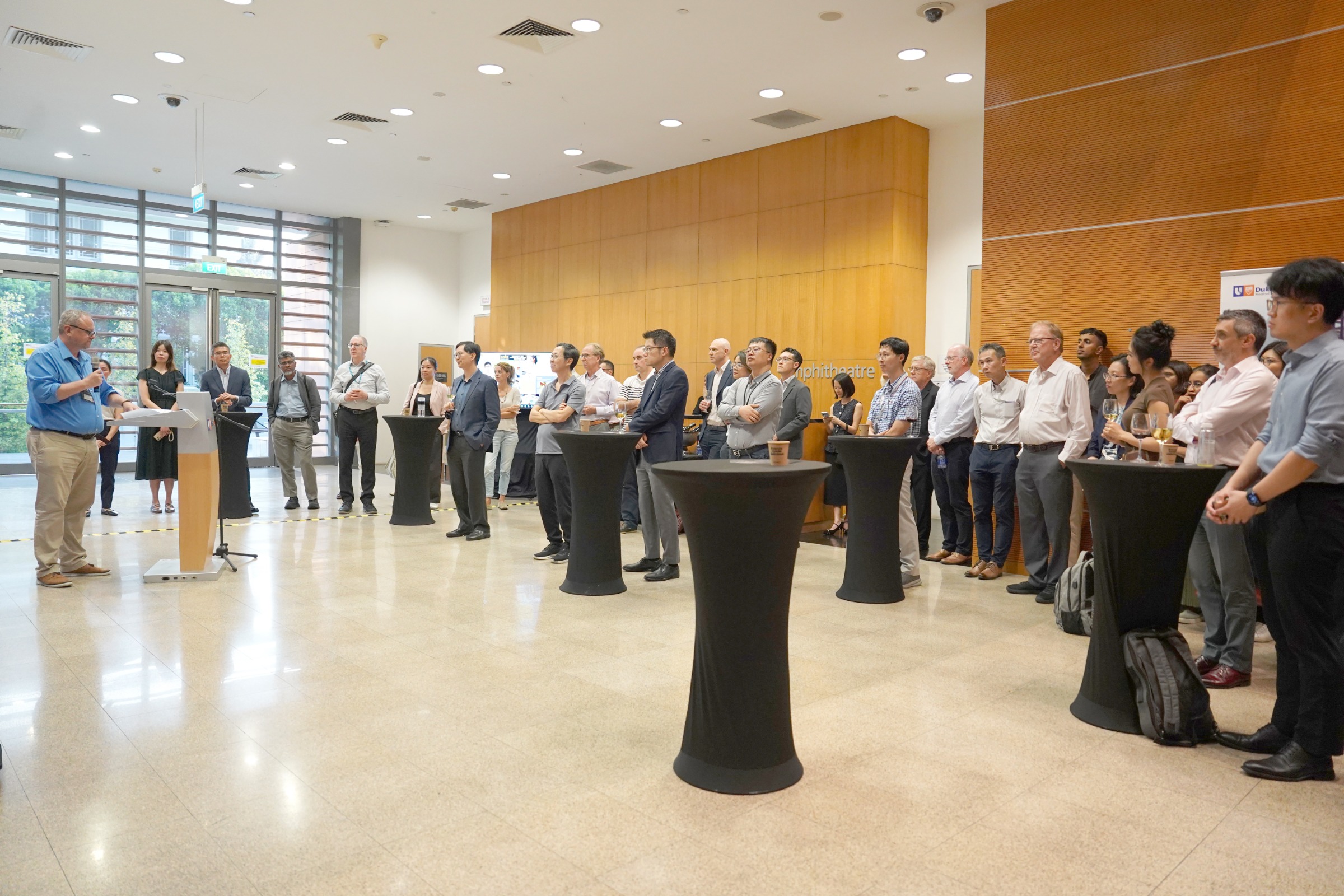
The 70-strong audience present for the launch comprises researchers, industry partners, investors, entrepreneurs and leaders from across the wider public, private and innovation ecosystems