Put brilliant scientists in a laboratory, give them funding and time, and discovery will follow.
It is an appealingly simple picture of research in a medical school. At Duke-NUS, the reality is far more dynamic.
Discoveries here are rarely the work of a laboratory operating alone. A clinical question finds a scientist with the tools to investigate it. A student joins a research team and begins learning how uncertainty becomes evidence. A mentor helps an early-career investigator navigate the long path from a promising idea to meaningful impact. Partnerships bring together expertise, patients, data and resources that no single institution could provide alone.
Research is embedded in education, clinical care and innovation, shaped by national needs and strengthened through partnerships across Singapore and beyond.
“Duke-NUS was created to be different by design,” says Professor Patrick Tan, Dean of Duke-NUS Medical School, outlining his vision for the school. “Our strength lies not in research, education, innovation or clinical care operating separately, but in bringing them together as one connected system.”
“Our ambition is for Duke-NUS to be a daring, future-facing medical school, fully AI-enabled and one that is catalytic in turning discovery into impact, connected across disciplines, institutions and communities, and cosmopolitan in drawing on the best ideas and partnerships from Singapore, Asia and the world,” he says. “This is how we can move promising ideas more purposefully from the laboratory and classroom into innovation, better care and meaningful outcomes for patients and society.”
The result is a medical school designed not only to produce knowledge, but to help that knowledge move.
Designed around problems, not departments
The School’s research ecosystem is supported by the Office of Research, led by Interim Vice-Dean Professor Sheemei Lok. Its work ranges from supporting researchers and stewarding resources to developing talent and helping the School anticipate future scientific and healthcare needs.
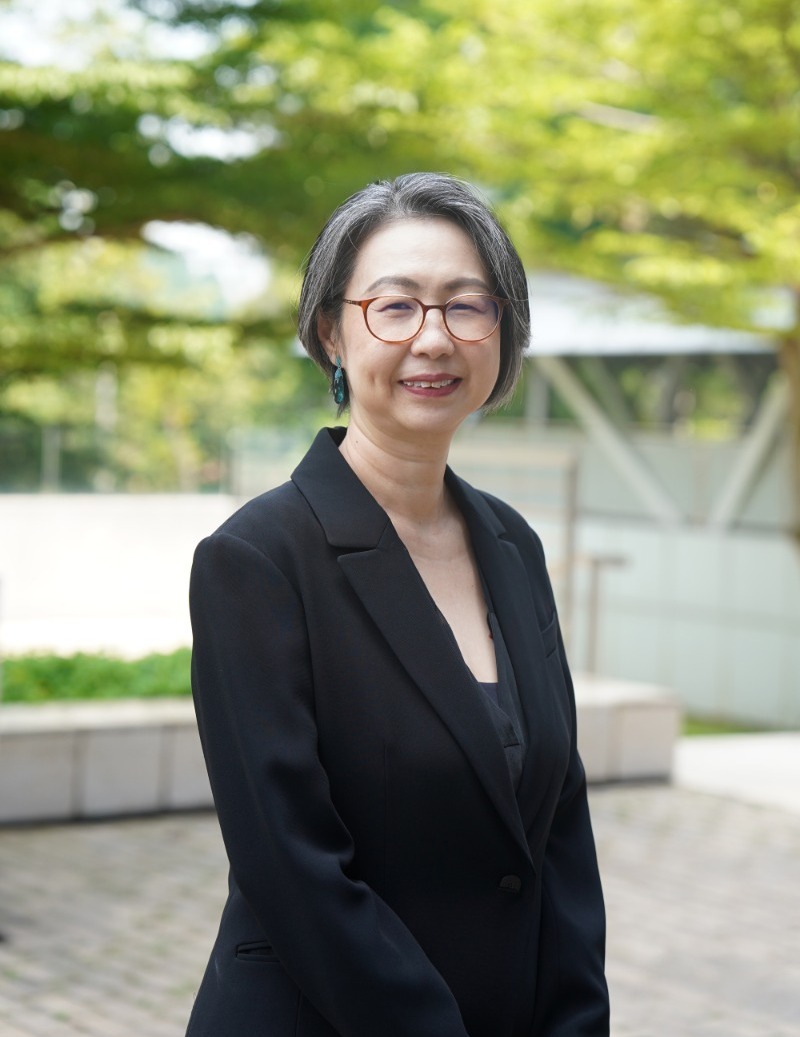 Professor Sheemei Lok leads the Office of Research at Duke-NUS as Interim Vice-Dean
“Research leadership is not only about funding or infrastructure. Even decisions that may appear administrative can shape careers, programme direction, morale and long-term strategy,” says Lok, Interim Vice-Dean for Research. “Ultimately, the future of research is about people: students growing into confident scientists, collaborations developing into lasting partnerships and teams persisting through disappointment before finding the breakthrough.”
At its scientific core are Duke-NUS’ five Signature Research Programmes: Cancer and Stem Cell Biology, Cardiovascular and Metabolic Disorders, Emerging Infectious Diseases, Health Services Research & Population Health, and Neuroscience and Behavioural Disorders.
Together, they give the School depth in areas of major healthcare importance. More importantly, they bring scientists and clinicians together around diseases and health challenges rather than separating them into conventional academic departments.
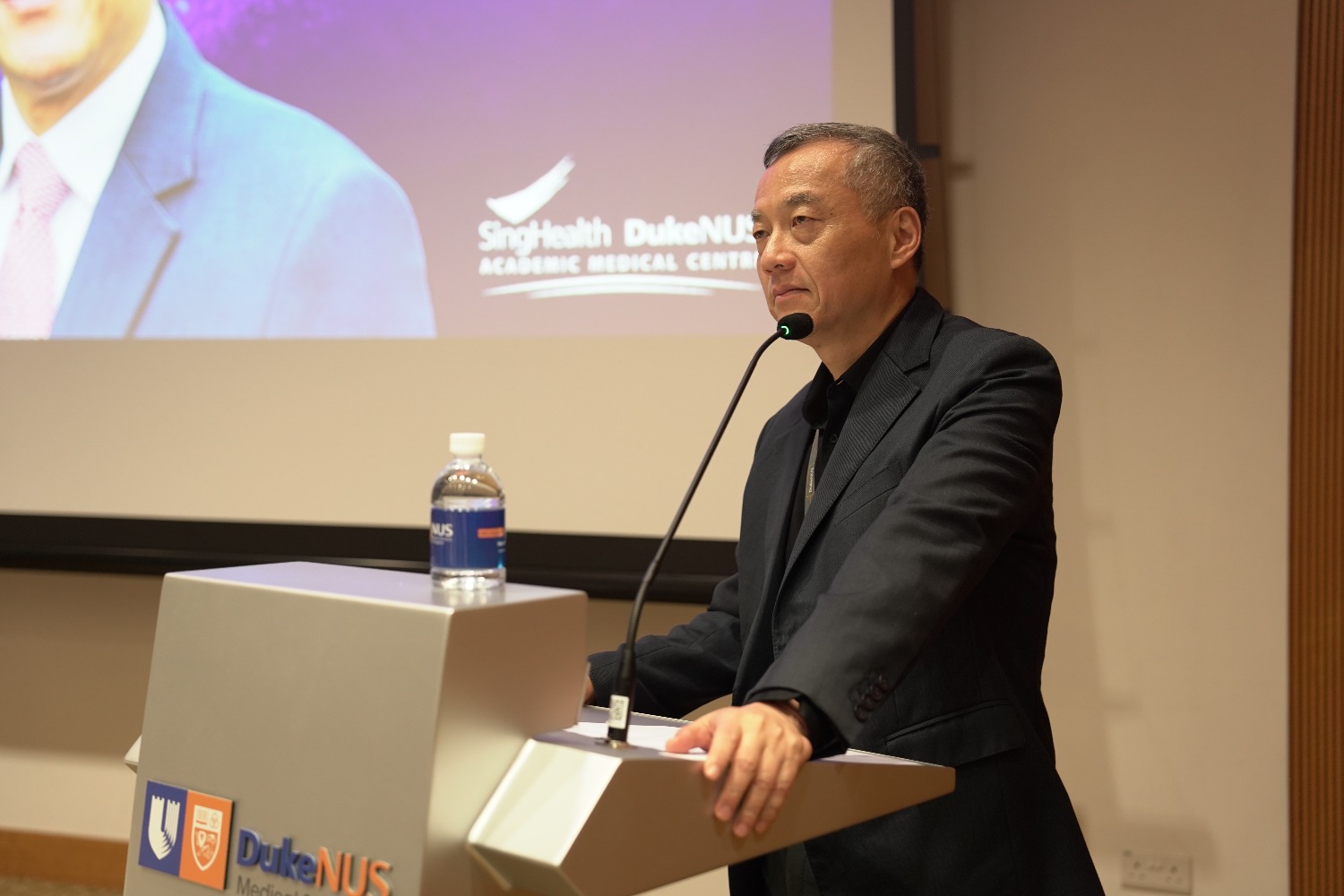 Professor Wang Yibin at the launch of MAGNET, a national research initiative aiming to transform how sarcopenia is understood, diagnosed and treated
For Professor Wang Yibin, who leads the Cardiovascular & Metabolic Disorders Programme, that difference is deliberate.
“The traditional medical school is usually organised by very segregated clinical and basic science departments,” Wang explains. “In such schools, there is a huge ocean between the two entities because the KPIs are different, and the cultures are different.”
Duke-NUS, he believes, disrupted that logic.
“Every pillar of our structure is actually disease-oriented or mission-oriented, but it combines both the clinical and the basic science.”
Within his programme, physicians caring for patients work alongside scientists studying areas such as genomics, metabolomics and mitochondrial function. The shared mission helps remove some of the cultural, administrative and physical barriers that can keep clinical medicine and laboratory science apart.
“Every pillar of our structure is actually disease-oriented or mission-oriented, but it combines both the clinical and the basic science.”
Prof Wang Yibin
This approach is also visible in initiatives such as MAGNET, a network focused on sarcopenia and muscle loss, and SOLAR, which brings different disciplines together to study the biology of ageing.
These are problems that cannot be solved neatly within the borders of a single specialty. They require scientists and clinicians to look at disease from several directions at once, bringing together different methods, perspectives and forms of evidence.
Surrounding the SRPs are specialised centres and institutes spanning ageing, biomedical data science, clinician-scientist development, infectious diseases, precision medicine, global health and medical simulation. Together, they create a structure broad enough to respond to emerging needs, but connected enough for ideas and expertise to travel across it.
Where the clinic changes the question
The value of that connected structure becomes clearest when research meets clinical care.
Through the SingHealth Duke-NUS Academic Medical Centre, the School’s strengths in research and education are brought together with SingHealth’s clinical expertise and reach. Research is not treated as an activity separate from patient care or medical training. Each helps shape the others.
The partnership’s 15 Academic Clinical Programmes connect specialty care, education and research across the SingHealth system, while Disease Centres bring multidisciplinary teams together around specific conditions and patient outcomes.
For Associate Professor Charles Chuah, Senior Associate Dean in the Academic Programmes Management Department of the Office of Academic Medicine, the value of the Academic Medical Centre lies in the alignment it creates across research, education and clinical care.
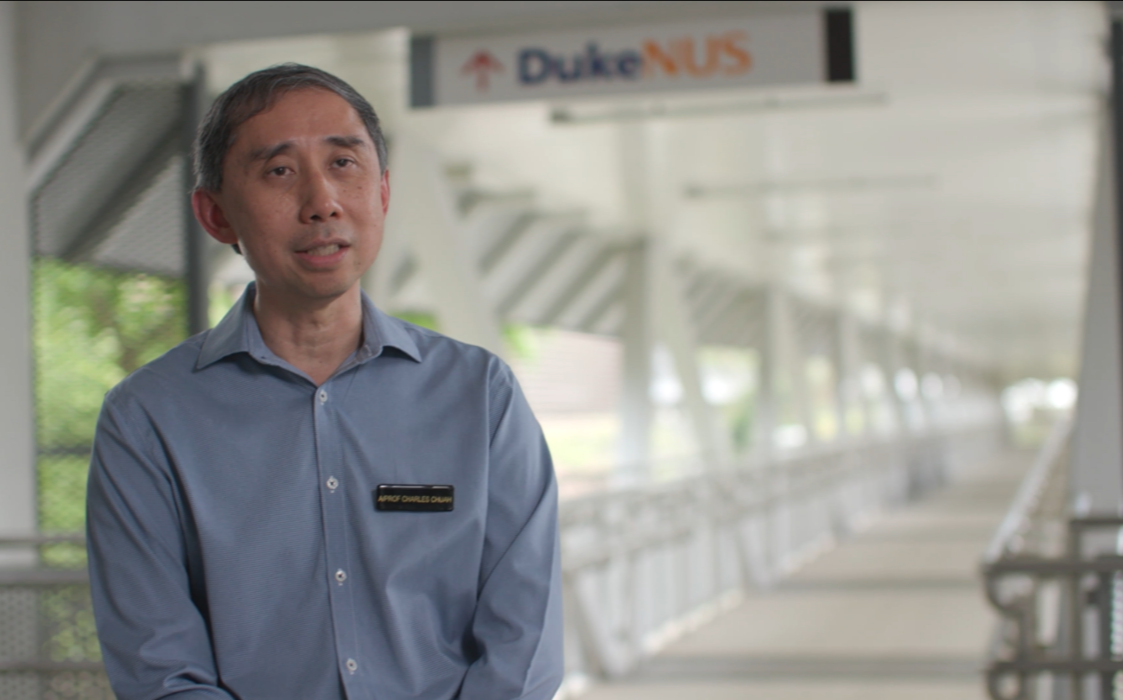 Associate Professor Charles Chuah is Senior Associate Dean in the Academic Programmes Management Department of the Office of Academic Medicine
 “The strength of our AMC is that it brings together people who share the same purpose but contribute different expertise,” he describes. “No single scientist or institution can hold all the answers. When a clinical question meets the right scientific capability, collaborations can grow organically and ideas can move more readily across disciplines and institutions.”
“That alignment reflects not only the SingHealth vision, but the wider vision for Singapore,” he says. “Academic Medicine is at its most powerful when those partnerships translate into better research, stronger training and, ultimately, better outcomes for patients.”
Chuah cites his own work with Professor Ong Sin Tiong, and the collaboration between Professor Ooi Eng Eong and Professor Jenny Low, as examples of clinical questions and finding the right scientific expertise.
Such partnerships often begin simply: a clinician encounters an unresolved problem in patient care, while a scientist has a method, technology or body of knowledge that could help investigate it. Within an Academic Medicine ecosystem, the distance between the two can become much shorter.
The supporting structures matter too. The Office of Academic Medicine manages grants across research, education and innovation, while the Centre for Clinician-Scientist+ Development (CCS+D) helps early-career clinician-researchers progress towards national funding pathways.
“There are various formal programmes such as the CCS+D, supervisors in residency and such. But in addition, there is a lot of informal mentoring in the AMC, some may be transient and others relationships over many years,” neurologist
Associate Professor Deidre Anne De Silva notes.
Seen in action, Academic Medicine is less an organisational framework than a way of working. It allows questions to move from clinic to laboratory, discoveries to return towards patient care and lessons from both to shape how the next generation is trained.