Medical school teaches students to recognise and treat disease. Working with communities teaches them what disease can do to a life.
Illness rarely affects the patient alone. It can reshape childhoods, disrupt family routines and place emotional, practical and financial strain on everyone around the person receiving care.
Understanding those realities is an important part of becoming a doctor, even when they cannot be captured in a scan, test results or case history.
At Duke-NUS Medical School, community engagement gives students opportunities to learn from people beyond lecture halls and clinical rotations. By spending time with children and families living through serious illness, students encounter a different dimension of care—one built on listening, trust and the willingness to be present when there is no immediate medical problem to solve.
Two longstanding student-led initiatives, Camp Simba and Paediatric Brain and Solid Tumour Awareness Day, bring that philosophy to life in very different ways.
A weekend to simply be children
For three days in June, 62 children and youths from families supported by HCA Hospice Care stepped into the world of Greek mythology.
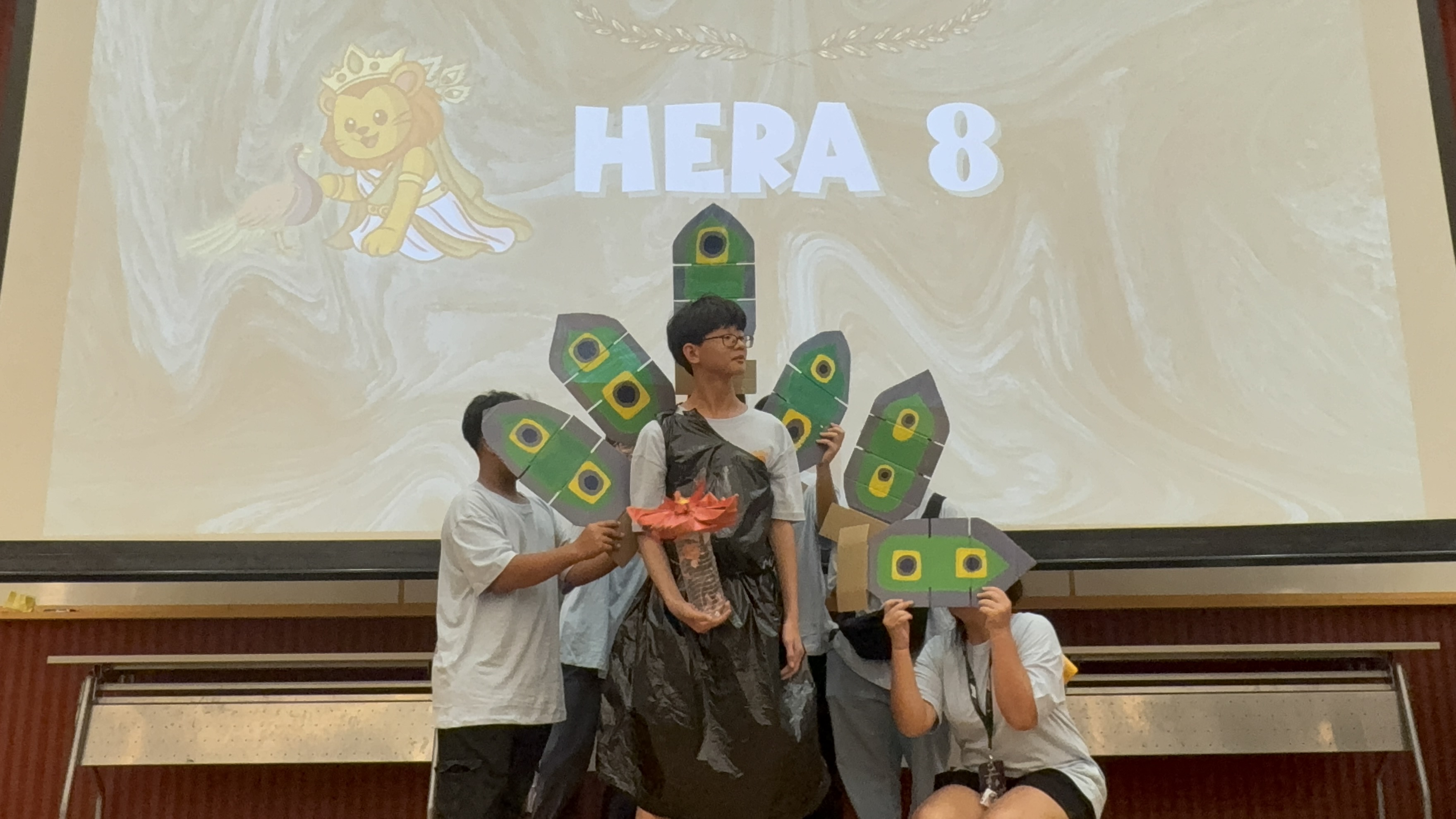 A team of campers from house Hera shows off their self-made costume. Credit: // Camp Simba team
At Camp Simba 2026, campers aged seven to 16 joined one of several mythological houses, made their own costumes, tackled an Amazing Race and explored Gardens by the Bay and the ArtScience Museum. They sang, played, created and formed friendships with 73 student facilitators.
Most importantly, they had the freedom to simply be children.
The annual camp is jointly organised by students from Duke-NUS, the NUS Yong Loo Lin School of Medicine and NTU’s Lee Kong Chian School of Medicine for children whose families are navigating serious illness.
This year’s Camp Half-Blood theme supplied the adventure, but the activities were designed with a deeper purpose. Team challenges encouraged campers to trust and support one another, while quieter moments gave them space to connect with peers who may understand experiences that can be difficult to explain elsewhere.
Returning campers also took younger and first-time participants under their wing, becoming reassuring older brothers and sisters within the community.
For the medical students involved, the camp offered a window into how illness is experienced outside the hospital. They met children not as cases or diagnoses, but as individuals with humour, fears, friendships and ambitions of their own.
“Going through camps like this really highlights why we're doing the things that we are doing,” said Programme Head Nicholas Kuu, from the Duke-NUS MD Class of 2029.
Bonding with the campers, he added, gave greater meaning to his medical training and helped him develop skills he would not ordinarily learn in a classroom.
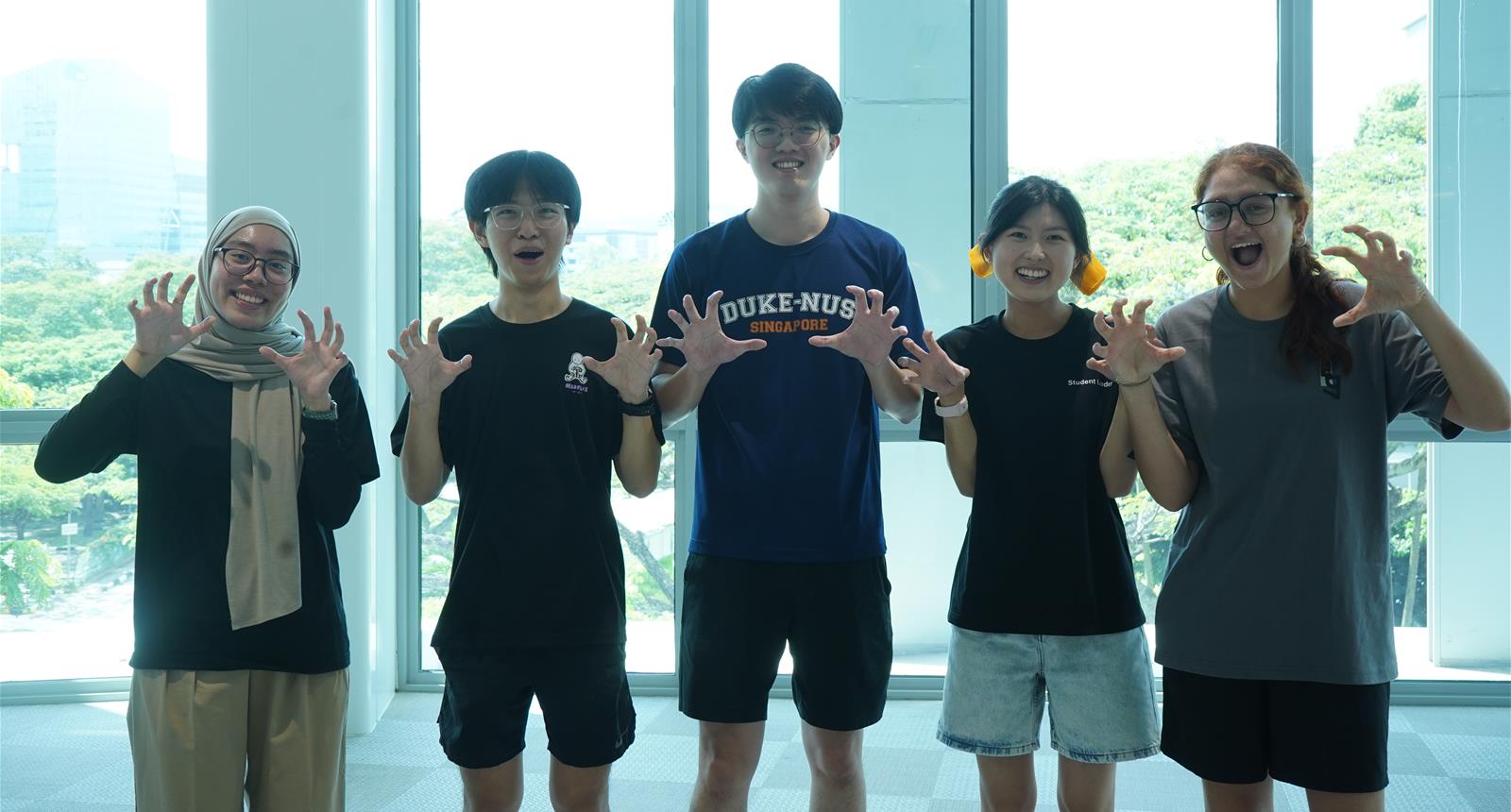 Camp Simba Project Director Inarah Farahah (first from left), Programme Head Nicholas Kuu (centre) and Head Facilitator Lee Swee Leng (second from right) with fellow camp committee members. Credit: // Duke-NUS Medical School
By the end of the weekend, the impact of Camp Simba could be seen not only in the games completed or prizes awarded, but in the relationships that had formed: children cheering for teammates they had met only days earlier, older campers looking out for younger ones and future doctors learning when to lead, when to listen and when simply to join in.
A different kind of joyride
A month earlier, another group of Duke-NUS students had gathered outside KK Women’s and Children's Hospital (KKH) for a rather different community event.
The usual calm of a Sunday mornings gave way to the sound of 90 Porsches lining the hospital driveway. Waiting nearby were 22 children receiving care for paediatric cancers, together with their families and caregivers.
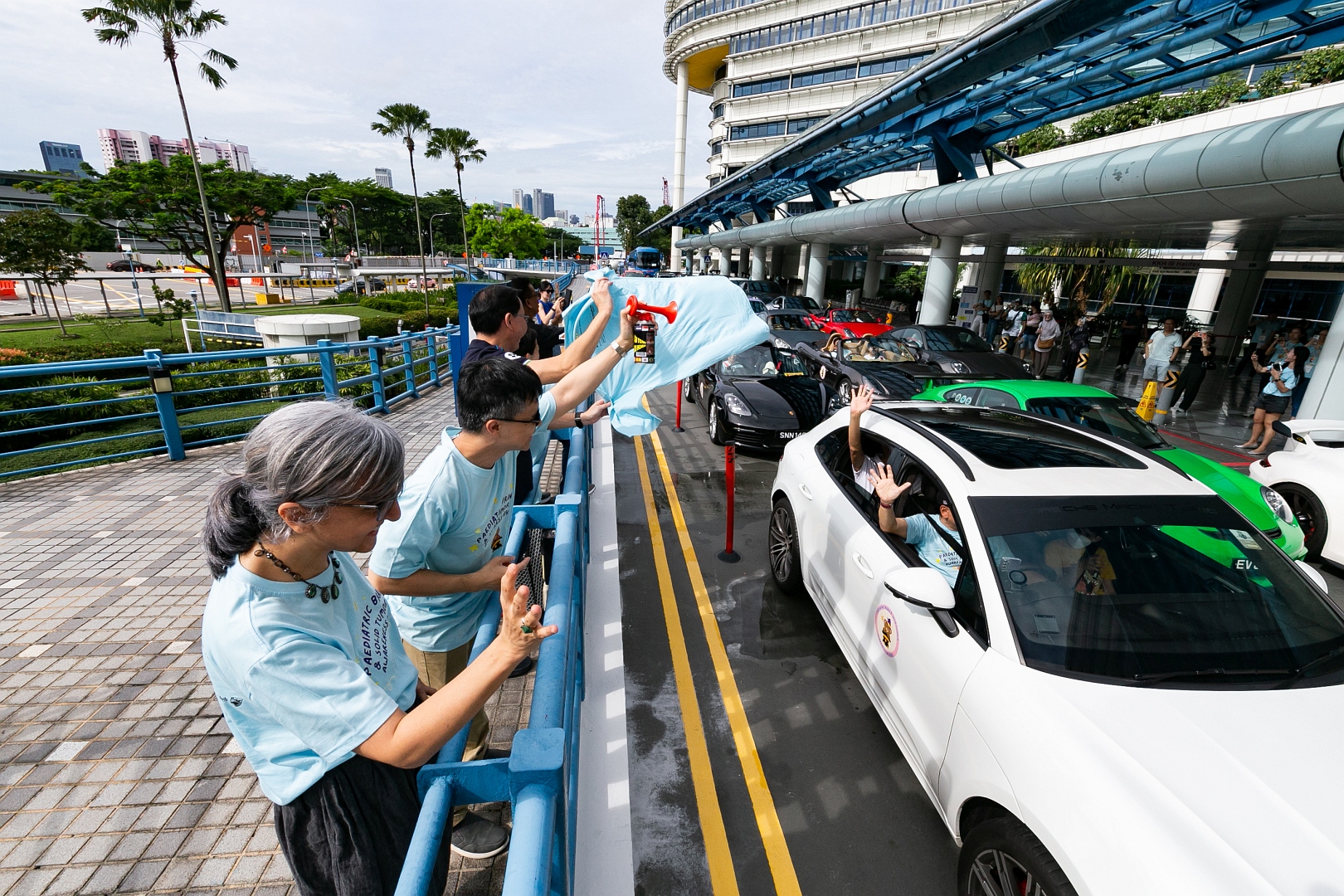 Associate Professor Shiva Sarraf-Yazdi joining in the proceedings as the Porsches are flagged off. Credit: // Duke-NUS Medical School
Student volunteers helped the children climb into the cars before they before they set off for ONE°15 Marina Sentosa Cove, where musical performances, carnival games and other activities awaited them.
Now in its 12th edition, Paediatric Brain and Solid Tumour Awareness Day began as a student-led initiative to stand alongside children with cancer and their families. This year, 50 Duke-NUS student volunteers worked with clinicians from KKH and the National Neuroscience Institute (NNI) to create a day of respite, encouragement and connection.
The Porsches may have provided the spectacle, but the event’s purpose extends well beyond the joyride.
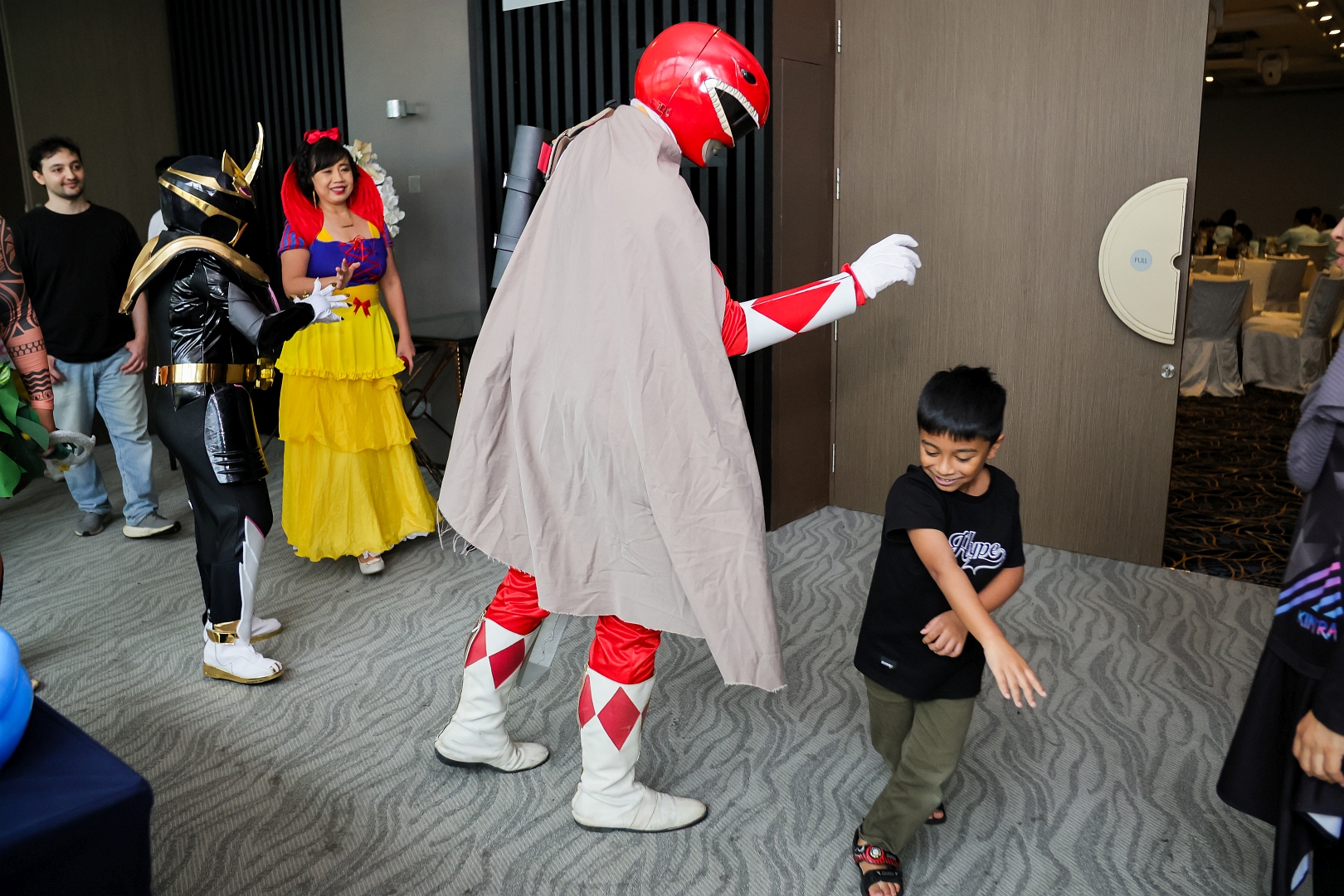 “It’s morphin’ time!” Credit: // Duke-NUS Medical School
Brain tumours are among the most common solid tumours affecting children and can impose a heavy burden on patients and families, Treatment may be prolonged, while the emotional, practical and financial consequences can continue beyond a hospital stay.
PBSTA Day brings patients and caregivers together with clinicians, volunteers and paediatric cancer survivors. In doing so, it creates a community in which families can exchange experiences, find encouragement and see that they are not alone.
For the students, that change in perspective matters. It reminds them that supporting a patient is not confined to making the right diagnosis or choosing the right treatment. Care can also mean recognising the emotional weight carried by patients and families and helping create moments in which illness does not occupy the entire foreground.